
Projects & Case Studies
Custom Ankle Support Sleeve Pricing: What Really Affects Your OEM Quotation?
What affects custom ankle sleeve pricing? Learn how yarn, knitting construction, size assortments, MOQ, branding and packaging influence OEM quotations.
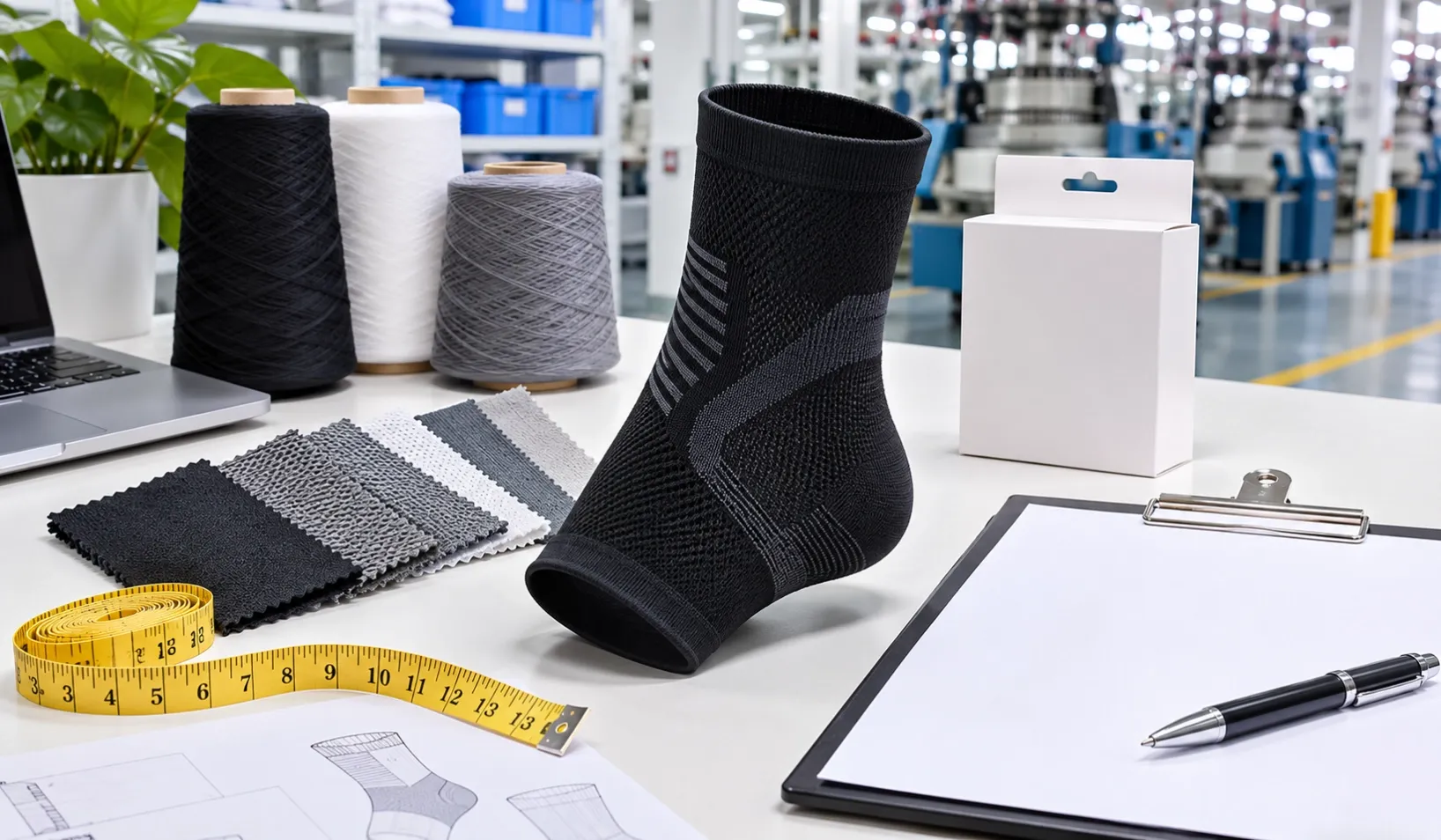
You send the same ankle sleeve photo to three suppliers and ask for a quotation.
A few days later, the prices come back. One supplier is noticeably cheaper. Another asks several questions about yarn, sizing and packaging before giving you a firm price.
At first glance, it may seem that the cheaper supplier is simply more competitive.
But are they actually quoting the same product?
This is where sourcing knitted ankle supports becomes more complicated than comparing unit prices.
A sleeve made from nylon and spandex may look similar to another one in a catalog, yet differences in knitting construction, material specifications and finishing can affect both manufacturing cost and the finished product.
For brands and importers, understanding those differences makes it easier to compare quotations and avoid unexpected costs after sampling.
The Material Description Doesn't Tell You Enough
Most knitted ankle supports use elastic yarn combinations. Nylon and spandex are common choices, but a basic material description tells only part of the story.
Two sleeves can both be described as nylon-spandex products while using different yarn specifications, knitting densities and finished weights.
These differences can affect yarn consumption, fabric stretch, recovery and wearing comfort.
For example, a supplier might propose a standard elastic yarn already used in regular production. Another might quote a specially sourced yarn to achieve a particular texture, stretch characteristic or functional requirement.
The second option may involve different material costs, procurement quantities and lead times.
However, a specialty yarn is not automatically the better choice.
If the product is intended to be a competitively priced, everyday sports accessory, a suitable conventional yarn may meet the development requirements.
The question worth asking is not simply which material costs more.
It is whether the selected material delivers the characteristics your product actually needs.
When comparing quotations, request a clear material specification and confirm that the quoted construction matches the sample you intend to approve.
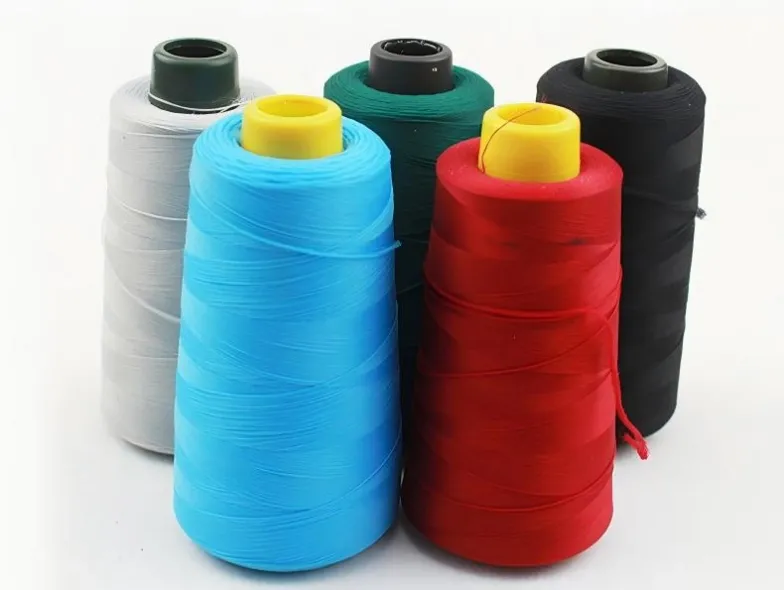
Knitting Construction Can Change the Cost
A knitted ankle sleeve is not necessarily produced with one uniform structure from top to bottom.
Different designs may use different knitting zones around the ankle, heel and arch.
A basic tubular design can be relatively straightforward to manufacture. A more developed construction may require additional machine programming, changes in stitch structure or closer control of different elastic zones.
The complexity of a design can influence knitting time, production efficiency and sample development.
For example, a brand may request a sleeve with a particular heel opening, reinforced knitting around selected areas and a more flexible structure across the instep.
Those features need to be translated into a manufacturable design.
Depending on the equipment and construction, changes may be straightforward or may require several rounds of adjustments.
This explains why a supplier often needs more information than a product photograph before providing an accurate custom quotation.
It also explains why two products with nearly identical appearances may not have identical manufacturing costs.
For buyers, the approved sample and technical specification should be the reference for pricing, not just the product image.
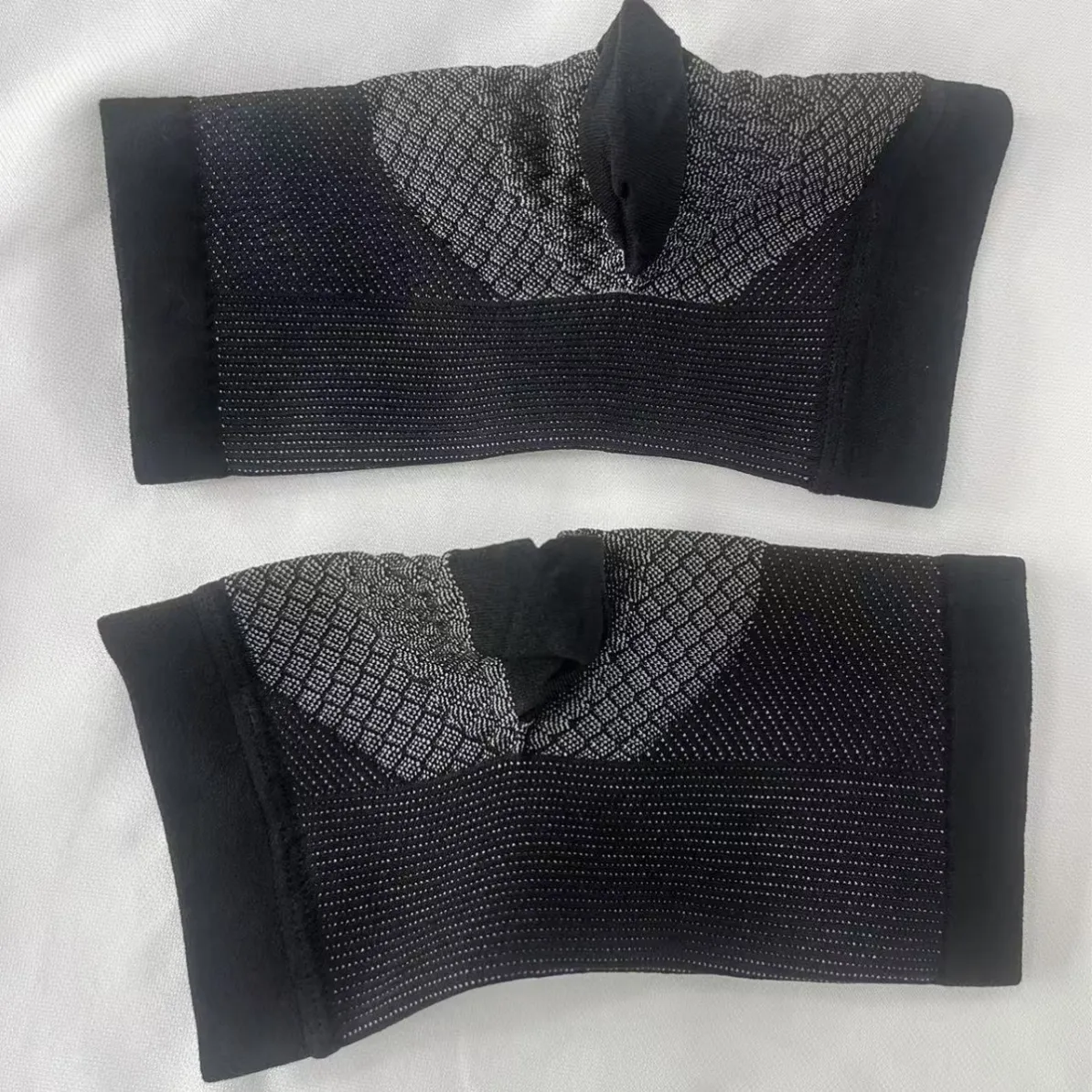
Why MOQ Matters More Than the Total Order Quantity
Suppose you are preparing an order for 1,200 pairs of knitted ankle sleeves.
You want two colors and three sizes.
That creates six color-and-size combinations, with an average of 200 pairs per combination if quantities are distributed equally.
The supplier may accept an order of 1,200 pairs, but that does not necessarily mean every combination can be produced at the same unit price.
Why?
Different colors may require separate yarn allocation or color changes. Different sizes can require adjustments to machine settings or production arrangements. Some materials also have purchasing minimums imposed by the yarn supplier.
These details depend on the particular manufacturing process.
A supplier that already uses your preferred black yarn in regular production may be able to offer more flexibility than one that must purchase a new custom color.
This is why buyers should clarify how MOQ is calculated.
Is the minimum based on the total order, each style, each color or each size?
Can different sizes be combined within one color?
Will the supplier accept an uneven assortment?
These questions can have a greater effect on your initial investment than a small reduction in the quoted unit price.
There is also a practical inventory consideration.
A lower unit price is not necessarily a saving if it requires you to order significantly more stock than your sales channel can realistically absorb.
For a new private-label collection, a manageable assortment can be more valuable than the lowest possible production price.
Branding and Packaging Are Part of the Product Cost
Private-label customization is another area where quotations can become difficult to compare.
Adding a logo may sound like a minor change, but the method matters.
A knitted-in logo, a sewn label and a printed branding element involve different materials and production arrangements.
A knitted-in design may require changes to the knitting program and potentially the machine setup, depending on the pattern and equipment.
A sewn label introduces an additional component and attachment process.
The best option depends on the product construction, appearance requirements and order quantity.
Packaging deserves similar attention.
A sleeve supplied in a simple polybag is not the same commercial product as one packed in a custom-printed retail box with a size label, instruction insert and barcode.
For products sold through retail channels, packaging costs may also involve artwork preparation, printing minimums and assembly work.
Before comparing quotations, make sure each supplier understands exactly what must be included.
If the packaging design has not been finalized, ask the supplier to quote the product and retail packaging separately.
This makes it easier to see which costs come from manufacturing and which come from presentation.
It also gives the brand more flexibility when testing different sales channels.
Be Careful When Comparing Sample and Bulk Prices
Sampling and bulk production are two different stages of an OEM project.
A standard sample made from available yarn may require relatively little development.
A custom construction may involve machine programming, material sourcing, size adjustments and several rounds of evaluation.
These activities take time and can generate costs before mass production begins.
Some suppliers charge a separate development or sample fee. Others may include part of that work in the commercial arrangement.
Neither approach is automatically better.
What matters is understanding what the fee covers.
Does it include one sample or several revisions? Are special materials charged separately? Will any development fee be credited against a later bulk order?
It is also worth confirming whether the quoted bulk price is based on an existing product or a fully approved custom sample.
If the specifications change after the quotation, the production price may need to be reviewed.
For an experienced buyer, this is a reason to finalize the important product requirements before negotiating the last few cents.
A Lower Unit Price Is Not Always a Lower Landed Cost
There is one more detail that can make two quotations look very different: the delivery terms.
A factory price quoted EXW is not directly comparable with a price quoted FOB at a named port.
The allocation of transportation, export clearance and other costs depends on the agreed Incoterms rule.
For containerized shipments, FCA may also be a more appropriate term to consider than FOB, depending on the transaction.
Buyers should always confirm the exact Incoterms rule, named location and what is included in the price.
Packaging, inland transportation, export formalities, international freight and destination charges can affect the total cost of bringing the goods into your market.
A supplier offering a lower manufacturing price may still result in a higher overall sourcing cost once the complete shipment is considered.
The same principle applies to quality requirements.
If your project requires additional material testing, dimensional checks or third-party inspection, clarify whether those costs are included.
And if the product will carry specific compression or therapeutic claims, discuss the relevant performance evidence and regulatory requirements before confirming the commercial specification.
Those requirements should never be assumed from the product name alone.
How to Request a Quotation You Can Actually Compare
The most useful quotation requests are specific without becoming unnecessarily complicated.
Instead of sending a product photo with the question "What's your best price?", describe the product you want to sell.
For example:
We are developing a private-label knitted ankle sleeve for the US sports accessories market.Please quote based on a nylon-spandex construction similar to the attached reference sample, with three sizes, two colors and an initial order of 1,200 pairs.We would like separate pricing for standard packaging and a custom-printed retail box.Please also confirm the MOQ by color and size, sample development requirements, production lead time and quoted delivery terms.
This gives the supplier enough information to identify the main cost variables.
If a particular feature is essential, such as a heel opening, specific fabric thickness or reinforced knitting zone, include it in the brief.
If you are flexible on materials or colors, say so.
That flexibility may allow the supplier to suggest an alternative construction or material already available in regular production.
The objective is not to ask every supplier for the cheapest possible version.
It is to obtain quotations based on comparable products.
Price Matters. But So Does Repeatability.
For a brand launching a new ankle support, a competitive first-order price is important.
But the product must also be suitable for repeat production.
If the next order uses different elastic yarn, a changed knitting structure or altered finishing, the sleeve may no longer fit like the sample originally approved.
That can create problems even when the new product looks acceptable during a routine visual inspection.
Before confirming production, agree on the materials, construction, finished measurements, packaging and relevant quality checks.
A reliable quotation should make those requirements clear.
The lowest price on a spreadsheet does not always represent the best sourcing decision.
A better question is whether the supplier can reproduce the agreed product at a commercially sustainable price.
Discuss Your Custom Ankle Support Project With Aby-Tex
Aby-Tex supplies knitted sports supports for brands, importers and wholesalers, with OEM and private-label development options.
For custom ankle sleeves, development discussions can cover yarn selection, knitted construction, sizing, colors, branding and retail packaging.
If you are comparing quotations or preparing a new product brief, contact Aby-Tex with your reference design, estimated quantity and target market.
We can review the specifications and discuss suitable sourcing options.