
Jul 29, 2026Applications & Solutions
Knitted Support and Compression Solutions for Different Markets
Explore knitted sports support and compression solutions for brands, wholesalers, retailers and e-commerce businesses across sports, travel, work and everyday wellness markets.
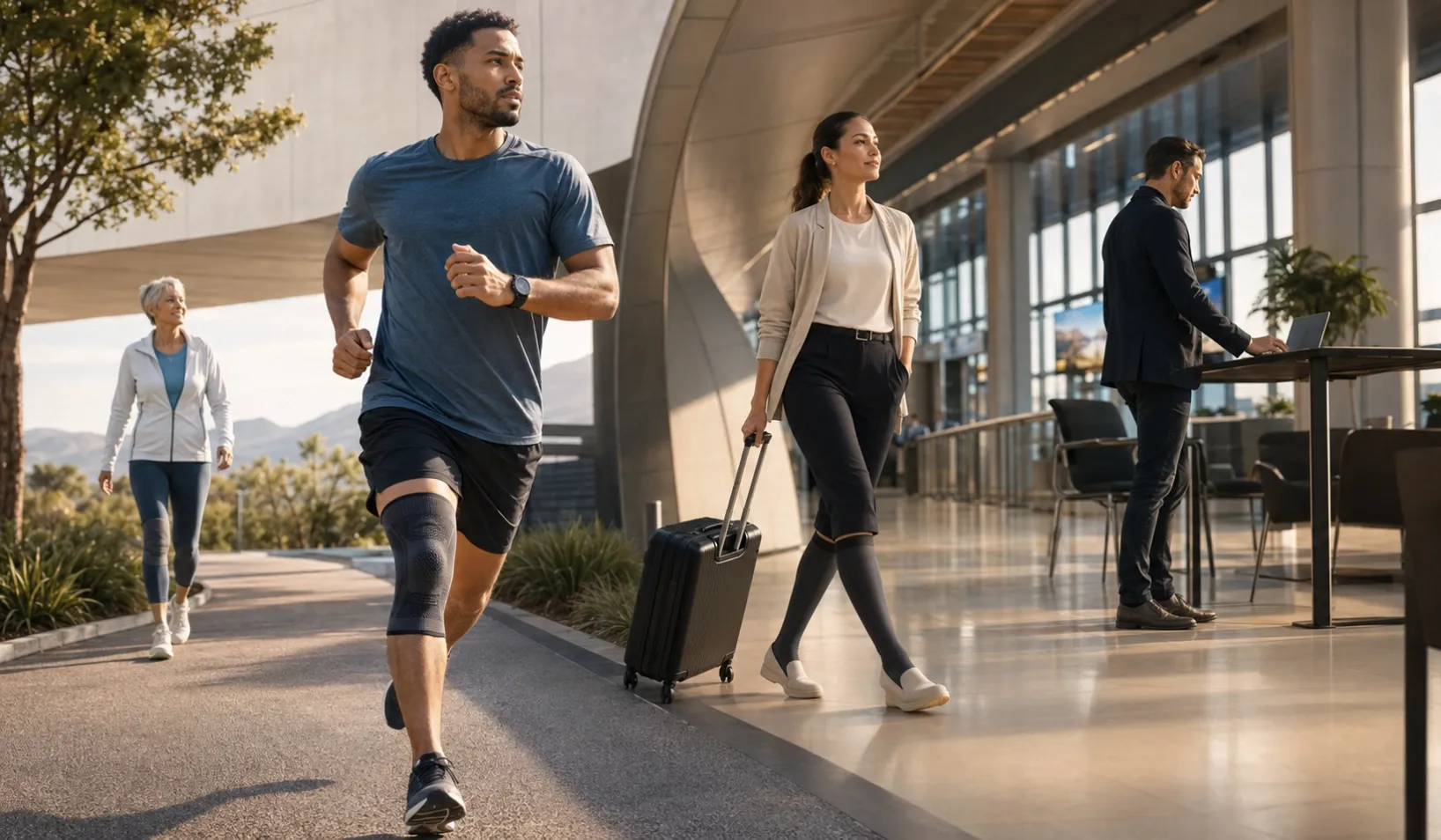
One Product Category, Many Market Possibilities
A runner ties her shoes before sunrise.
A traveler walks through an airport after a ten-hour flight.
A warehouse worker finishes another long shift on his feet.
An older customer enters a local store, searching for something comfortable and easy to wear.
Their lives are different, but their needs often meet in the same place: reliable support, comfortable compression and the confidence to keep moving.
Knitted supports and compression products are no longer limited to one narrow market. They now appear in sports collections, travel accessories, wellness ranges, retail stores, e-commerce platforms and private-label product lines.
The opportunity is not simply to sell another sleeve or sock.
It is to develop the right product for the right person, at the right moment.
Sports and Active Lifestyle
Movement creates freedom, but it also places repeated demands on the body.
Runners, cyclists, gym users and recreational athletes often look for products that provide a secure feeling without limiting natural movement. They want support that works quietly in the background—present when needed, almost forgotten when everything feels right.
Suitable products may include:
- Knitted knee supports
- Ankle sleeves
- Wrist supports
- Calf compression sleeves
- Sports compression socks
- Recovery-focused compression products
For the active lifestyle market, buyers should consider breathable structures, moisture management, targeted support zones and strong elastic recovery.
The product must stay in place during movement. It should feel supportive without becoming heavy, stiff or excessively warm.
For sports brands, differentiation may come from exclusive colors, dynamic knitting patterns, functional yarns and products designed around a specific activity.
A generic sleeve competes on price. A clearly positioned solution gives the customer a reason to remember the brand.
Everyday Comfort and Wellness
Not every customer is training for a marathon.
Some simply want their legs to feel more comfortable at the end of the day.
Everyday compression products can be developed for office workers, teachers, retail employees and other users who spend long hours sitting or standing. In this market, comfort and ease of use are often more important than an extremely firm wearing sensation.
Potential products include:
- Light-support compression socks
- Daily compression sleeves
- Soft knitted ankle supports
- Comfortable knee sleeves
- Easy-wear support products
Materials should feel soft against the skin, while the construction should provide enough stretch for convenient dressing and removal.
Neutral colors may suit professional environments, while seasonal colors and subtle patterns can help lifestyle brands transform a functional product into something customers are happy to wear every day.
The best daily support product does not ask the wearer to change their life. It simply fits into the life they already have.
Travel and Long-Distance Journeys
Travel is filled with movement, yet it often requires the body to remain still for hours.
Long flights, train journeys and road trips have created a growing market for travel-friendly compression products. Customers in this category usually look for comfort, portability and a product that can be worn for extended periods.
Suitable options may include:
- Graduated compression socks
- Knee-high travel socks
- Lightweight calf sleeves
- Easy-on compression designs
For travel-focused collections, buyers should consider breathable yarns, smooth toe construction, comfortable cuffs and packaging that clearly explains sizing and intended use.
Compact packaging is especially valuable for airport retail, travel accessory stores, pharmacies and e-commerce gift sets.
A travel product is more than fabric packed into a small box. It carries a simple promise: wherever the journey goes, the body will feel a little more supported along the way.
Work and Occupational Support
Millions of people spend their working lives standing, walking, lifting or repeating the same movements.
Warehouse staff, hospitality workers, healthcare workers, delivery teams, factory employees and retail personnel may all have different working environments, but they share a need for durable products designed for extended wear.
Relevant product categories include:
- Workday compression socks
- Back supports
- Wrist supports
- Knee sleeves
- Ankle supports
Products developed for occupational use should prioritize durability, stable fit and all-day comfort. Darker colors, reinforced areas and easy-care materials are often practical choices.
For uniform suppliers, corporate wellness programs and occupational product distributors, packaging and product specifications can be adapted to different industries or workforces.
In this market, the product is not worn for a photograph. It is worn through a real working day. Every seam, edge and elastic zone must respect that reality.
Recovery and Post-Activity Comfort
After movement comes recovery.
Sports participants and active consumers increasingly look for products that can become part of their post-workout routine. These products are often positioned around comfort, relaxation and continued support after physical activity.
Possible options include:
- Calf compression sleeves
- Compression socks
- Soft knee sleeves
- Ankle supports
- Targeted knitted support products
Recovery-focused products may use softer yarns, breathable structures and moderate compression to create a comfortable wearing experience.
Brands can build complete collections by connecting products to different moments: before activity, during movement and after exercise.
This creates more than a single item. It creates a product system—and a stronger reason for customers to return.
Any medical or therapeutic claims should be supported by appropriate testing and reviewed according to the regulations of the intended market.
E-Commerce and Direct-to-Consumer Brands
Online customers cannot touch the fabric before purchasing.
They rely on images, product descriptions, reviews and size charts. This makes product clarity especially important.
Products developed for e-commerce should offer:
- A clearly defined use case
- Visible and understandable features
- Easy-to-follow sizing
- Strong packaging presentation
- Distinctive colors or knitting details
- Consistent quality across repeat orders
For DTC brands, a focused product usually performs better than a vague one.
Instead of describing a sleeve as suitable for everyone, the brand may position it for running, long work shifts, daily travel or post-activity comfort.
Clear positioning makes marketing easier. It also helps customers recognize themselves in the product story.
A successful online product answers one emotional question quickly: Is this made for someone like me?
Wholesalers and Distributors
Wholesalers and distributors face a different challenge.
They may supply multiple retailers, customer groups or geographic markets. They need products with broad commercial potential, stable production and price structures that leave room for every part of the distribution chain.
Their priorities often include:
- Reliable repeat-order quality
- Competitive pricing
- Flexible order quantities
- Practical sizing systems
- Manageable SKU counts
- Retail-ready packaging
- Consistent delivery schedules
A distributor may begin with a small core range, such as knee supports, ankle sleeves and compression socks, before expanding according to market response.
Private-label packaging can be adapted for different languages, regional requirements and sales channels.
For distributors, a strong product is not merely one that sells once. It is one that can travel through the supply chain smoothly and return as a repeat order.
Retail Stores and Pharmacy Channels
In a physical store, the product has only a few seconds to communicate.
The packaging must quickly explain what the product is, where it is worn, how to choose the size and what kind of support it provides.
Retail-oriented products should feature:
- Clear product naming
- Visible size information
- Simple benefit descriptions
- Easy-to-understand illustrations
- Compact and durable packaging
- Barcodes and required labels
Retailers may prefer proven colors and straightforward product ranges that employees can explain easily. Entry-level and premium versions can also be developed to serve different price segments.
The shelf is a quiet salesperson. Good packaging gives it a voice.
Private-Label and Established Brands
Established brands rarely need another standard product with a different logo.
They need something that belongs to their brand.
This may involve:
- Exclusive knitted patterns
- Custom functional yarns
- Brand-specific color palettes
- Improved sizing systems
- Unique support zones
- Coordinated packaging
- Complete product families
A brand may begin with a hero product and extend it into related categories. For example, a successful knee support can lead to ankle, wrist and calf products with a consistent visual identity.
This approach creates a recognizable collection instead of a group of disconnected items.
Manufacturing makes the product possible. Consistency gives the product a name people trust.
Different Regions, Different Expectations
A product that works well in one market may require adjustment for another.
Climate, body measurements, preferred support levels, price expectations and retail habits can vary between regions.
For example:
- Warm markets may prioritize breathable structures and moisture management.
- Colder markets may accept thicker knitted products.
- Mature compression markets may expect detailed pressure specifications.
- General retail markets may prefer lighter support and easier sizing.
- E-commerce markets may favor visually distinctive products and focused applications.
Before development begins, buyers should consider the destination market, customer profile, price level and distribution channel.
The goal is not to make one product for the whole world. It is to understand which details need to change so the product feels right wherever it arrives.
From Market Need to Finished Product
At Aby-Tex, we work with brands, wholesalers, distributors, retailers and product development companies to create knitted support and compression products for different applications and markets.
Our capabilities cover:
- Product and material recommendations
- Knitting structure development
- Compression and support adjustment
- Sizing customization
- Functional yarn options
- Private-label branding
- Retail packaging
- Sampling and bulk production
Whether you are developing a sports collection, expanding a wellness range or introducing a private-label support line, the process should begin with your market—not with a catalogue number.
Tell us who your customers are, where the product will be sold and what problem you want it to solve.
Together, we can develop a product that does more than reach the market.
It can belong there.
Contact Aby-Tex to discuss a knitted support or compression solution for your customers and market.