Oct 13, 2026Product Knowledge
Knitted vs. Neoprene Knee Supports: Which Material Is Right for Your Product Line?
Compare knitted and neoprene knee supports in breathability, flexibility, fit, cost and durability. A practical sourcing guide for brands and distributors.
Knitted vs. Neoprene Knee Supports: Which Material Is Right for Your Product Line?
When developing a private-label knee support, material selection is one of the first decisions brands and distributors need to make.
Knitted and neoprene knee supports may serve similar product categories, but they offer different wearing experiences, construction options and commercial advantages.
The better choice depends on your target customer, intended use and product positioning.
Here is what buyers should consider before requesting samples.
1. Understanding the Two Materials
Knitted Knee Supports
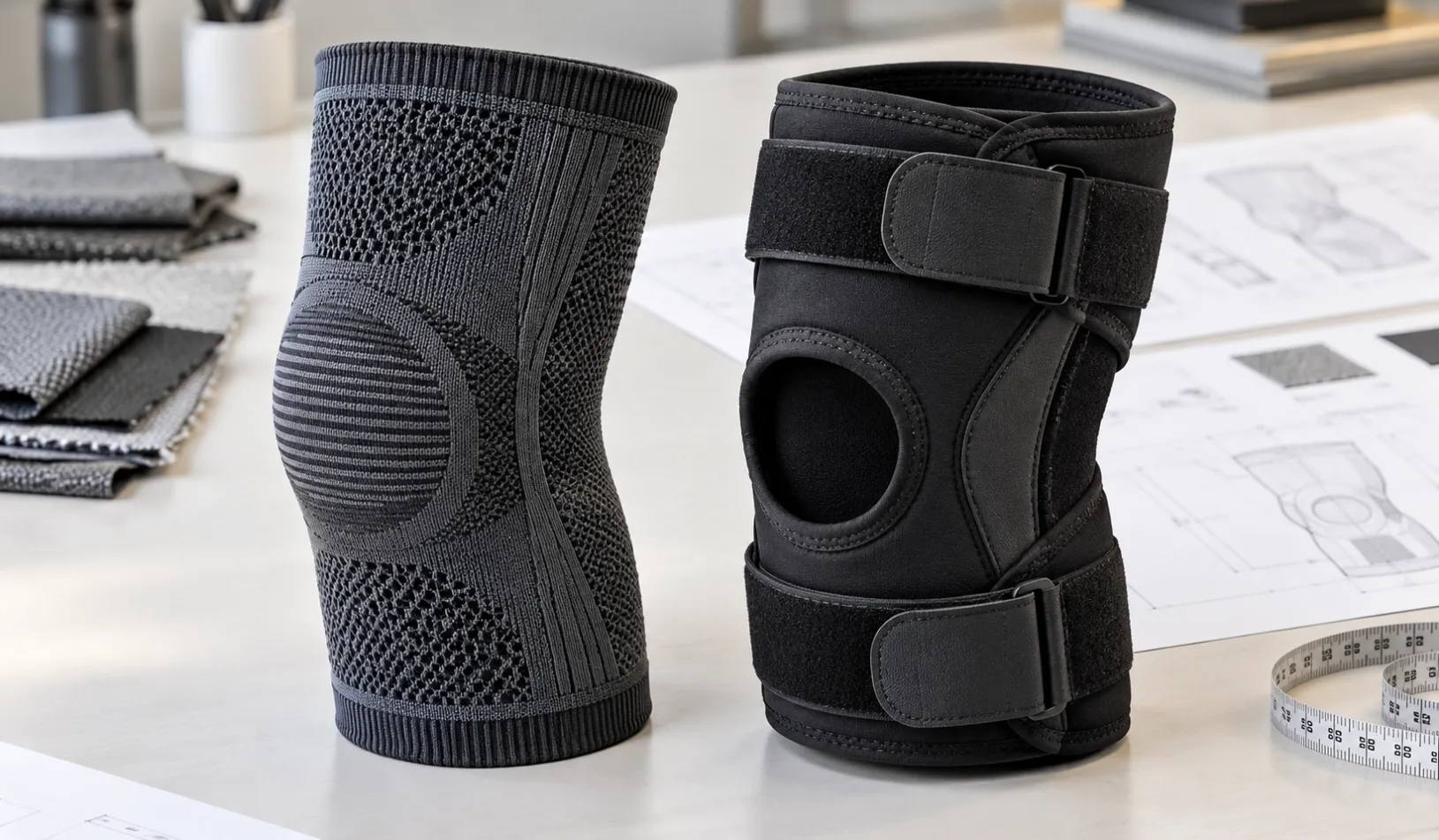
Knitted knee supports are typically made from elastic yarn combinations such as nylon, polyester and elastane.
Engineered knitting allows manufacturers to adjust fabric structures in different areas of the sleeve, creating options for flexibility, breathability and fit.
They are commonly considered for lightweight sports supports and everyday comfort products.
Neoprene Knee Supports
Neoprene is a synthetic rubber, commonly used in foam sheets laminated with textile layers.
It offers a substantial, close-fitting feel and tends to retain more warmth than lightweight knitted fabrics.
Neoprene constructions are often used in knee sleeves, wraparound supports and designs incorporating straps or additional structural components.
2. Knitted vs. Neoprene: Key Differences
Feature | Knitted Support | Neoprene Support |
|---|---|---|
Breathability | Generally higher with suitable knit structures | Generally lower with solid foam |
Flexibility | Elastic, body-conforming construction | Flexible but often thicker |
Warmth | Usually lighter and cooler | Greater heat retention |
Fit Development | Multiple knit zones and sizing options | Pattern cutting, shaping and adjustable designs |
Bulk | Often thinner and lighter | Often thicker |
Customization | Yarn, knitting, colors, compression structure | Foam thickness, fabric lamination, straps, panels |
Cost | Depends on yarn, complexity and volume | Depends on foam, lamination and assembly |
These are general characteristics rather than guaranteed performance differences. Finished-product design and testing remain important.
3. Which Material Fits Your Target Market?
For brands developing knee supports for running, fitness and everyday movement, lightweight knitted designs may be attractive because of their flexibility and potential breathability.
For products where warmth, substantial coverage or particular wraparound constructions are priorities, neoprene may be worth considering.
Some products combine textiles, silicone grip elements, straps or stabilizing components.
Buyers should avoid assuming that material alone determines the level of joint stability. More demanding support requirements may need additional structural features and appropriate validation.
4. What About Product Cost?
It is easy to assume that knitted supports are always cheaper than neoprene designs, but this is not necessarily true.
A basic knitted sleeve and an engineered 3D knitted support can have significantly different production costs.
Likewise, neoprene pricing depends on material quality, thickness, lamination, stitching and additional components.
Before comparing quotations, confirm that suppliers are quoting comparable specifications.
Important details include material composition, product construction, size range, grip features, packaging, MOQ and inspection requirements.
A lower quotation does not always mean a lower overall sourcing cost.
5. What Should Buyers Test Before Selecting a Material?
Before finalizing your product line, request samples based on the same intended user and application.
Evaluate:
- Comfort during knee bending and movement
- Heat and moisture management
- Fit across different leg measurements
- Cuff rolling and product slipping
- Elastic recovery or shape retention
- Washing performance and workmanship
- Production consistency against approved specifications
For private-label brands, testing more than one size is particularly important.
Document the evaluation results before approving bulk production.
6. Choosing the Right Development Partner
A good supplier should do more than recommend whichever material is already available.
They should help you understand the trade-offs between product comfort, construction, positioning and manufacturing cost.
At Aby-Tex, we specialize in functional knitted supports and compression products, supporting OEM/ODM development through yarn selection, knitting structures, sizing, sampling and production coordination.
If you are developing a lightweight knitted knee support or comparing materials for a new product line, we can help review your requirements and discuss suitable development options.
Explore our Knitted Knee Support Collection or contact Aby-Tex to discuss your next private-label project.
Related Reading
Planning a new private-label knee support? Review our Manufacturer Selection Guide and 3D Knitted Knee Support Sampling Checklist.