Jul 29, 2026Product Knowledge
How to Choose the Right Knitted Support and Compression Product
Learn how to select the right knitted supports and compression products based on application, support level, materials, fit, construction and target customers.
A support product may look simple.
A circle of knitted fabric. A stretchable sleeve. A few lines of elastic yarn.
But once it is worn, every hidden decision begins to speak.
The yarn speaks through softness.
The knitting structure speaks through support.
The sizing speaks through comfort.
And the workmanship speaks through every repeated order—or every customer complaint.
For brands, wholesalers and distributors, choosing the right product is not simply about selecting a knee sleeve, ankle support or compression sock. It is about finding the right balance between support, comfort, durability, price and market positioning.
This guide explains the essential factors buyers should consider when developing or sourcing knitted support and compression products.
1. Begin with the Intended User
The first question should not be What product do we want to sell?
It should be Who will wear it, and why?
A product designed for a runner may need breathability, flexible movement and targeted stabilization. A product intended for daily wear may need a softer hand feel and all-day comfort. A retail promotional product may need easy sizing, clear packaging and an accessible price point.
Before selecting a product, define:
- Who is the target user?
- When and where will the product be worn?
- How long will it be worn each time?
- What level of support does the user expect?
- Is the product intended for sports, daily comfort, travel or recovery?
- Will it be sold online, in retail stores or through professional channels?
A product becomes easier to develop when its purpose is clear.
Without a defined user, even a technically good product may fail to find its place in the market.
2. Understand the Difference Between Support and Compression
Support and compression are closely related, but they are not identical.
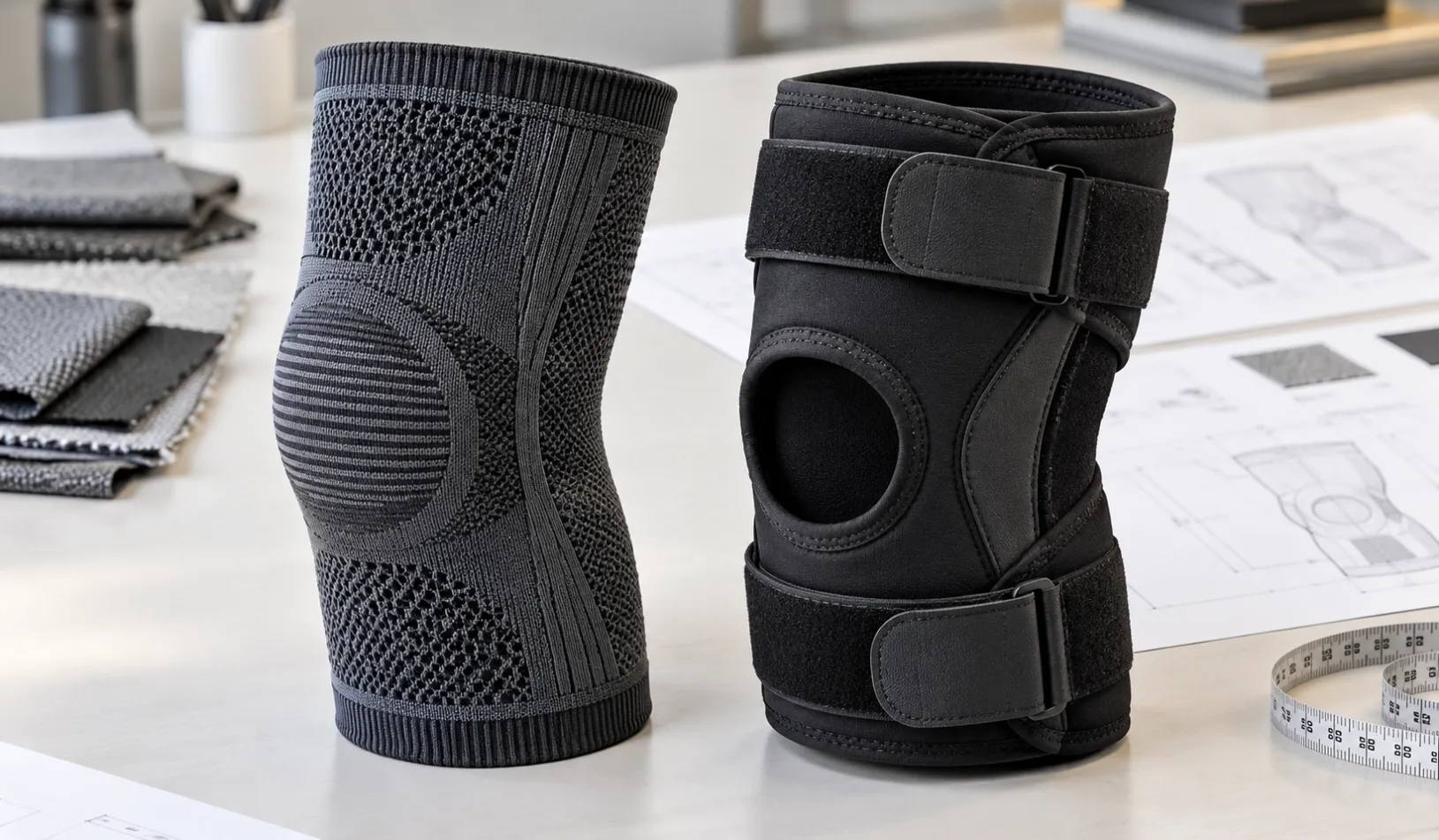
A knitted sports support is generally designed to provide stability, proprioceptive support and a secure feeling around a joint or body area. Its construction may include reinforced zones, ribbed sections, different knitting densities or additional straps.
A compression product applies controlled pressure to the body. Depending on its design, it may be developed for everyday comfort, sports performance, travel or recovery-related use.
The choice depends on the product’s core purpose.
For example:
- A knee sleeve may focus on joint stability and freedom of movement.
- An ankle sleeve may require targeted support around the ankle while remaining comfortable inside a shoe.
- A wrist support may need a compact structure that does not interfere with hand movement.
- A back support may combine elastic compression with adjustable reinforcement.
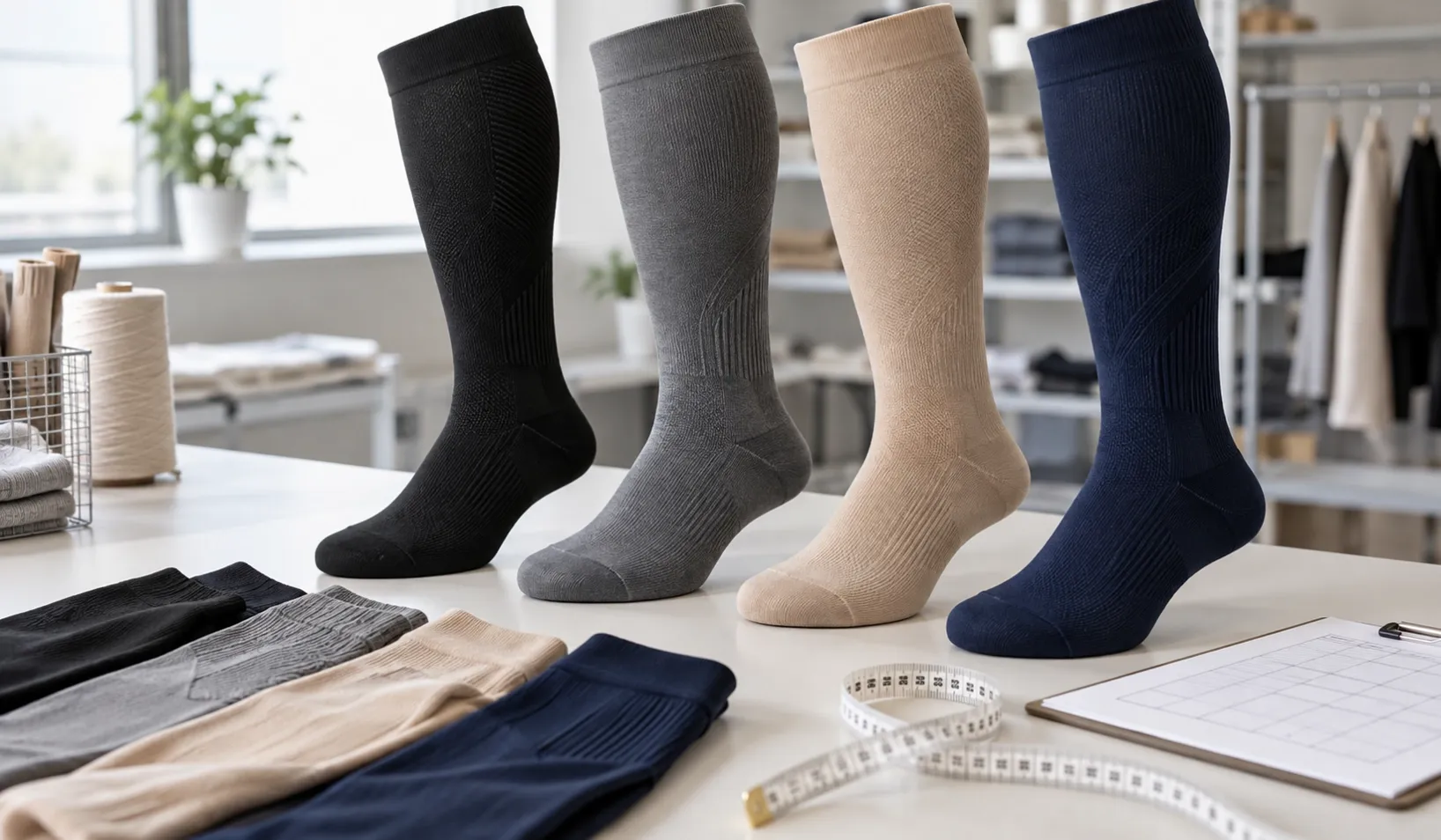
- A compression sock may require a carefully designed pressure profile from the ankle upward.
A strong product does not promise everything. It performs one clear job exceptionally well.
3. Select the Appropriate Support Level
More compression does not automatically mean a better product.
If a sleeve is too tight, it may be difficult to put on, uncomfortable during extended wear and unsuitable for the intended customer. If it is too loose, the user may not feel enough support, and the product may appear ineffective.
The appropriate support level should be selected according to:
- Target application
- User age and lifestyle
- Wearing duration
- Product structure
- Yarn recovery
- Sizing system
- Market expectations
For general retail and everyday applications, buyers often prioritize comfort and ease of use. Sports-oriented products may require firmer targeted zones without restricting natural movement.
Products with specific medical or therapeutic compression claims require additional testing, documentation and regulatory review for the intended market.
The pressure level should therefore never be treated as a decorative number on the packaging. It should be supported by the product’s actual construction and appropriate testing.
4. Pay Attention to Knitting Construction
Two products can use similar yarns and still feel entirely different.
The reason is structure.
Knitting density, yarn tension, stitch design and the placement of elastic zones all influence the final wearing experience.
A well-designed knitted support may include:
- Flexible zones for natural movement
- Reinforced zones for targeted support
- Ribbed edges to reduce slipping
- Breathable areas for heat and moisture management
- Seamless or low-seam construction for comfort
- Different compression zones within one product
The construction should follow the movement of the body.
A knee bends. An ankle rotates. A wrist flexes. A calf expands as the wearer walks.
Good knitting does not fight against these movements. It follows them quietly, offering support without becoming a burden.
5. Choose Materials According to the Product Story
Materials shape both product performance and market positioning.
Nylon and polyester yarns are commonly selected for strength, durability and moisture management. Spandex or elastane provides stretch and recovery. Other functional fibers may be introduced to create additional comfort or selling points.
Possible material directions include:
- Moisture-wicking yarns for active users
- Antibacterial yarns for freshness-related positioning
- Soft-touch fibers for daily wear
- High-recovery elastic yarns for repeated use
- Breathable structures for warm climates
- Functional yarn blends for differentiated collections
However, a fashionable material name alone does not guarantee a good product.
A premium fiber placed in a poor construction will not rescue the wearing experience. Material, knitting and fit must work together.
The best product story begins with something the wearer can actually feel.
6. Build a Practical Sizing System
Sizing is one of the most underestimated causes of complaints and returns.
One-size-fits-all may appear convenient because it reduces inventory. But bodies are not produced from a single template.
A support that fits a smaller leg may feel painfully tight on a larger calf. A sleeve designed for a broad size range may become too loose to provide meaningful support to users at the lower end.
For a more reliable sizing system, buyers should consider:
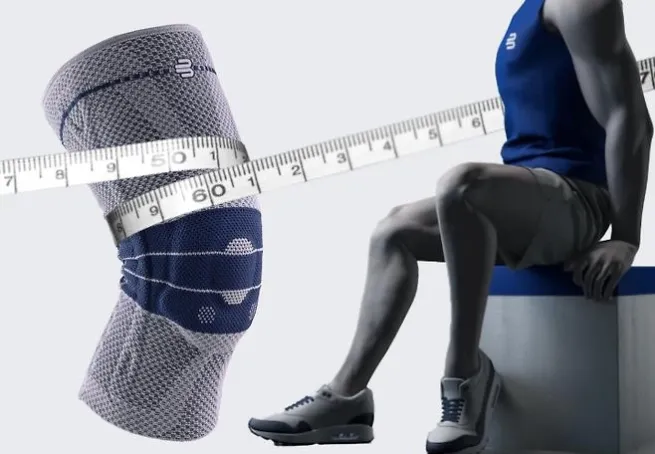
- Joint circumference
- Calf or thigh circumference
- Product length
- Fabric stretch range
- Target compression
- Differences between regional body profiles
The number of sizes should match the sales channel.
An online brand may offer several sizes and provide a detailed size chart. A wholesaler supplying many retail stores may prefer fewer SKUs, but each size still needs a realistic and clearly defined circumference range.
Fewer SKUs can simplify inventory. Better sizing protects the brand.
The goal is to find the balance between the two.
7. Evaluate Comfort Beyond the First Impression
A product can feel impressive for the first thirty seconds and uncomfortable after an hour.
That is why evaluation should go beyond touching the sample or trying it on briefly.
Buyers should consider:
- Is the product easy to put on and remove?
- Do the edges roll or dig into the skin?
- Does it slip during movement?
- Are any seams irritating?
- Does the product become excessively hot?
- Does it maintain its shape after washing?
- Is the support still consistent after repeated wear?
The true character of a support product appears over time.
A beautiful sample wins attention. A comfortable and durable product earns the reorder.
8. Match the Product to the Sales Channel
The same product may not work equally well in every market.
For e-commerce, buyers should prioritize products with visible features, clear benefits, strong photography potential and easy-to-understand sizing.
For wholesalers and distributors, product consistency, competitive pricing, stable availability and manageable SKU counts are often more important.
For retail stores, packaging must explain the product quickly. The customer may decide within seconds, so the support level, application, sizing and main benefit should be easy to understand.
For private-label brands, differentiation becomes more important. This may come from functional yarns, exclusive colors, custom knitting patterns, improved fit or a focused use case.
A product should not merely be manufactured. It should be designed for the place where it will be discovered, understood and purchased.
9. Test Before Committing to Bulk Production
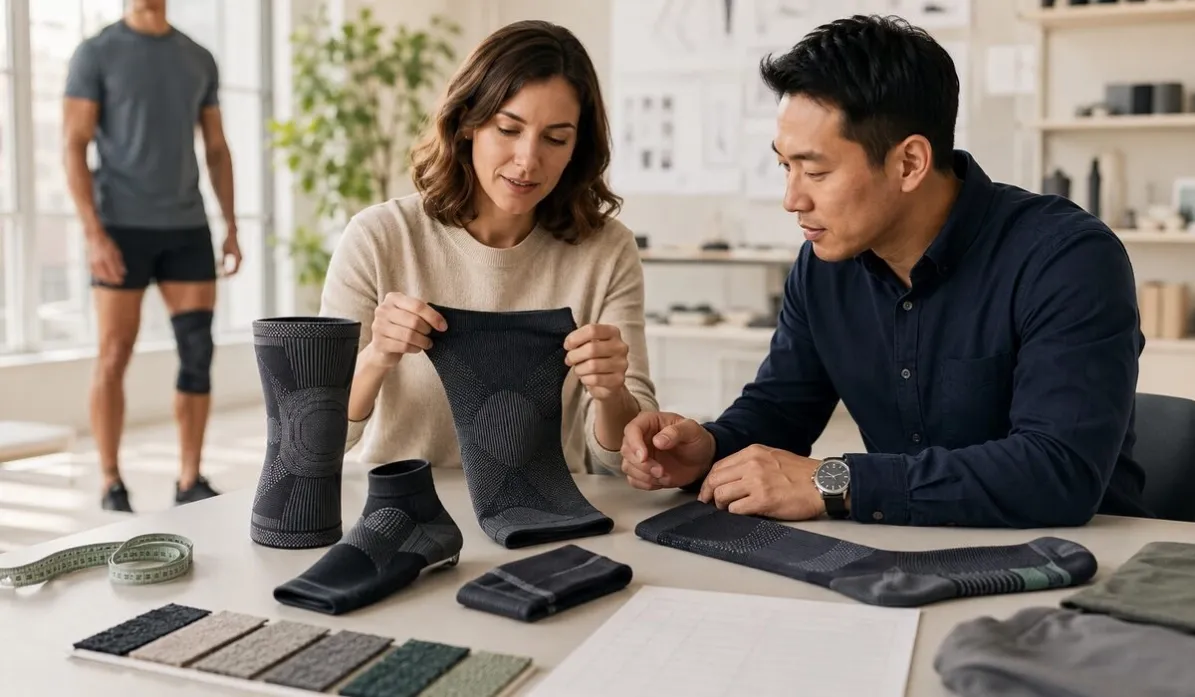
Sampling is not a ceremony. It is a decision-making process.
Before approving a product for bulk production, buyers should evaluate:
- Measurements and size tolerance
- Appearance and workmanship
- Stretch and recovery
- Fit on representative users
- Support level and comfort
- Color accuracy
- Logo quality
- Packaging information
- Washing performance
- Compliance with agreed specifications
When necessary, third-party testing can be arranged according to the product claims and destination market.
Clear feedback during sampling saves time later. Vague approval often creates expensive problems during bulk production.
The best moment to correct a product is before thousands of pieces exist.
A Better Product Begins with Better Questions
The right knitted support is not always the tightest, the most complicated or the most expensive.
It is the product that understands its wearer.
It supports without overwhelming.
It stretches without losing itself.
It performs without demanding attention.
At Aby-Tex, we help brands, wholesalers and distributors develop knitted supports and compression products based on real applications, target users and commercial requirements.
From material selection and knitting structure to sizing, sampling and packaging, our team works with customers to turn an initial idea into a product ready for the market.
Planning a new support or compression collection? Contact Aby-Tex to discuss your target customers, price range and product requirements.