Oct 20, 2026Product Knowledge
Wide-Calf Compression Socks: A Sizing Guide for Brands and Wholesalers
Learn how brands and wholesalers develop wide-calf compression socks with better sizing, fit testing and OEM specifications before bulk production.
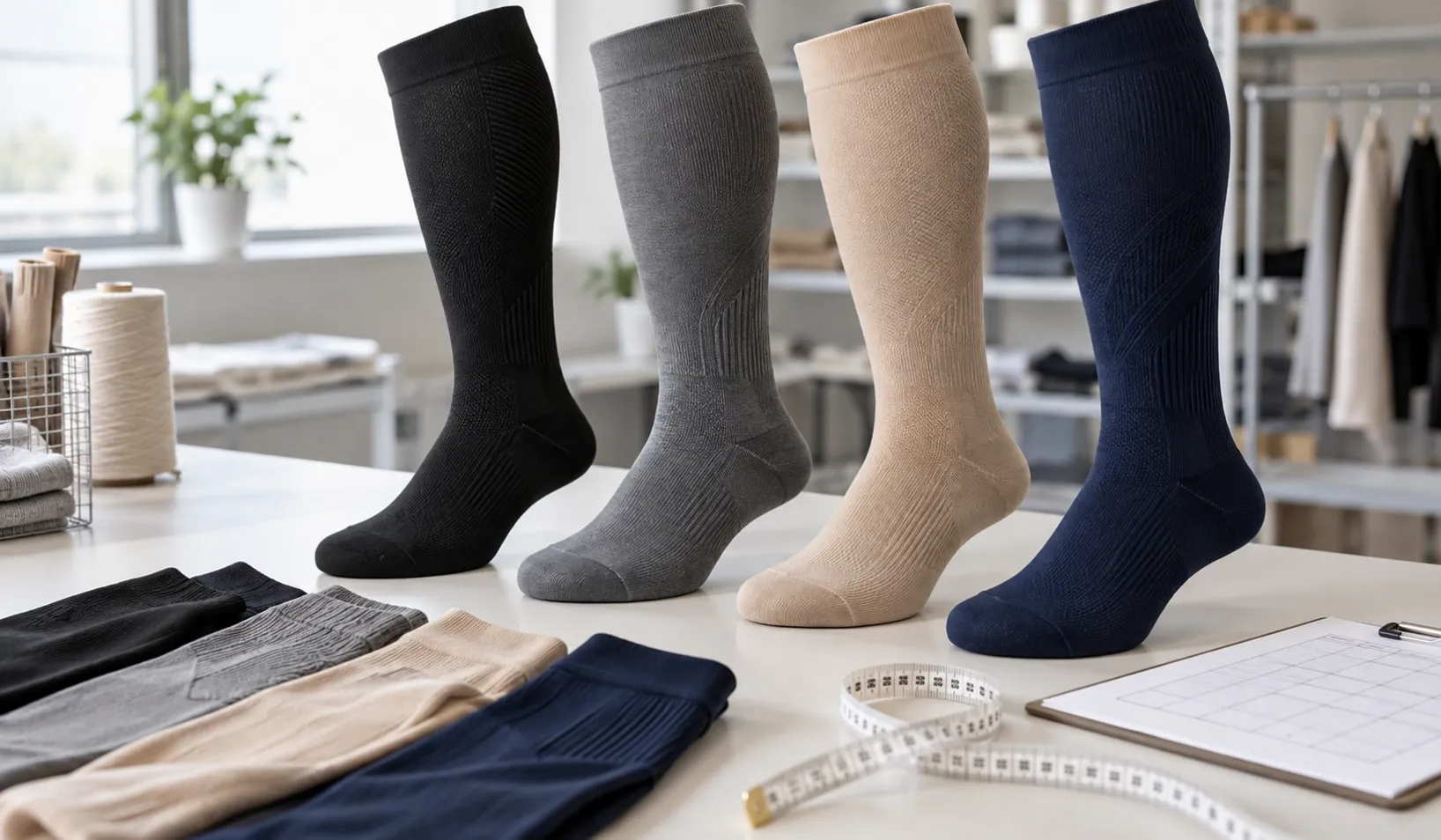
Wide-calf compression socks are a useful addition to many compression sock collections. But for brands and wholesalers, developing the right product involves more than making a standard sock wider.
A compression sock may fit the foot perfectly but feel too tight around the calf. Another may accommodate the calf while leaving too much fabric around the ankle or heel.
These fit problems can lead to customer complaints, returns and poor product reviews.
So how should buyers approach wide-calf compression sock development?
1. Why Standard Sock Sizing May Not Work
Many conventional socks are sized primarily by shoe size.
Compression socks require a more detailed approach because the fit around the ankle and calf also affects wearing comfort and the intended compression profile.
Two customers wearing the same US shoe size may have very different calf measurements.
For brands introducing wide-calf styles, simply increasing the overall sock size may create new problems:
- The foot section becomes too long.
- The ankle feels too loose.
- The top cuff rolls or feels restrictive.
- The sock length no longer matches the wearer's leg.
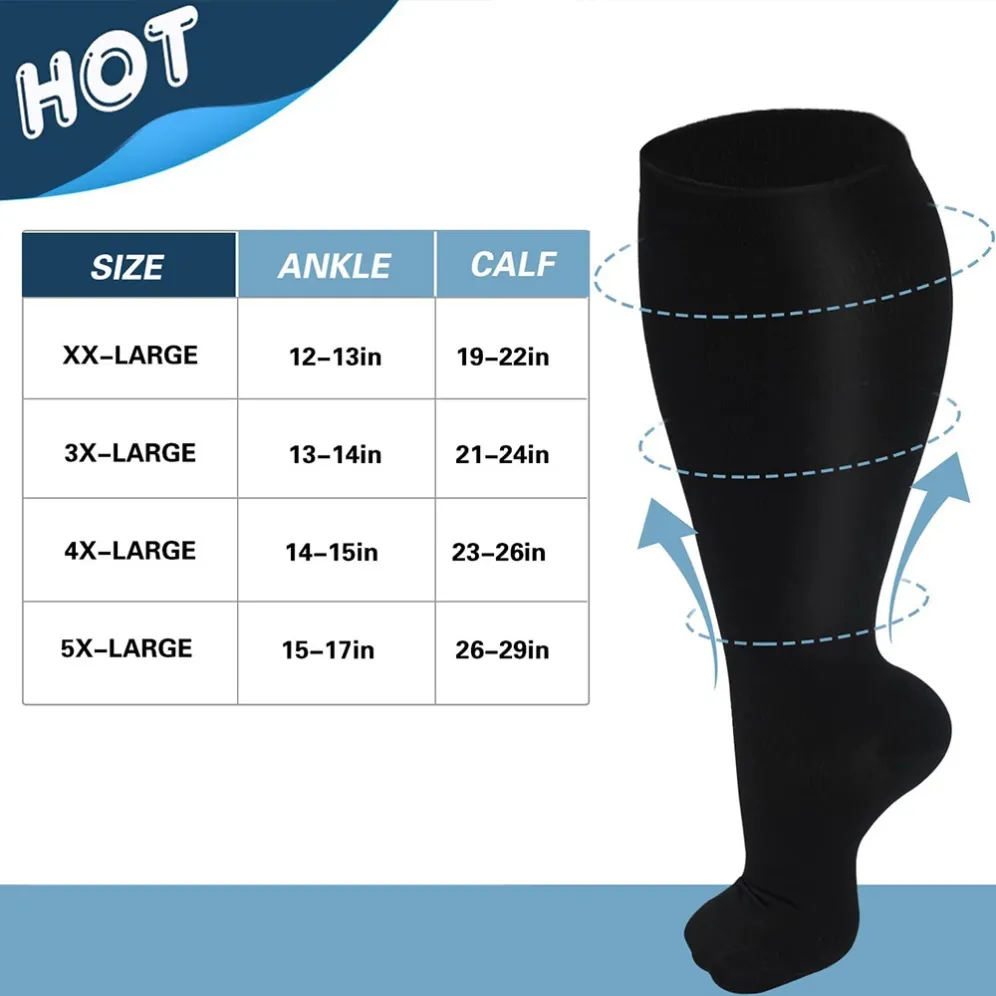
The better approach is to develop a size chart using multiple body measurements rather than relying only on S, M, L or XL labels.
2. Four Measurements Buyers Should Consider
Before requesting samples, brands should discuss four measurements with their compression sock supplier.
Measurement | Why It Matters |
|---|---|
Foot length | Helps determine foot and heel fit |
Ankle circumference | Important for compression fit |
Calf circumference | Defines the wide-calf size range |
Lower-leg length | Helps prevent incorrect sock height |
These measurements should be based on your intended customers, not an unrelated supplier's standard chart.
For example, a US retailer might want to offer a regular-calf and a wide-calf version within the same shoe-size range.
That approach may serve customers better than simply adding another oversized sock size.
3. Wide-Calf Design Is More Than Extra Stretch
A sock that stretches far enough is not automatically a well-designed wide-calf compression sock.
Buyers should review three construction details.
Yarn Recovery
Elastic yarn needs to provide suitable stretch and recovery during repeated wearing and washing.
Top Cuff Construction
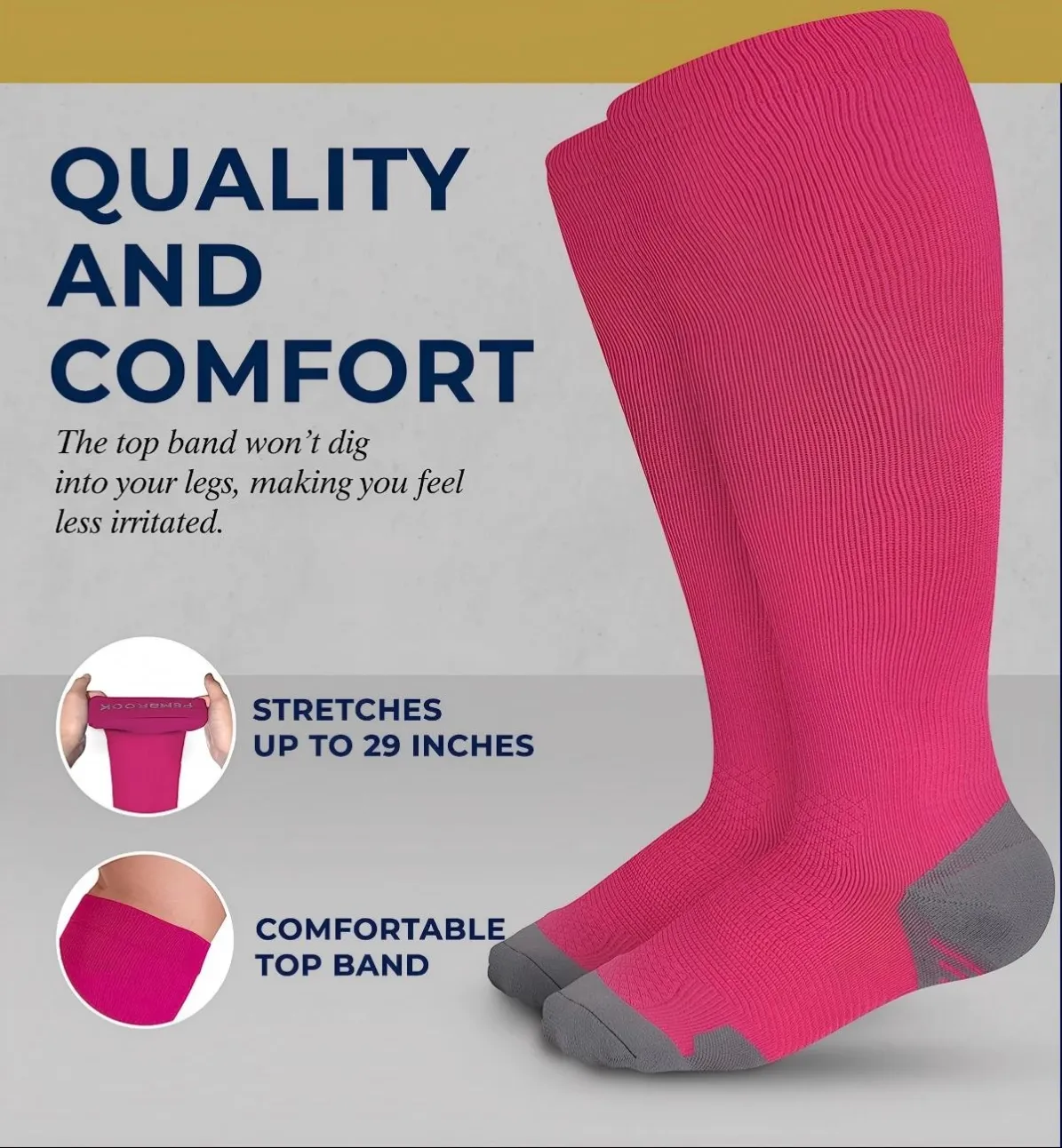
The cuff should help keep the sock in place without creating excessive localized tightness. Cuff width and elastic tension may need adjustment for different calf sizes.
Compression Distribution
Changing the calf circumference can affect the intended pressure profile. Brands specifying a graduated compression range should agree on appropriate testing across the relevant sizes.
A pressure claim should be supported by suitable finished-product testing, not assumed from the knitting design alone.
4. Test the Fit Before Approving Production
A size chart is a starting point, not final proof of fit.
Before approving a wide-calf product, ask your supplier to prepare samples covering representative sizes, including the boundaries of the proposed size ranges where practical.
During evaluation, check:
- Whether the heel stays in position
- Whether the cuff rolls or digs into the leg
- Whether the fabric wrinkles around the ankle
- Whether the sock reaches the intended height
- Whether the product is comfortable to put on and remove
Also check fit after repeated wear and laundering under agreed test conditions.
Small issues found during sampling are usually easier to address than the same issues discovered after thousands of pairs have been shipped.
5. Think About Retail Sizing Before Placing an Order
For wholesalers and private-label brands, sizing affects more than manufacturing.
It also affects product packaging, online size guides and inventory management.
Clear size charts can help customers choose products more confidently.
Before confirming your assortment, ask:
- Do we need separate regular-calf and wide-calf versions?
- Can both versions share the same foot-size range?
- How many sizes can our sales channel realistically support?
- Do the packaging and online listings explain how to measure the calf?
The goal is not to offer as many sizes as possible.
It is to offer a practical size range that suits your customers and can be maintained across repeat orders.
6. What to Send Your OEM Supplier
A useful development brief should include:
- Target market and customer profile
- Intended foot and calf measurement ranges
- Desired compression specifications
- Preferred sock length and material
- Reference samples, if available
- Estimated order quantity
- Packaging and private-label requirements
With these details, a supplier can evaluate the construction, sampling requirements and manufacturing feasibility more effectively.
Final Thoughts
Wide-calf compression socks can help brands address a fit need that standard sizing may not cover well.
But a successful product begins with the correct measurements, thoughtful construction and careful sample evaluation.
For buyers, the most important question is not simply how wide a compression sock can stretch.
It is whether the finished product provides an appropriate fit across the intended size range.
Planning a custom compression sock collection?
Aby-Tex supports OEM development discussions covering materials, sizing, knitting construction and private-label packaging.