
Applications & Solutions
Why Knitted Knee Sleeves Roll Down and How to Improve the Fit
Why do knitted knee sleeves roll down? Learn how sizing, elastic recovery, cuff design and silicone grips affect fit before OEM production.
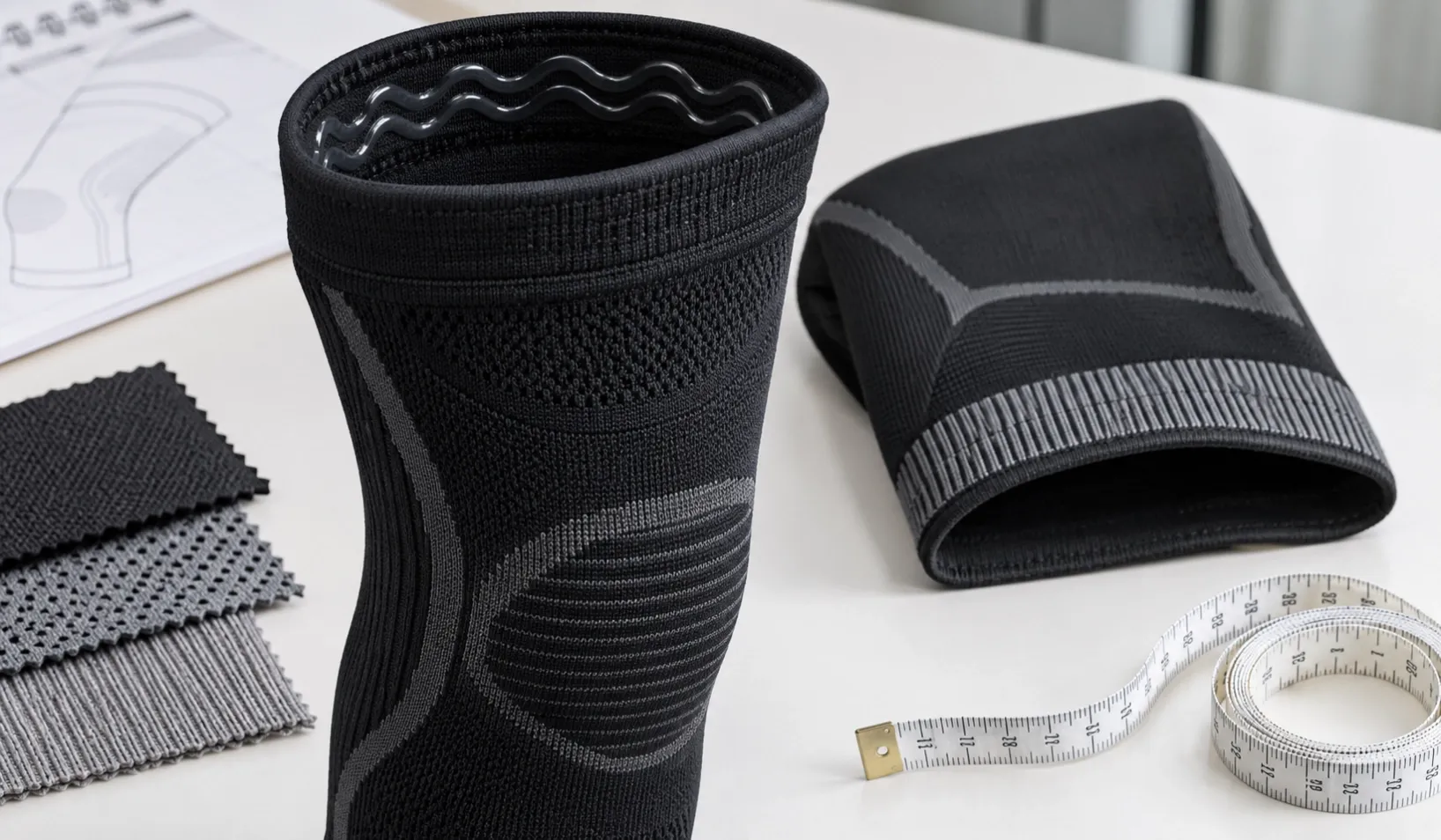
A knitted knee sleeve can pass a dimensional inspection and still cause problems when someone wears it.
The flat width is correct. The length matches the approved sample. The stitching looks clean. But after a few minutes of walking or bending, the sleeve starts moving down the leg.
For sports brands and importers, this is a product development issue worth addressing before bulk production. A knee sleeve that constantly needs readjusting is unlikely to deliver a good wearing experience, regardless of how attractive it looks in the packaging.
The obvious solution might seem to be a tighter upper cuff or an additional silicone grip. However, neither change will necessarily solve the problem.
To understand why a knitted knee sleeve slips, it helps to look at the relationship between leg shape, fabric elasticity and the way the sleeve behaves during movement.
A Correct Flat Measurement Doesn't Guarantee a Good Fit
One of the limitations of evaluating a knitted support is that the product changes shape considerably when worn.
A knee sleeve is normally measured in a relaxed, flat condition. Its actual fit depends on how the knitted fabric stretches around the leg.
Two sleeves can have identical flat measurements but feel quite different because of their yarn composition, knitting density and elastic recovery.
Body proportions matter just as much.
A wearer with a relatively narrow thigh and a larger calf may experience a different fit from someone with the opposite proportions, even when their knee circumferences are similar.
This is why a size chart based on a single knee measurement may not adequately describe the fit of every sleeve design.
For OEM development, it is useful to review the thigh circumference above the knee, the circumference below the knee and the position of the sleeve's upper and lower edges.
The measuring points need to be clearly defined in the technical specification so that sampling and production teams are working with the same references.
Simply making the entire sleeve smaller can create excessive tightness without improving its ability to stay in place.
Slipping and Rolling Are Two Different Problems
When a customer complains that a knee sleeve will not stay up, the first thing to establish is what actually happens during wear.
Does the entire sleeve gradually move toward the calf?
Or does the upper edge fold over while the main body remains approximately in position?
These problems can look similar in customer feedback, but they may require different design changes.
If the whole sleeve moves downward, the development team should examine the overall fit, leg circumference relationship, fabric tension and position of the cuffs.
If the upper edge rolls, attention may need to shift toward cuff construction, edge stiffness, local tension and the way the upper section fits the thigh.
There is also the area behind the knee to consider.
When the knee bends, excess material may gather in the knee crease. Depending on the construction, this can affect comfort and how the fabric moves around the joint.
A sleeve that feels comfortable while standing may behave differently during repeated bending.
This is one reason knitted structures are sometimes varied across different parts of the sleeve. The fabric around the back of the knee may need different flexibility from the sections above and below it.
However, changing one knitting zone can affect the fit of the complete product. Any revised construction should be evaluated as a whole.
Will a Silicone Anti-Slip Band Solve the Problem?
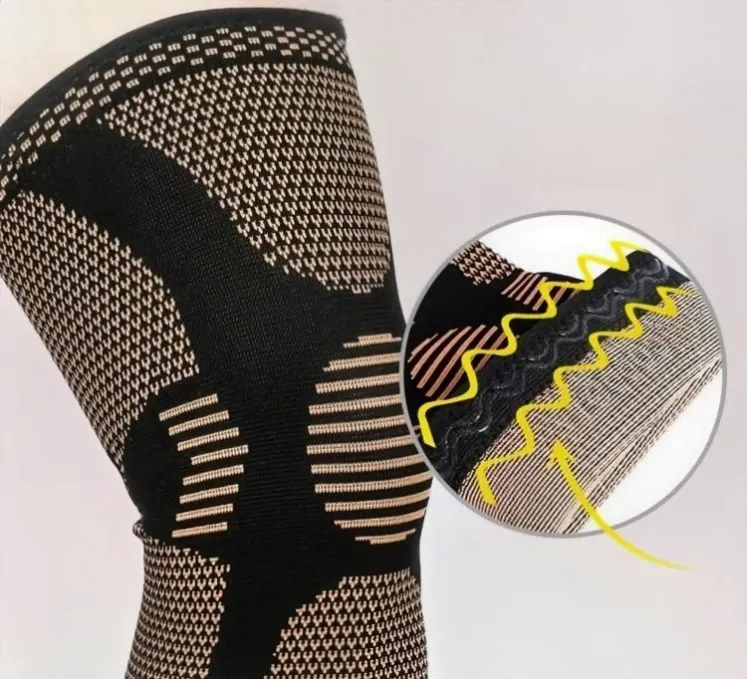
Silicone grip bands are widely used in compression garments and sports sleeves to help resist movement against the skin.
For a knitted knee sleeve, a grip feature may be placed on the inside of the upper cuff.
Different designs can use silicone lines, dots or other patterns.
A well-positioned grip can be useful, but its effectiveness depends on the surrounding construction.
If the cuff is too loose, a grip strip may not provide sufficient contact. If the cuff is too tight, additional friction may make the sleeve uncomfortable.
The intended wearing conditions also matter. A grip that contacts bare skin may behave differently when the product is worn over clothing. Perspiration and skin sensitivity should also be considered during evaluation.
There is an important distinction here for OEM buyers.
A silicone grip band at the upper cuff is not the same component as a silicone support ring positioned around the kneecap.
The two features serve different design purposes and should not be confused when reviewing suppliers' samples.
Before adding a silicone grip, determine whether the existing problem comes from insufficient position retention or from an incorrect fit.
Otherwise, the revised sample may introduce another component without addressing the original issue.
The Material May Behave Differently After Repeated Wear
Elastic recovery is another detail that deserves attention.
A knitted sleeve relies on its material and construction to maintain a suitable fit during movement.
If the fabric changes significantly after repeated stretching or laundering, the wearing experience may also change.
For buyers comparing different yarn options, the initial stretch of a sample tells only part of the story.
It is also worth checking how the material recovers.
This can become especially relevant when a factory proposes changing an elastic yarn to reduce cost or improve material availability.
Even if the new yarn produces a sleeve with the same relaxed dimensions, its stretch and recovery characteristics may not be identical.
For repeat orders, the approved yarn specification and knitting construction should therefore form part of the production requirements.
Material substitutions should be evaluated before they are accepted.
A More Useful Way to Review Samples
When a sample slips during fitting, a general comment such as "please improve the anti-slip function" gives the supplier very little information.
More specific feedback makes the next development step easier.
For example, the buyer can identify whether the problem occurs at the upper cuff, behind the knee or along the entire sleeve.
It also helps to record when the movement begins.
Does the sleeve shift during walking, after repeated knee bends or immediately after putting it on?
Does it happen with every size or mainly with wearers near the boundaries of the size chart?
Photographs taken before and after the fitting trial can help illustrate the problem.
If practical, test the original sample alongside a revised version under comparable conditions.
Changing one important construction detail at a time can also make it easier to understand whether a revision has helped.
A practical sample review should document the wearer's relevant measurements, the intended position of the sleeve, the activities performed and any movement or discomfort observed.
There is no universal fitting procedure that guarantees a non-slip knee sleeve. The evaluation should reflect the product's intended use and the brand's agreed acceptance criteria.
Testing more than one wearer and size is important, particularly when developing a complete size range.
What Should Be Confirmed Before Bulk Production?
For private-label brands, sample approval should go beyond appearance and relaxed dimensions.
The final specification should identify the approved yarn, knitting structure, finished measurements, size chart, cuff construction and any anti-slip components.
Where position retention is an important product requirement, the buyer and supplier should also agree on how it will be evaluated.
This does not have to begin with an unnecessarily complicated testing program.
The first priority is to establish a repeatable method that reflects the intended wearing conditions and allows samples to be compared consistently.
Once the design has been approved, the supplier should ensure that production follows the agreed specification.
A sample that stays in position during a fitting trial is useful evidence for that particular design and test condition. It should not be presented as proof that the sleeve will never slip on every wearer.
Better Fit Comes Before Stronger Grip
A knitted knee sleeve needs to accommodate movement while maintaining an appropriate fit around the leg.
That balance depends on more than a silicone strip or a tight upper cuff.
Leg measurements, sleeve proportions, knitted construction and elastic recovery all influence the finished product.
For brands developing a new knee support, identifying the cause of slipping during sampling is usually more useful than immediately adding more grip features.
A product that fits properly and remains comfortable during its intended activities is a stronger foundation for a reliable private-label collection.
Custom Knitted Knee Support Development With Aby-Tex
Aby-Tex supports OEM and ODM development for knitted knee supports, including material selection, knitting structures, sizing, cuff designs and private-label packaging.
Our product collection includes basic knitted sleeves, anti-slip knee support designs and adjustable knee supports.
If you are developing a knitted knee support for your brand, contact Aby-Tex with your reference sample, size requirements and product specifications.