Product Knowledge
Back Support Belts for Workwear Distributors: An OEM Sourcing Checklist
A practical OEM sourcing guide to back support belts for workwear distributors. Review materials, sizing, closures, durability, labeling and wholesale supply.
A workwear distributor receives a request from a regional customer.
The customer wants adjustable back support belts for an employee accessory program.
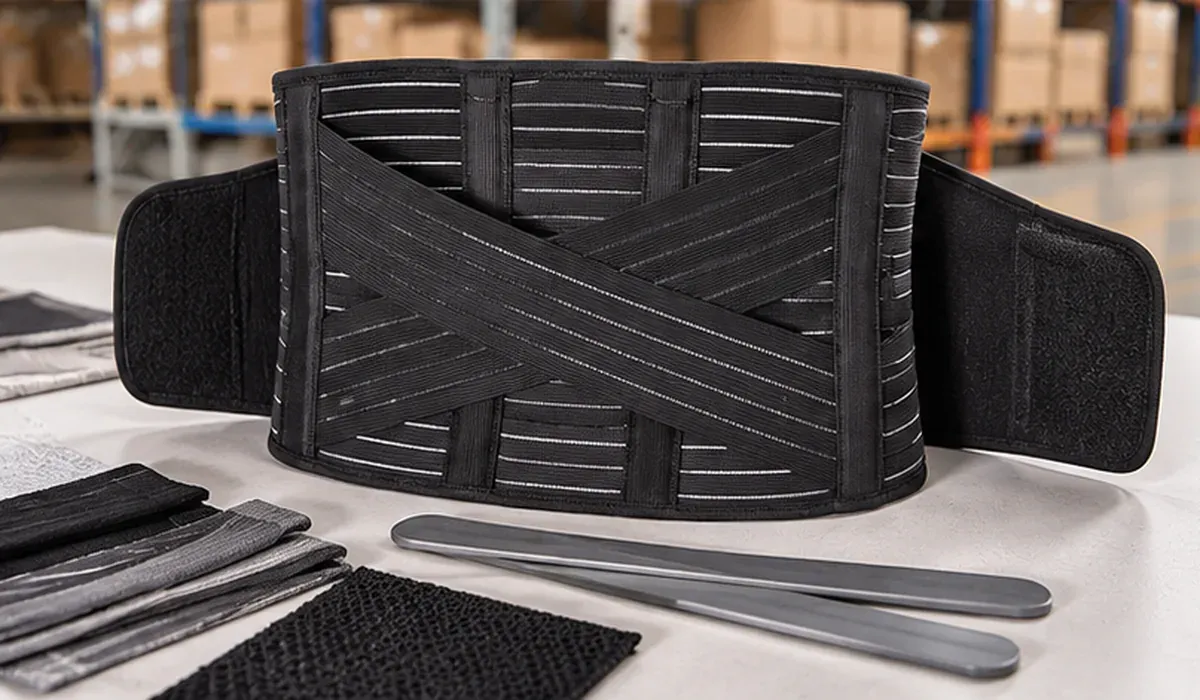
The distributor finds several products that look nearly identical: black fabric, elastic side straps, hook-and-loop fastening and flexible reinforcement panels.
Prices vary.
Which product should the distributor source?
The answer requires more than comparing photographs and asking for the lowest unit price.
For workwear wholesalers, the real purchasing questions concern fit, construction, durability, product documentation and reliable replenishment.
Understand the Intended Product Positioning
Before selecting a belt, clarify how it will be described and sold.
Some distributors include adjustable lumbar belts as optional work accessories. Others supply products intended for specific clinical applications.
These are not necessarily equivalent categories.
In the United States, OSHA does not endorse back belts as a proven means of preventing occupational back injury. NIOSH has also found insufficient evidence to recommend them as an injury-prevention measure.
A distributor should not market an ordinary back belt as certified personal protective equipment or claim that it prevents lifting injuries without an appropriate basis.
The intended use and marketing claims should be reviewed before sourcing and labeling decisions are finalized.
1. Check the Main Belt Construction
Start by evaluating the actual materials.
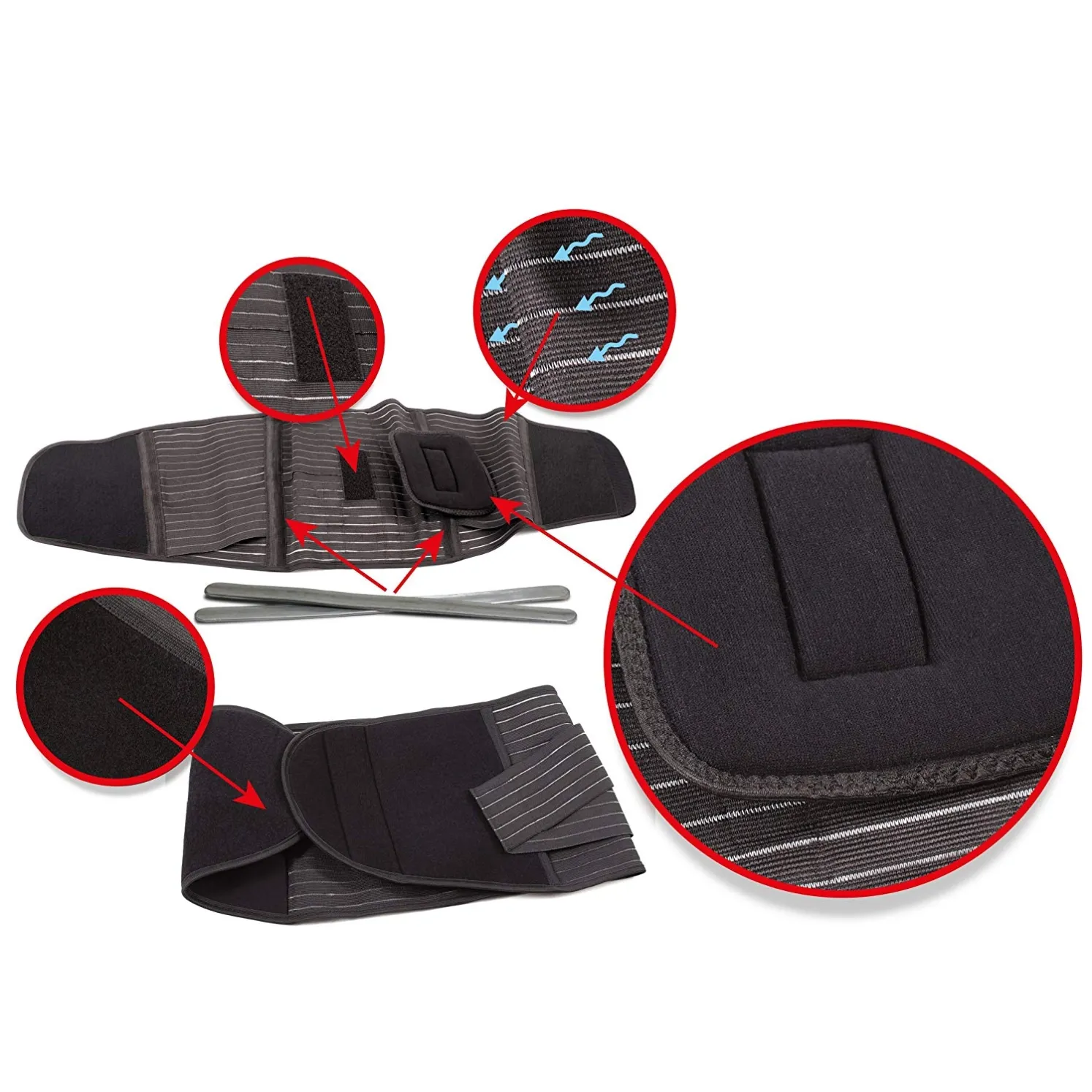
Common back support belt constructions may include elastic knitted fabric, mesh panels, adjustment straps, hook-and-loop closures and flexible reinforcement elements.
Each component creates different purchasing considerations.
For example, a mesh panel may be selected where airflow and fabric bulk matter.
Elastic straps introduce requirements for recovery and fastening performance.
Reinforcement components need to be evaluated for placement and wearer comfort.
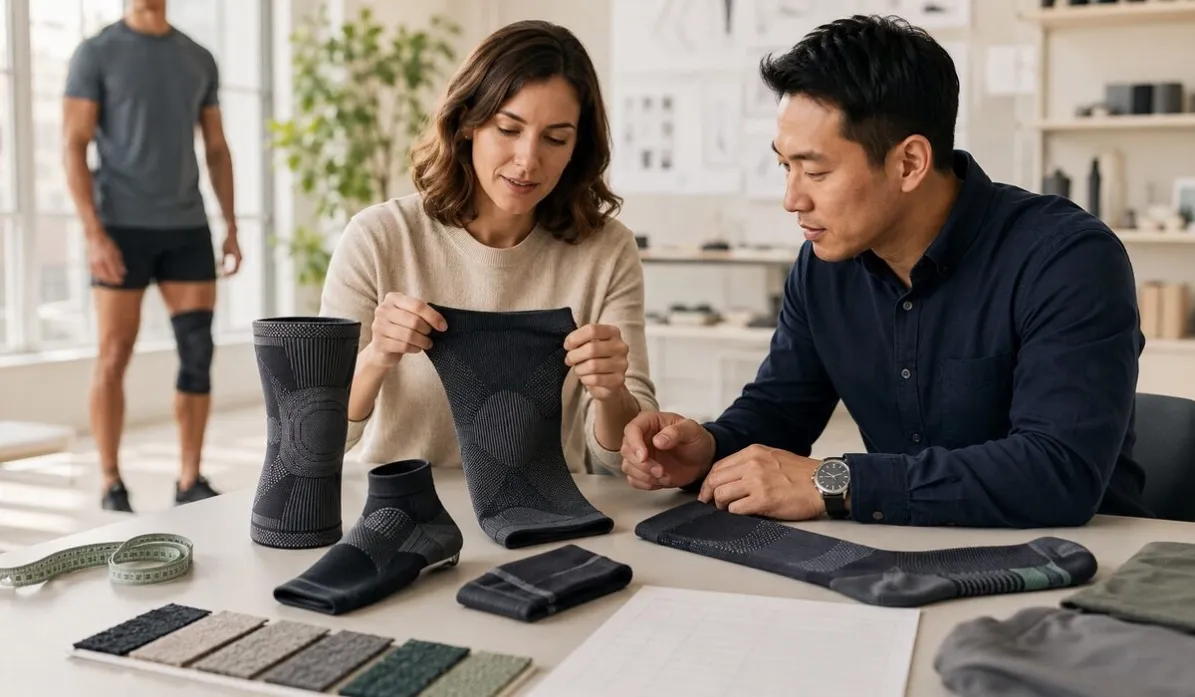
Ask for a sample showing the complete construction, including the inside of the belt.
A product photograph rarely reveals the quality of seams, binding, attachment points or fastening materials.
2. Define the Size Range for Your Buyers
Workwear distributors may supply customers with varied body measurements.
A single adjustable size is not automatically suitable for the full intended wearer population.
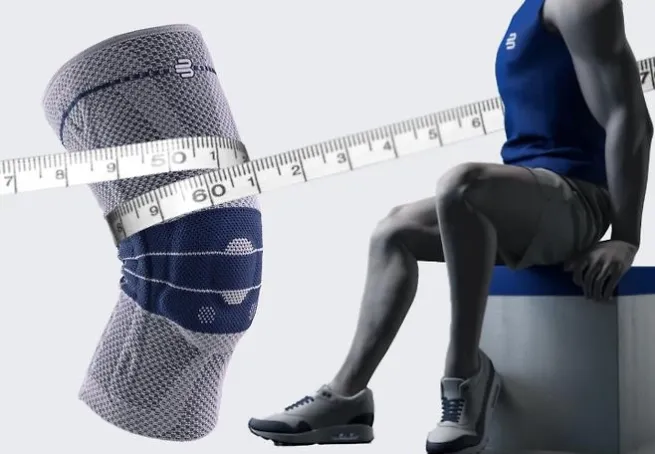
Before purchasing, confirm the measurement method used in the size chart.
For each available size, review the recommended body circumference, belt dimensions and practical adjustment range.
Also consider whether the belt will typically be worn over a uniform or other clothing.
A suitable sample evaluation can include standing, sitting and ordinary movement.
The objective is to check the intended fit and comfort, not to infer injury-prevention performance.
For private-label programs, provide a clear size guide in inches and centimeters where appropriate.
3. Evaluate Closures and Repeated-Use Durability
A belt may be opened, adjusted and fastened many times during its service life.
The fastening system deserves more attention than it often receives during quotation comparisons.
Check:
- Hook-and-loop contact area
- Strap attachment strength
- Ease of adjustment
- Edge binding and stitching
- Fabric recovery after repeated stretching
- Appearance and function after agreed laundering tests
Buyers should agree with the supplier on appropriate inspection methods and acceptance criteria.
A fastening system that performs well during an initial fitting may still require changes before bulk production.
4. Compare Finished Products, Not Just Material Descriptions
Two suppliers may both describe their belts as breathable nylon-spandex constructions.
That does not mean the products have identical properties.
The finished belt can differ in weight, thickness, elasticity, mesh structure and fastening details.
When comparing quotations, ask whether both suppliers are quoting against the same approved sample or technical specification.
A comparison sheet should cover:
Procurement Item | What to Confirm |
|---|---|
Main material | Fiber and construction specification |
Size range | Body measurements and finished dimensions |
Closure | Fastening material and adjustment range |
Reinforcement | Components, placement and assembly |
Packaging | Individual packs, labels and carton details |
Inspection | Workmanship, measurement and durability criteria |
MOQ and lead time | Requirements for the actual assortment |
This makes cost comparisons more meaningful.
5. Review Labels and Claims Before Printing
For American workwear distributors, product labeling deserves an early discussion.
Confirm which product information will appear on the retail package, instruction insert and online listing.
Depending on the intended product and applicable rules, this may include fiber information, origin labeling, size instructions, care information and relevant warnings.
Avoid statements suggesting that the belt prevents workplace injuries, guarantees safe lifting or replaces established ergonomic controls.
If a customer requests a medical or therapeutic claim, that should trigger a separate review of the product's intended use, evidence and regulatory requirements.
Marketing language should reflect what the product has actually been designed and evaluated to do.
6. Think About Replenishment Before the First Order
Workwear distributors often operate differently from direct-to-consumer brands.
A successful wholesale product needs to be available when channel customers reorder.
Consider how the supplier will maintain the approved design.
Can the same fastening components be sourced again?
What happens if a specified elastic material becomes unavailable?
Will the supplier seek approval before substituting a component?
Can the same size chart and packaging format be maintained?
These questions should be answered before the first order rather than after inventory runs low.
Ask the supplier to identify any parts with longer sourcing lead times and agree on a process for approving changes.
7. Build a Clear OEM Purchasing Brief
An effective sourcing brief should explain both the physical product and the commercial requirements.
Include:
- Intended market and distribution channel
- Reference belt or design photographs
- Required size ranges and measurement method
- Main fabric and fastening preferences
- Packaging, labeling and branding requirements
- Estimated first-order quantity
- Forecast reorder volumes, where available
- Required testing or inspection documentation
- Shipping destination and requested delivery schedule
A well-defined brief helps suppliers evaluate manufacturing feasibility and provide quotations based on comparable requirements.
It can also reveal missing information before sampling begins.
Final Thoughts
Sourcing a back support belt for a workwear distribution channel involves more than finding an attractive product at a competitive price.
Buyers need clarity about materials, fit, fastening durability, labeling and repeat-order consistency.
They also need to distinguish ordinary work accessories from products making medical or occupational injury-prevention claims.
A responsible sourcing approach creates clearer specifications and a more dependable wholesale program.
Source Adjustable Back Support Belts With Aby-Tex
Aby-Tex supports OEM and ODM development for adjustable back support products, including material selection, sizing, strap construction, private-label packaging and sourcing coordination.
For wholesale programs and custom development, contact Aby-Tex with your product specification and estimated requirements.