Oct 30, 2026Product Knowledge
Copper-Blend Wrist Supports: What OEM Buyers Should Check Before Sampling
Sourcing copper-blend wrist supports? Learn how OEM buyers evaluate yarn composition, knitted construction, fit, washing performance and product claims.
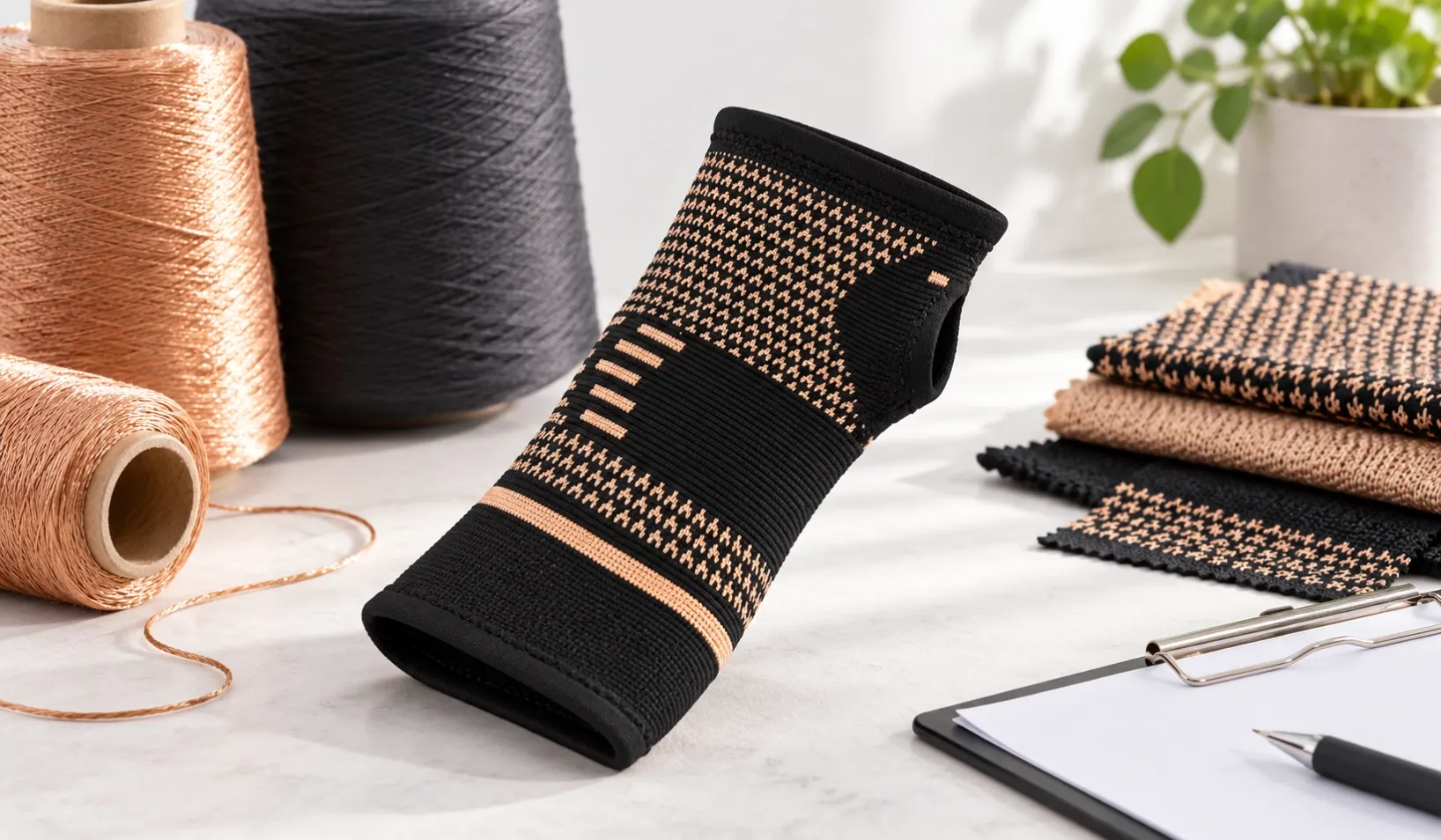
A supplier offers a wrist sleeve made with copper-containing yarn.
The sample looks almost identical to a conventional knitted wrist support. Both are black, elastic and lightweight.
The copper version costs more.
So what exactly is the buyer paying for?
For a brand developing private-label wrist supports, the answer should come from a clear material specification and finished-product evaluation, not from the word copper on the packaging.
Here is how to approach the sourcing decision.
First, Find Out What Copper-Blend Means
Copper-infused, copper-blend and copper-containing yarn are common product descriptions.
However, these terms do not automatically tell a buyer how the material is manufactured or how much copper is present in the finished product.
A copper-containing yarn may be produced using different fiber and manufacturing technologies.
The terminology alone is not a technical specification.
Ask your supplier to identify:
- The yarn manufacturer or material source, where available
- The type of copper-containing material
- The actual fiber composition
- The copper-related specification and how it is measured
- The proportion of the yarn in the finished fabric
- Any available supporting test documentation
Be particularly careful with percentage claims.
A fabric containing 60% of a copper-related nylon yarn does not necessarily contain 60% elemental copper.
These are different statements.
Brands should verify which measurement a quoted percentage represents before printing it on a product label.
Don't Judge the Material From a Swatch Alone
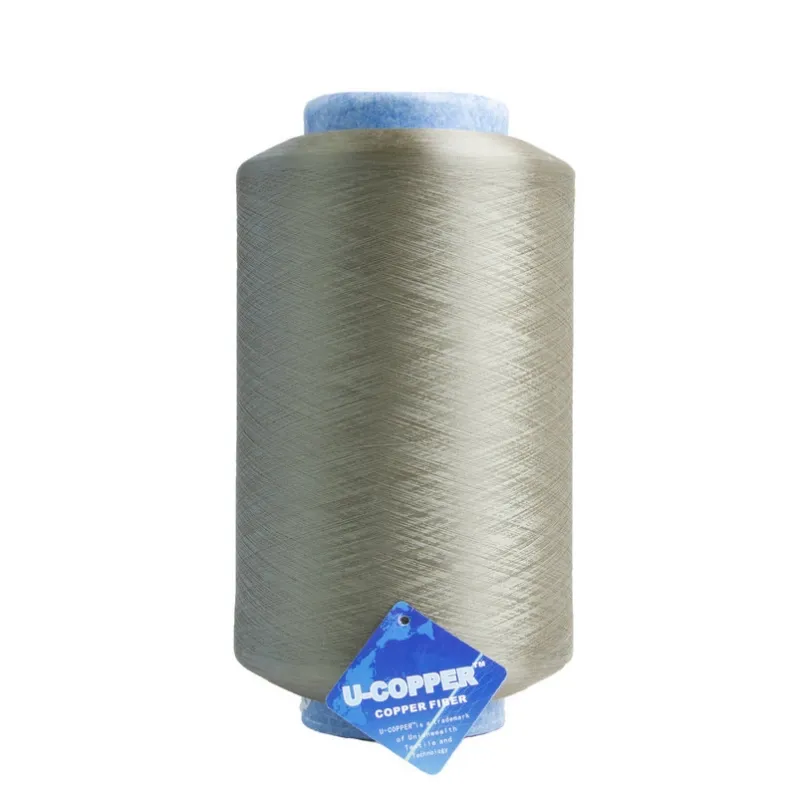
A yarn sample can show surface texture and color, but it cannot demonstrate how the finished wrist support will behave.
Material selection should consider the complete knitted construction.
For example, adding or changing a functional yarn can influence fabric thickness, elasticity, surface feel and knitting behavior.
Buyers should evaluate the proposed copper-blend sample alongside a suitable conventional construction.
The two samples should have comparable dimensions and intended fit.
Otherwise, a difference in wearing experience may come from sizing or knitting structure rather than the copper-containing material itself.
Five Questions to Ask During Sample Review
1. Does the fabric recover after stretching?
Wrist supports are repeatedly stretched during dressing and movement. Evaluate recovery against an agreed specification.
2. Does the knitted structure remain comfortable?
Check the edges, wrist coverage, thumb opening if present, and material contact points.
3. Does the yarn affect fabric appearance?
Review shade consistency, surface texture and possible changes after washing.
4. Can the construction be reproduced?
Ask whether the selected yarn and knitting specification can be maintained for repeat orders.
5. Are functional claims supported?
If antimicrobial, odor-control or other performance claims are proposed, request testing relevant to the finished product and intended claim.
The supplier should explain what the results actually demonstrate.
Copper Content Is Not Proof of Medical Benefit
This is an important point for American brands.
Copper-containing materials are sometimes promoted with claims about pain relief, circulation or recovery.
However, the presence of copper in a wrist support does not by itself establish these benefits.
The US Federal Trade Commission previously challenged unsupported medical claims made for copper-infused compression apparel.
For OEM buyers, the practical lesson is straightforward.
Separate statements about what a product contains from statements about what it can do.
A material-composition claim requires accurate material evidence.
An antimicrobial claim requires appropriate evidence for that specific claim and may involve additional regulatory considerations.
A disease-treatment or pain-relief claim requires a different and potentially much higher level of substantiation and regulatory review.
Do not assume a generic supplier test report supports every possible marketing statement.
For US product launches, the brand should review its intended claims before finalizing labels, advertisements and packaging.
Sizing Still Matters More Than a Material Story
Even an interesting functional yarn will not compensate for poor fit.
When developing a knitted wrist support, review the intended wrist circumference range, sleeve length, fabric elasticity and any thumb-opening dimensions.
Test samples across representative users.
A sleeve that feels comfortable on one wrist size may roll, shift or become restrictive on another.
This matters for private-label brands selling online because customers must select sizes without trying on the product.
A clear, usable size guide should be part of the development project.
Compare the Commercial Cost of Both Options
Suppose your supplier offers two constructions:
A standard nylon-spandex knitted wrist sleeve.
A similar design using a copper-containing yarn.
Before selecting the more expensive option, compare the full manufacturing requirements.
Buying Factor | What to Compare |
|---|---|
Yarn cost | Actual quoted yarn specifications |
Knit construction | Whether the same structure can be maintained |
Sizing | Finished dimensions and stretch behavior |
Sampling | Development and testing requirements |
MOQ | Minimums linked to materials and colors |
Claims | Documentation and regulatory review needed |
Repeat orders | Yarn availability and substitution controls |
A higher material cost may be commercially justified if customers recognize and value the differentiation.
But buyers should validate that demand rather than assume copper-related wording will automatically improve sales.
What to Include in Your OEM Inquiry
Send the supplier your intended product design, target market, wearer measurements, estimated quantities and branding requirements.
Ask for a clear material description, the relevant technical documents and a sample suitable for fit evaluation.
If you are comparing conventional and copper-blend versions, request both under comparable specifications.
This provides a better basis for a product decision than evaluating two unrelated catalog samples.
Final Thoughts
Copper-blend wrist supports can be an interesting option for brands looking to differentiate a knitted support collection.
But the commercial value of the product depends on more than the fiber name.
Material identity, fit, manufacturing consistency and truthful product claims all matter.
A responsible OEM development process should make those details clear before the buyer approves bulk production.
Explore Custom Wrist Supports With Aby-Tex
Aby-Tex offers knitted wrist support options including copper-containing yarn constructions, subject to project specifications and manufacturing feasibility.
If you are developing a private-label wrist support range, contact Aby-Tex with your material and product requirements.