Oct 21, 2026Product Knowledge
Custom Knitted Ankle Sleeves: How to Get the Fit Right Inside Shoes
Learn how brands source custom knitted ankle sleeves with better shoe fit, sizing, knit construction and OEM sample approval for sports support collections.
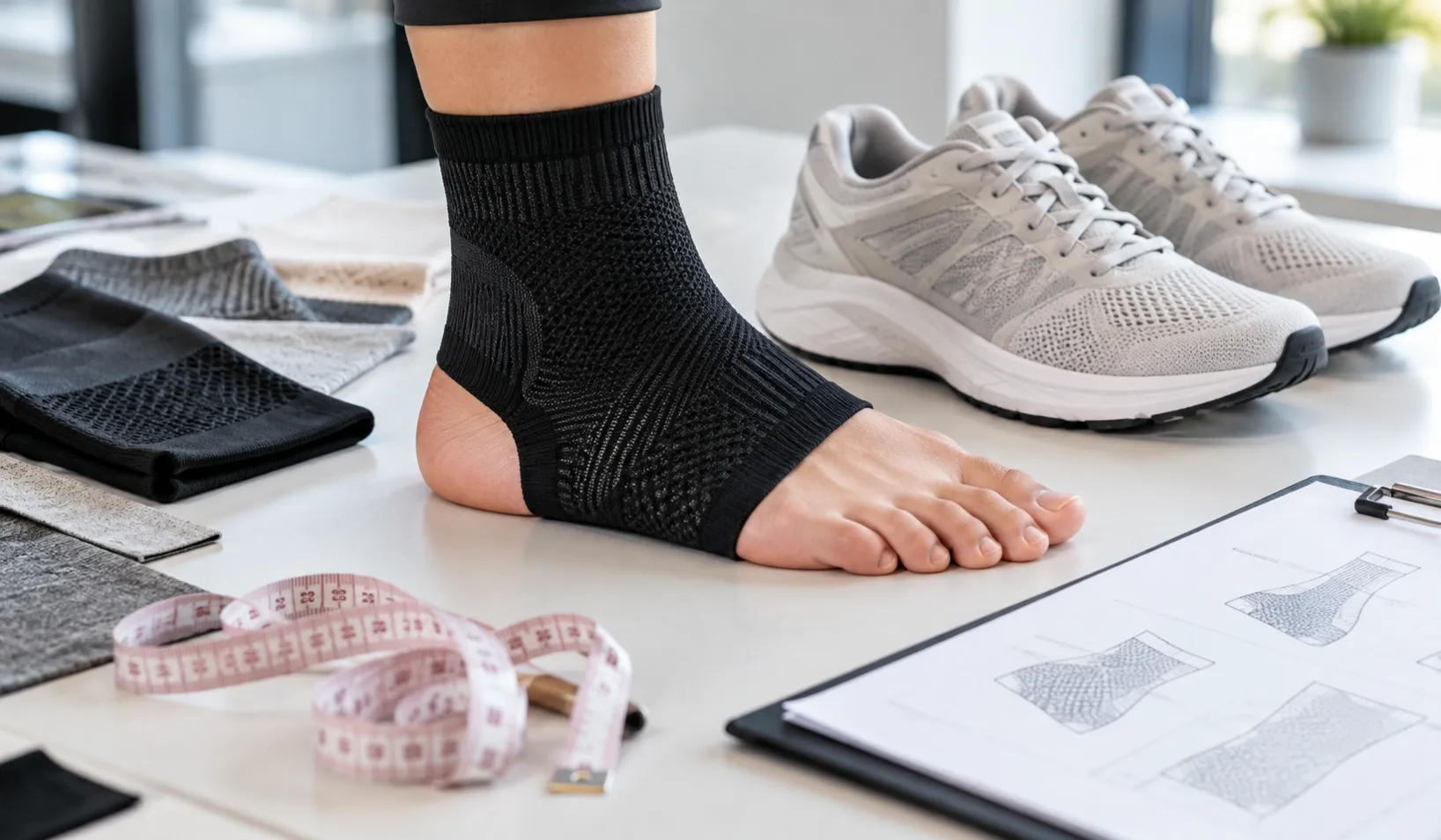
A knitted ankle sleeve may look simple on a product page. It is a small piece of elastic fabric, usually designed to fit closely around the ankle and foot.
But for sports brands and wholesalers developing private-label ankle supports, getting the fit right is not always simple.
A sample can feel comfortable when tested barefoot and become noticeably uncomfortable once the wearer puts on running shoes or training footwear.
This is one reason buyers should evaluate more than fabric elasticity when developing custom knitted ankle sleeves.
Here are the design details worth checking before approving production.
1. Start With the Intended Wearing Situation
Before discussing yarn composition or knitting patterns, ask a practical question:
How will the customer actually wear this ankle sleeve?
A sleeve intended to be worn inside a running shoe has different design priorities from a support intended for occasional everyday use.
For footwear-based applications, buyers should consider:
- The additional thickness underneath shoe collars and laces
- Comfort around the heel and ankle bones
- Whether the sleeve creates pressure points inside the shoe
- Ease of putting on and removing the product
- Fabric movement during walking and exercise
A thicker fabric is not automatically a better support.
Sometimes a lighter, well-fitting construction is more appropriate for the target application.
2. Pay Attention to the Heel and Arch Construction
The ankle is not a uniform cylinder.
Its shape changes around the heel, ankle bones and arch of the foot.
A knitted sleeve needs to accommodate these differences without excessive bunching or pulling.
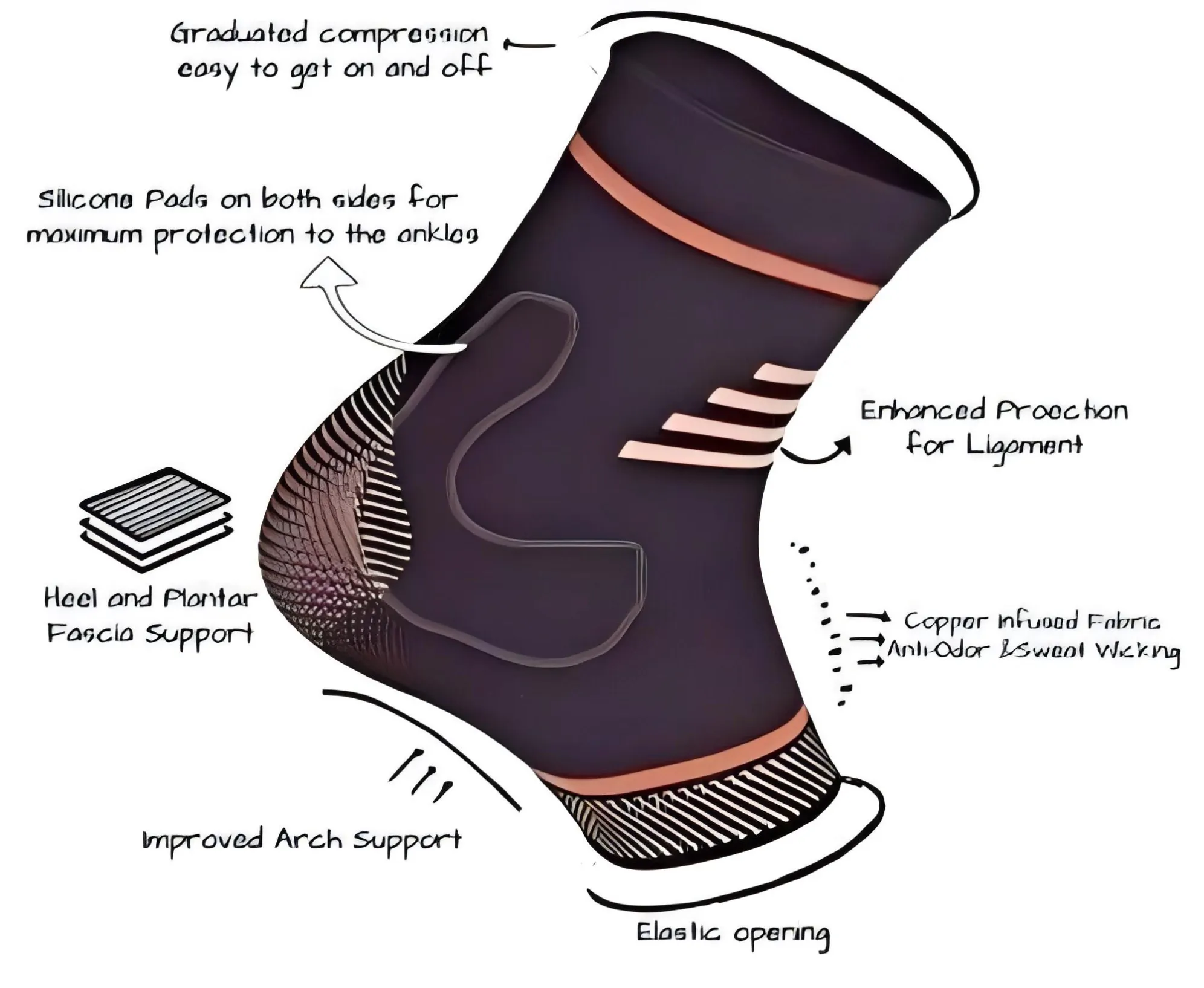
When reviewing a sample, examine the construction around three areas.
Heel Opening or Heel Coverage
If the design includes an open heel, check whether the opening stays correctly positioned during movement.
For covered-heel styles, check fabric tension and whether excess material gathers inside the shoe.
Arch Area
The knitted structure around the arch influences how the sleeve fits against the foot.
A structure that feels too restrictive or leaves excessive loose fabric may create discomfort during extended wear.
Ankle Contour
Knitting patterns and elasticity should be evaluated around the ankle bones, particularly where the sleeve may come into contact with footwear.
These details should be reviewed on actual wearers, not only on flat product measurements.
3. Understand What Knitting Zones Actually Do
Many products are marketed as 3D knitted ankle supports.
However, the phrase 3D knitting alone does not explain how a sleeve is constructed or how it performs.
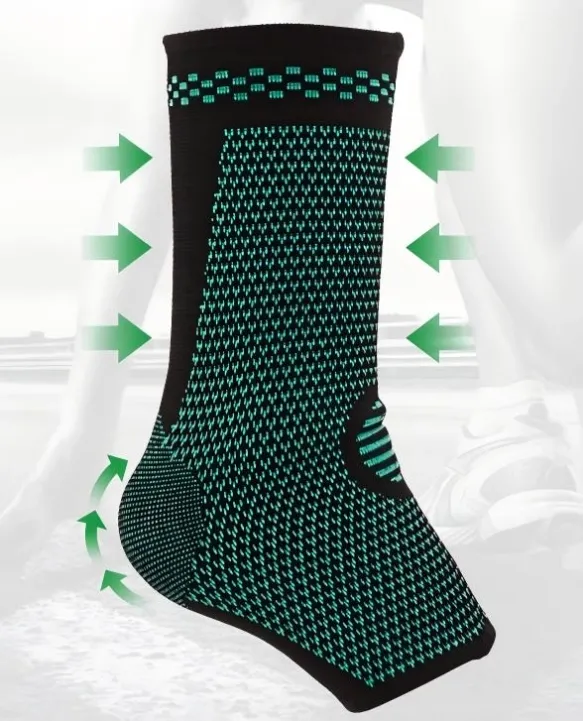
Different knitting zones may be developed to achieve different stretch, thickness and fit characteristics.
For example, a product design might use:
- More flexible knitting around areas requiring movement
- Denser structures where additional fabric stability is desired
- Elastic cuffs intended to maintain position
- Different textures for comfort and product appearance
The important point is not how many zones appear in a marketing image.
It is whether the construction matches the intended wearing experience.
Buyers should ask their supplier to explain which design details are functional and which are primarily decorative.
4. Build a Size Chart Around Foot and Ankle Measurements
One common sourcing mistake is assuming that shoe size alone is sufficient for ankle support sizing.
Two people with the same shoe size may have different ankle circumferences and instep dimensions.
For OEM development, a useful size specification may include:
Measurement | Development Purpose |
|---|---|
Ankle circumference | Evaluating fit around the joint |
Instep or midfoot circumference | Checking fit through the foot |
Heel-to-instep relationship | Reviewing the heel opening or covered-heel shape |
Sleeve length | Confirming product coverage |
Footwear compatibility | Checking bulk and pressure points inside shoes |
The exact measurement method and size boundaries should be agreed upon with the supplier.
Brands selling in the US should also ensure that their size charts are understandable to American customers.
A clear measurement guide is often more useful than simply printing S, M, L and XL on the packaging.
5. Evaluate the Sleeve During Movement
A good sample should not be approved only because it looks attractive on a table.
Fit should be evaluated during the activities for which the product is being developed.
Consider asking wear testers to:
- Put on the sleeve and check initial comfort.
- Wear it with the intended type of footwear.
- Walk and perform representative movements.
- Check whether the sleeve shifts, folds or rolls.
- Remove the product and assess any unusual pressure points.
The evaluation should include more than one size.
If the sleeve is expected to be washed regularly, the brand should also discuss fabric recovery and dimensional changes after laundering.
Fit feedback should be documented and compared against an agreed sample specification.
6. Review Material Recovery, Not Just Initial Stretch
Elasticity is important in knitted ankle supports, but initial stretch tells only part of the story.
Buyers should also evaluate how the material recovers after stretching.
Yarn composition, knitting density and finishing conditions can influence the fabric's behavior.
A sleeve that becomes noticeably loose after repeated use may not meet the intended wearing requirements.
When comparing two samples, consider their appearance and fit after repeated stretching and washing under the same conditions.
Any compression or therapeutic performance claims require additional evidence appropriate to the intended product and market.
7. Give Your Supplier a Clear OEM Development Brief
The more precisely you describe the application, the easier it becomes to evaluate suitable constructions.
Your product brief should include:
- Intended activity and target customer
- Reference design or existing sample
- Required size range
- Preferred yarn materials and fabric thickness
- Heel construction and sleeve length
- Color and private-label requirements
- Target price range and estimated quantities
- Testing and sample approval requirements
If some requirements are undecided, identify them as open development questions rather than leaving the supplier to guess.
This makes sample discussions more productive and helps prevent misunderstandings before bulk production.
Frequently Asked Questions
Can knitted ankle sleeves be customized for private-label brands?
Yes. Depending on the design and manufacturing feasibility, customization may include yarn selection, size ranges, knitting structures, colors, logos and retail packaging.
Should an ankle compression sleeve fit tightly inside a shoe?
The fit should meet the approved product specification without creating uncomfortable pressure points. Buyers should evaluate the finished sleeve with the intended footwear rather than relying on fabric stretch alone.
Can an ankle sleeve be developed in multiple sizes?
Yes. Size development should consider wearer measurements, material elasticity and representative fitting trials. The final size chart should be approved before production.
Is a knitted ankle sleeve the same as a rigid ankle brace?
No. A flexible knitted sleeve and a rigid or semi-rigid brace are different product constructions. They should not be assumed to provide equivalent stabilization or medical functions.
Final Thoughts
For brands developing knitted ankle supports, success often comes down to fit.
The most important details may not be visible in a product photograph.
Heel construction, knitting elasticity, footwear compatibility and size development all influence the finished product.
A carefully evaluated sample provides a stronger foundation for repeat production than appearance alone.
Develop Your Custom Knitted Ankle Sleeve With Aby-Tex
Aby-Tex supports OEM and ODM development for knitted sports supports, including material selection, size specifications, sampling and private-label packaging.
If you are developing a new ankle support product for your brand, contact Aby-Tex to discuss your requirements.