Applications & Solutions
How to Choose Ankle Sleeves for Basketball and Court Sports
Sourcing ankle sleeves for basketball and court sports? Compare formats, size ranges, construction and supplier checks before you place a private-label order.
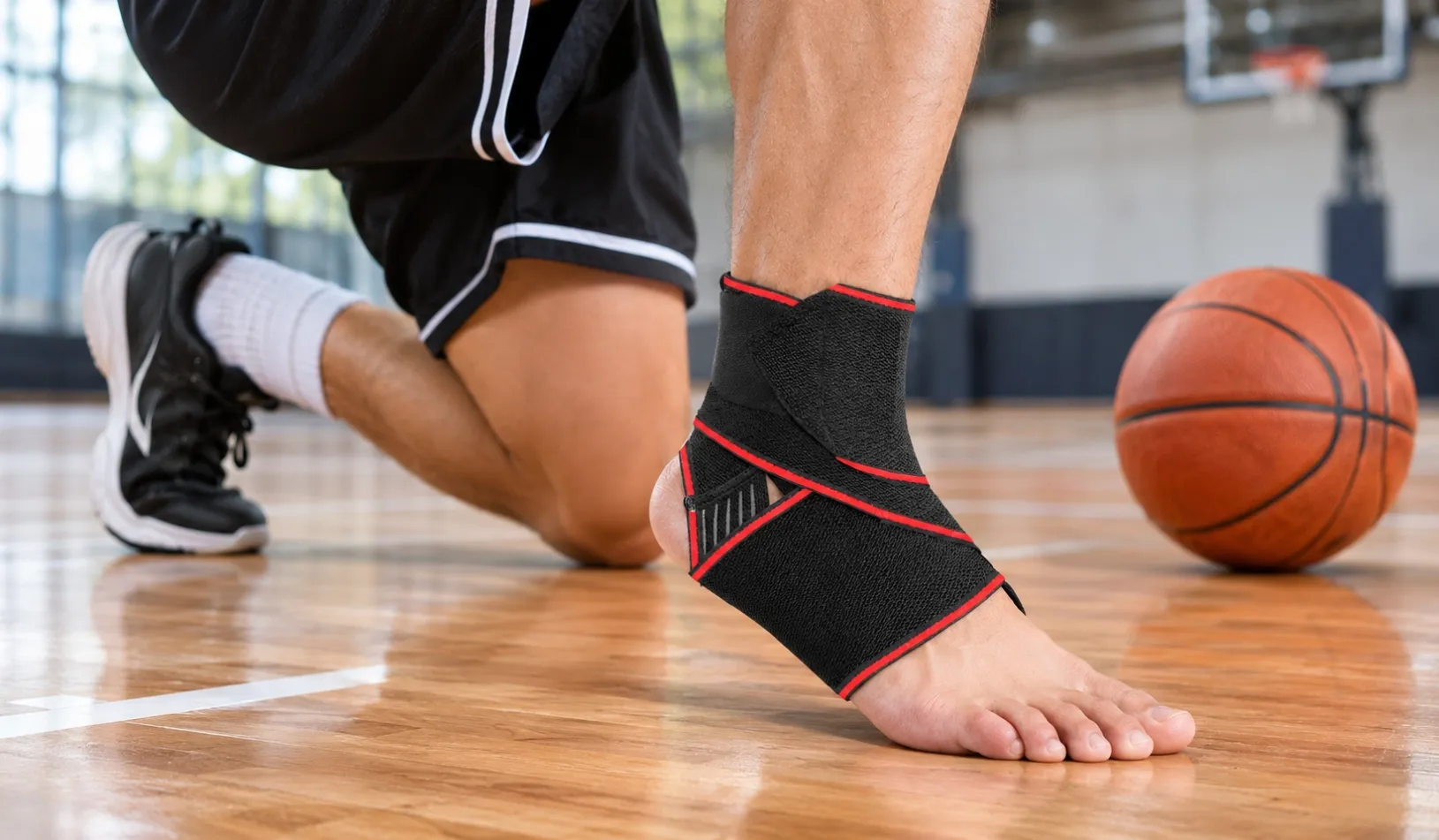
For a buyer sourcing ankle sleeves for basketball and court sports, the decision is a product-line decision, not a personal fitting decision. The questions are commercial: which formats belong in the range, which size curve covers the target market, and what can be checked on arrival.
This guide is written for private-label buyers, distributors and sports retailers. It is not medical advice: if a product is intended for a medical condition, that needs professional guidance and the relevant test reports.
- Start with the channel and the end user Basketball and court sports are not one market. The sleeve that sells through a team supplier is not necessarily the one that sells through an e-commerce sports store.
- Team and club supply: bulk orders, a defined size curve, often a club colour or logo.
- Retail and e-commerce: the listing needs format, size guide, composition and care instructions. Returns are driven by fit, so the size chart and the description have to agree with what arrives.
- Distributors serving several brands: the same base product may need different packaging, labelling and colourways for different customers.
- Format: decide the range before the first sample Three formats are usually confused. The choice is a range decision: which to carry, and which to leave out.
- Pull-on knitted sleeve: a single knitted piece, slim inside the shoe, even compression, simple sizing. Check the heel in the sample — a shaped heel holds position better than a plain tube during lateral movement.
- Adjustable support with a strap: one product serving wearers who want different levels of snugness, which can reduce the number of SKUs to carry. Ask how the strap fastens and whether it adds bulk inside the shoe.
- A brace or taping: a different category, usually bulkier and sold for a different purpose. Do not list it as a substitute for a knitted sleeve without being clear about the difference. If the range already includes knee and calf sleeves, an ankle sleeve fills the gap at the foot.
- Sizing: plan the size curve, not a single size A wrong size is a returns problem, not only a comfort problem — too loose and the sleeve slides and bunches; too tight and it cuts in and restricts movement. Check that the size chart is based on measurements, not only S/M/L labels: ankle circumference above the ankle bone, foot circumference across the arch, and shoe size and sock thickness, since the sleeve must fit inside the shoe the end user actually plays in. Ask how many sizes the supplier offers, whether the size curve covers the target market, and how the sizes are graded. Trial a fitting sample in each size on court, with game socks and game shoes. A sleeve that fits in the showroom can still slip after ten minutes of cuts and jumps.
- Compression: specify it, then verify it Ankle sleeves are usually described by feel rather than by a single number, which makes them hard to specify in a purchase order. Two questions matter more than any headline claim: is the compression targeted — firmer where the design intends it, lighter where the foot needs to flex — and has the stated level been tested?
- Light: the starting point for everyday wear and light training, and the easiest specification to hold across sizes.
- Moderate: the range most often used for sports products — a clearly noticeable hold without the difficulty of putting on a firm, specialist product.
- Firm: only with a clear reason and clear labelling. Do not make the firmest option the default for a general sports line. Ask for the test method and report behind any compression claim. Do not put a specific pressure value or functional benefit in a listing unless the supplier can document it for that exact product.
- Fabric and construction: the checks that belong in QC Knitted ankle sleeves are usually a blend — a main yarn for structure and an elastic yarn for stretch and recovery. The sample checks are the same checks that should be written into the order's QC criteria: breathability and moisture handling, with a composition statement behind any material claim; knit zones and a shaped heel that hold position during lateral movement; flat seams and a smooth inner surface; a top edge that grips without digging in; and durability — wash the sample several times and check whether compression, shape and top edge hold up. A sleeve that loses its hold after a few washes will generate returns, and the wash test is cheap before an order, expensive after one.
- What to ask an OEM supplier before the first order
A short checklist. It does not state Aby-Tex's MOQ, price or lead time, which must be confirmed for the specific order.
- What sizes and size ranges can you supply, and is the size chart based on real measurements?
- What yarn blend and knit construction is used, and can you provide a composition statement?
- Can you supply a fitting sample in each size, and what is the sampling process?
- What customisation is available: colours, logo, packaging and labelling — and does a knitted-in logo change the construction?
- How is quality controlled — and what happens if a batch does not meet the agreed fit or compression specification?
- What are the care instructions, and how many wash cycles is the product expected to withstand?
Pricing for a custom sleeve depends on the same factors as other knitted supports — yarn, construction, size range and order quantity. For a fuller picture of how those factors affect a quotation, see Custom Ankle Support Sleeve Pricing: What Really Affects Your OEM Quotation?