Oct 24, 2026Manufacturing & Capabilities
How to Choose a Custom Compression Sock Manufacturer: A Sourcing Guide for North American Brands
Compare custom compression sock manufacturers on pressure, yarn, sizing, samples, OEM options, packaging, and repeat-order quality for US and Canadian brands.
Choose a custom compression sock manufacturer by checking whether it can turn your requirements into measurable specifications, produce samples you can evaluate, and explain how those specifications will be maintained in repeat orders. Compare suppliers against the same brief: compression level, yarn, sizing, construction, customization, quality checks, and packaging.
For US and Canadian brands, an attractive sample is only the starting point. The commercial challenge is building a product that customers can size correctly, your team can describe accurately, and the supplier can reproduce when it is time to reorder.
Start with a Product Brief Before Comparing Manufacturers
Give each supplier the same requirements before requesting a quotation. Otherwise, differences in price may reflect different products, packaging, or inspection arrangements.
Your initial brief should identify:
- Intended wearer, use occasion, and sales channel.
- Proposed compression range and whether graduated compression is required.
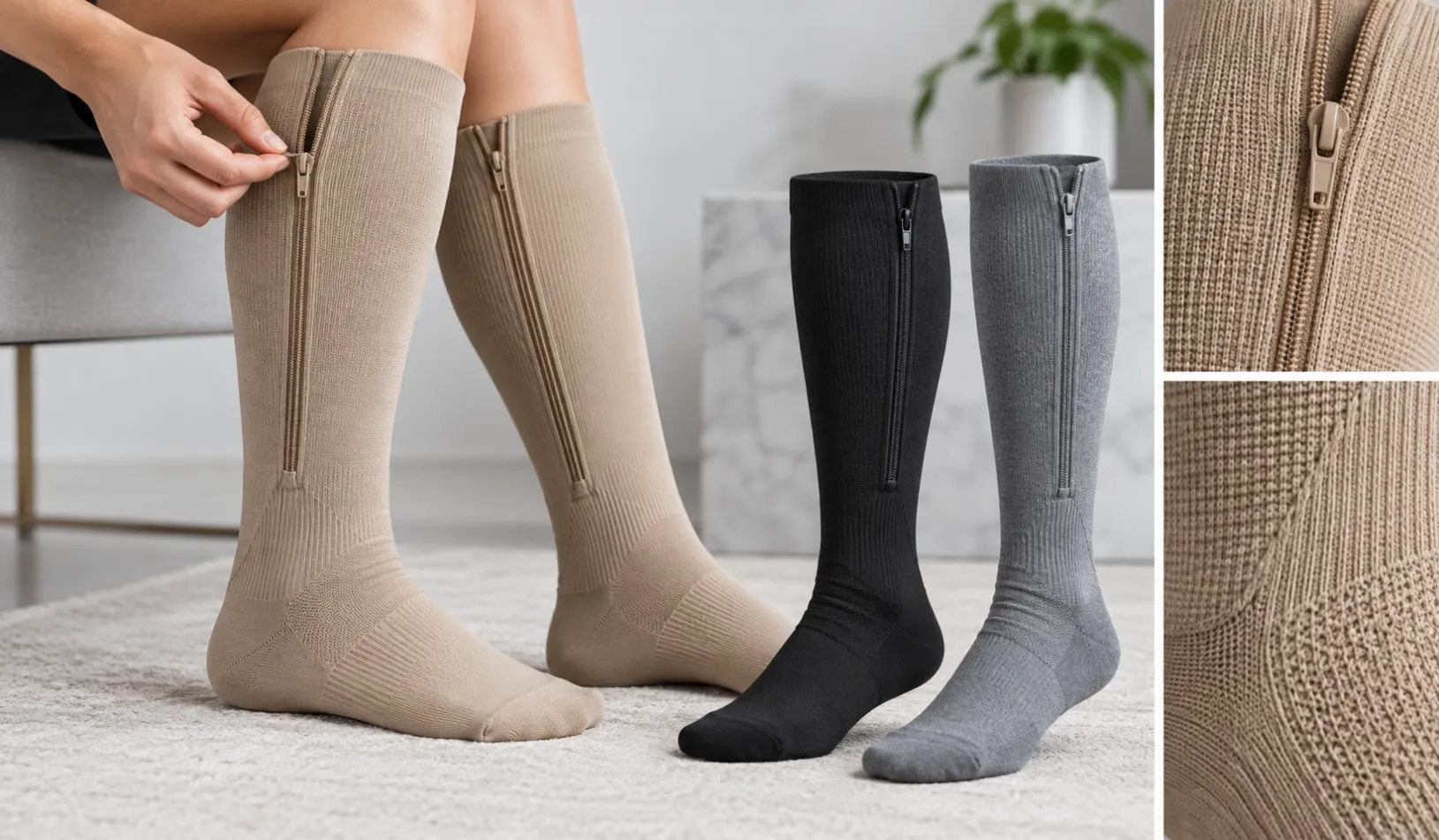
- Sock height, toe construction, cushioning, and any zipper or grip features.
- Target size range and available wearer measurements.
- Material preferences and any performance claims requiring evidence.
- Branding, retail packaging, and barcode requirements.
- Estimated quantities by size and color, plus expected reorder patterns.
- Delivery destination and required delivery date.
Distinguish a catalog product with private labeling from a construction developed around your own specifications. Suppliers may use “OEM,” “ODM,” and “private label” differently, so ask exactly what will change.
At Aby-Tex, the compression sock range includes graduated and zippered styles. Identify the closest starting construction in your inquiry, then list the differences your brand needs. A reference product is useful, but it does not replace a written specification.
How Should a Custom Compression Sock Manufacturer Verify Compression?
Ask how the proposed pressure range and graduated profile will be checked on the actual construction and size range you intend to purchase.
A number expressed in mmHg is incomplete without a measurement basis. Ask the manufacturer to explain the method, measurement locations, sample sizes, test conditions, and acceptance criteria. For a graduated product, request evidence covering the pressure profile rather than only one measurement point.
Aby-Tex’s Graduated Compression Socks product page lists a nylon/spandex construction and a 15–20 mmHg specification. Treat that listing as a starting point for discussion. Request documentation applicable to your selected product and sizes before using the pressure range on your own packaging.
Useful supplier questions include:
- Which sizes and constructions does the available documentation cover?
- How are samples selected for pressure evaluation?
- What is checked after changes to yarn, sizing, knitting, or finishing?
- If performance after washing will be claimed, what evaluation supports it?
Wear trials can reveal comfort and fit issues, but they do not establish a numerical compression range. Keep subjective feedback and measured performance as separate approval records.
Specify Yarn and Materials Beyond the Fiber Names
Confirm the full material specification and evaluate the finished sock. “Nylon and spandex” alone does not define the product you are approving.
Ask for fiber percentages, yarn specifications, construction details, and any finishes. Where specialist or functional yarns are proposed, request the exact material identity and evidence for the claims your brand wants to make. Avoid turning a yarn name into an unsupported benefit.
Compare samples against practical requirements: surface feel, thickness inside footwear, ease of putting the sock on, appearance after washing, and recovery after stretching. Record the observations against an agreed evaluation procedure.
For repeat orders, establish a substitution rule. If the approved yarn becomes unavailable, the supplier should disclose the proposed replacement and obtain approval before production. Decide which checks must be repeated; matching the original fiber percentages is not enough to demonstrate an equivalent finished product.
Build Sizing Around the Intended Wearer
Request a size chart supported by fit evaluation, with clear instructions showing customers where and how to measure.
For knee-high designs, discuss ankle circumference, calf circumference, foot fit, and leg length. A shoe-size range alone leaves unanswered questions about the leg portion of the sock.
For US and Canadian customers, make measurement instructions easy to use in inches and centimeters. Check conversions and distinguish US men’s and women’s shoe-size references wherever they appear.
Evaluate the Size Range, Not Just the Middle Size
Review the smallest and largest sizes and the boundaries between adjacent sizes. Include wearers whose measurements are near those boundaries.
Record heel position, toe space, cuff comfort, sock height, and ease of application and removal. If wide-calf sizing is required, define the intended measurements explicitly and evaluate that construction separately.
For zippered designs, also inspect zipper operation, the protective layer behind it, and comfort along the closure. Confirm that performance evaluation covers the zippered version rather than assuming results from another construction apply.
Use Sampling as a Series of Approval Decisions
Agree on what each sample stage must establish. One sample should not automatically approve fit, pressure, artwork, packaging, and production readiness.
A practical sequence is:
- Reference sample: Assess the supplier’s existing construction and identify required changes.
- Development sample: Review proposed materials, fit, features, and branding.
- Size-set review: Evaluate the intended size range against the size chart.
- Pre-production sample: Confirm the agreed construction and presentation before bulk production.
Some projects can combine stages. The important point is to document what has been approved and what remains open.
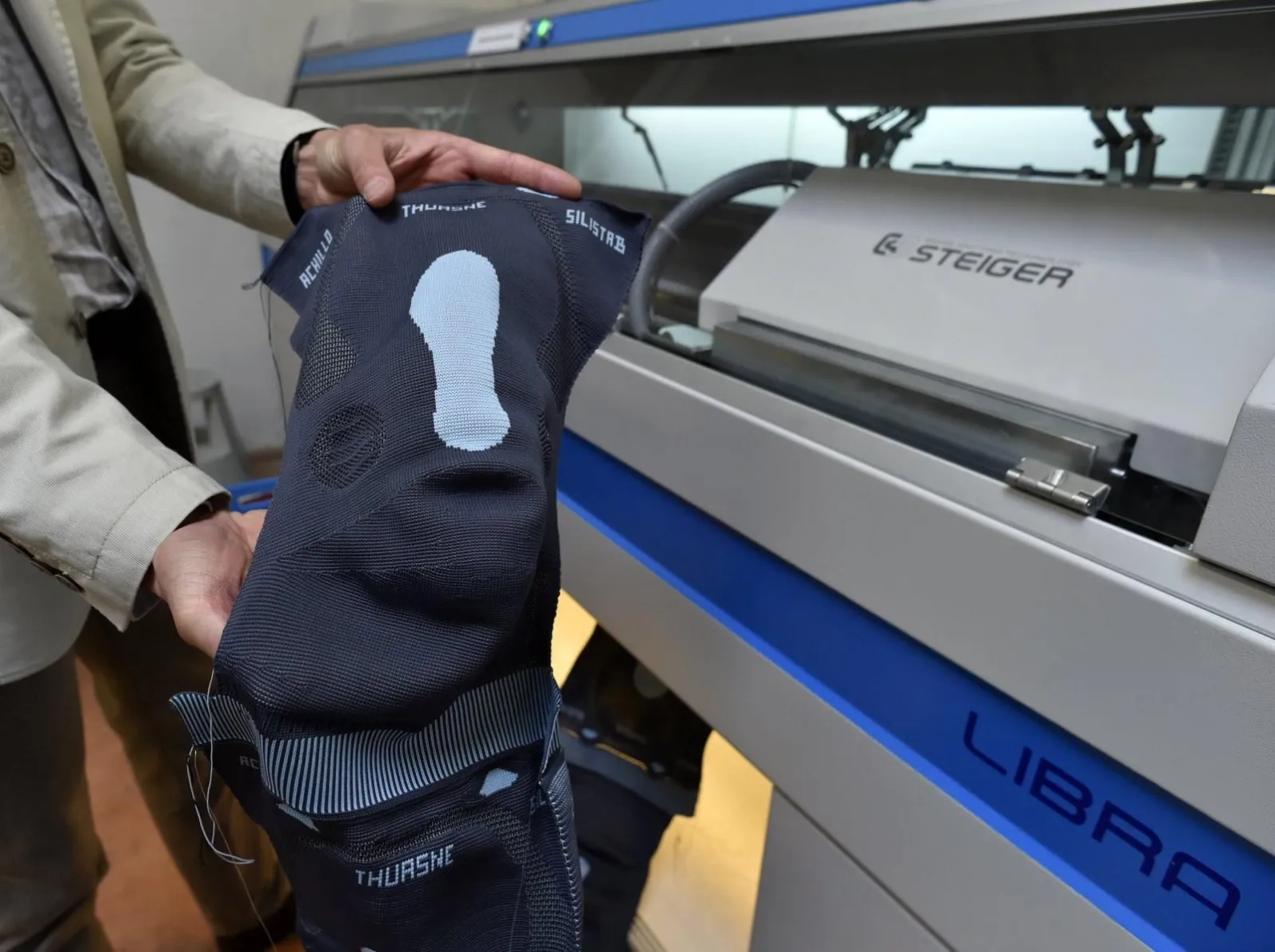
Aby-Tex’s published development process includes material selection, knit programming and sampling, internal validation, buyer review, and production scale-up. Use those stages to agree on the deliverables for your project.
Keep a sample record with a version number, photographs, measurements, comments, and approval date. Both parties should retain an approved reference sample alongside the written specification.
Ask when the sampling schedule begins, which materials must be available, and how revisions affect timing. A catalog sample and a newly developed size set should not be assumed to follow the same schedule.
Define the OEM Customization Scope Before Approving Costs
Ask the manufacturer to distinguish branding changes from construction changes. A logo adjustment and a new fit requirement create different development work.
Confirm the proposed options for:
- Knitted, printed, or applied branding.
- Colors and patterns.
- Sock height, toe style, and cushioning.
- Zippers or grip features.
- Size chart and size identification.
- Labels, inserts, retail packs, and multipacks.
Review branding on the actual sock. Check logo placement when worn and whether the design remains clear across sizes.
Request minimum order quantities by style, color, size, and packaging configuration. A total order quantity can conceal a size allocation that does not match your expected demand.
Compare quotations using the same approved specification. Clarify sample charges, testing arrangements, packaging, inspection, freight terms, and which development costs may recur if the product changes.
Plan Quality Consistency Before the First Repeat Order
Choose a supplier that can explain how production will be compared with the approved specification and how changes will be controlled.
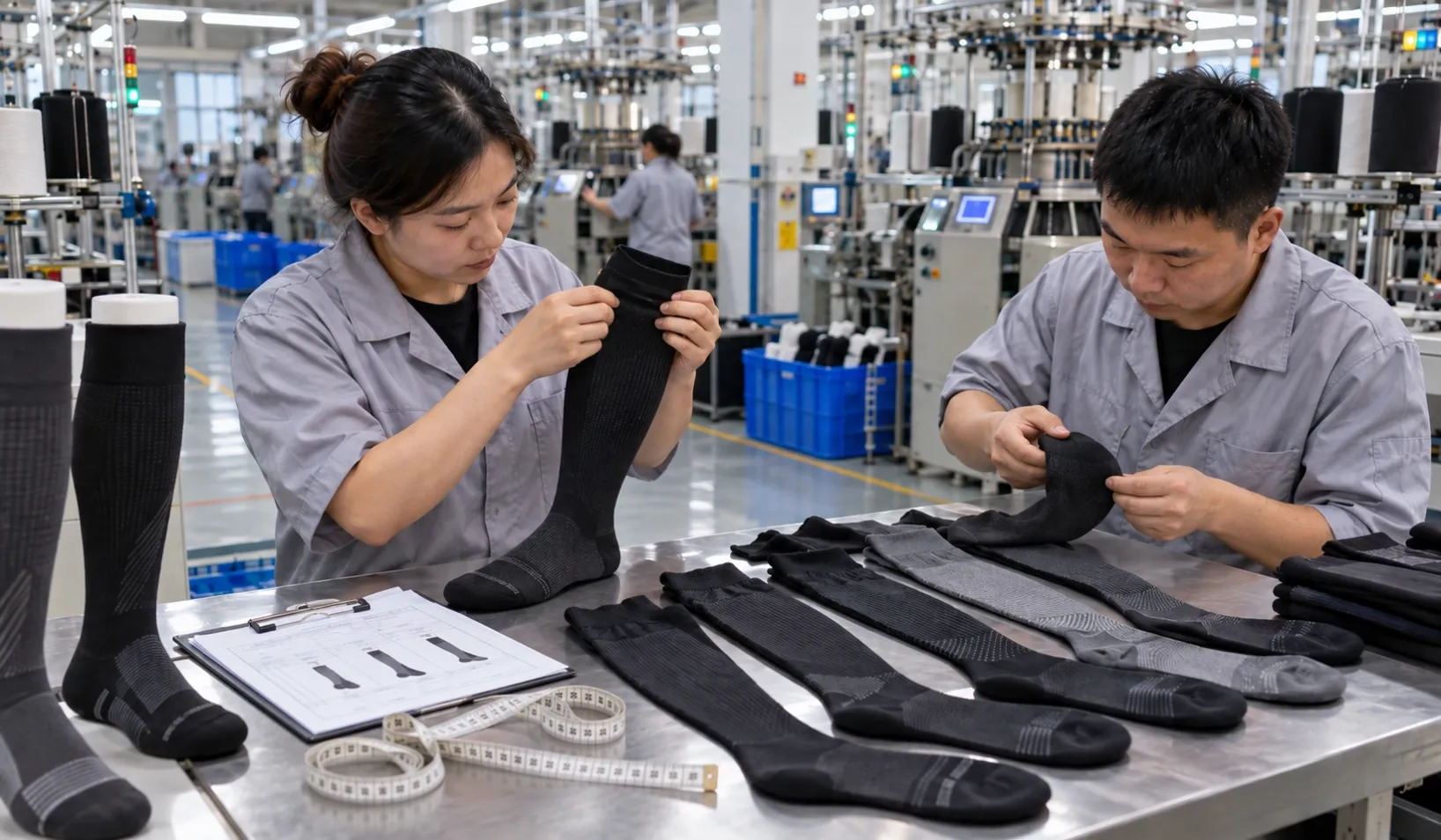
Agree on checkpoints for incoming materials, production, finished goods, and packing. Separate visual inspection from performance verification: counting defects and checking dimensions does not establish pressure performance.
Control area | What to agree with the manufacturer | Buyer consequence |
|---|---|---|
Materials | Approved yarn specification and substitution procedure | Makes material changes visible before production |
Dimensions | Measurement method and tolerances by size | Provides a consistent basis for accepting or rejecting goods |
Compression | Evaluation method, coverage, and acceptance criteria | Connects stated performance to documented evidence |
Workmanship | Defined defects and inspection procedure | Reduces disputes over what counts as acceptable |
Appearance | Approved color and branding references | Helps keep replenishment stock visually consistent |
Packing | SKU identification, quantities, and barcode checks | Reduces receiving and fulfillment errors |
For repeat orders, reference the approved specification version in the purchase order. Ask whether yarn, knitting arrangements, finishing, or packaging will change.
If a change is proposed, decide whether it requires documentation review, new samples, or renewed testing before approval. “Same as last order” is too vague when neither side has identified the reference.
Keep production-lot records and retain samples where practical. If complaints arise, being able to connect them to a particular order, size, or lot makes investigation more useful.
Treat Packaging as Part of the Product Specification
Approve packaging with the product, because customers and warehouse teams rely on it to identify the correct item.
For North American sales, prepare separate artwork requirements for each destination and channel. Confirm applicable language and labeling requirements before printing; do not assume one layout suits every US and Canadian distribution plan.
Your packaging approval should cover:
- Product name and size identification.
- Fiber information and care instructions.
- Pressure wording supported by the applicable evidence.
- Measurement and wearing guidance.
- Barcode, SKU, and pack quantity.
- Required origin and business-identification information.
- Carton markings and assortment details.
Check that the size chart on the package matches the approved fit specification and online listing. Review a physical pack for legibility and scan the barcode on the actual printed material.
If considering Aby-Tex’s zippered compression sock styles, include closure instructions in the packaging review. Do not add anti-slip or other performance wording solely because it appears in a product name; establish what supports your intended claim.
Compare Suppliers with a Purchase-Readiness Checklist
Evaluate the completeness of each supplier’s response alongside price. A lower quote may leave sampling, testing, packaging, or change-control costs unresolved.
Before committing to bulk production, confirm that you have:
- A written specification for the selected construction and size range.
- An agreed basis for evaluating compression.
- Material details and a substitution procedure.
- Documented sample approvals and unresolved issues.
- MOQ and quotation details by the relevant order configuration.
- Quality checkpoints and acceptance criteria.
- Approved retail artwork and packing instructions.
- A confirmed schedule with approval dependencies.
- A procedure for handling nonconforming goods.
- A repeat-order reference and change-approval process.
For wholesalers and importers, also check whether replenishment orders can follow demand by size. Reordering a fixed assortment may leave slow-moving sizes in stock while popular sizes sell out.
Frequently Asked Questions
What should I send before requesting custom compression sock samples?
Send your target market, intended wearer, proposed pressure range, size requirements, reference images or samples, construction preferences, branding, packaging, and estimated quantities. Clearly identify requirements that are undecided so the manufacturer can address them during development.
Can a manufacturer change the compression level of an existing design?
Ask for a feasibility review and a validation plan. Do not treat a pressure change as a labeling change. Confirm which parts of the construction need adjustment and how the revised product will be evaluated across sizes.
What determines the MOQ for private-label compression socks?
Ask for the minimums associated with the base product, custom yarn or color, branding, size allocation, and packaging. Obtain a project-specific quotation rather than assuming that one advertised MOQ applies to every configuration.
How can a brand reduce differences between the sample and repeat orders?
Keep the approved sample and specification, define measurable acceptance criteria, and require approval of material or production changes. Reference the same specification version on subsequent orders and agree on the checks needed before shipment.
Can the same product and package be used in both the United States and Canada?
Confirm the product positioning, claims, labeling, language, and sales-channel requirements for each destination before approving shared artwork. Commercially, separate packaging versions may be worth discussing even when the underlying product specification is the same.
Prepare Your Aby-Tex Sourcing Brief
A useful first inquiry gives the manufacturer enough detail to identify development questions before quoting.
Start with the Aby-Tex construction closest to your intended product, then specify your proposed compression range, wearer measurements, yarn preferences, customization, packaging, and quantities by size. Ask which requirements can use an existing design and which need further development or verification.
Send your compression sock project brief to Aby-Tex to discuss the product, sample requirements, and order plan. Make the next decision against a written specification and an agreed evaluation processtion.
Explore Custom Compression Sock Solutions
Looking for a reliable supplier for your next compression sock project?
Aby-Tex supports private-label compression socks with customization options for yarns, compression specifications, sizing, colors and packaging.