Oct 15, 2026Manufacturing & Capabilities
Zippered Compression Socks: 7 Design Checks Before Sampling
Sourcing zippered compression socks? Discover 7 design details brands should review before sampling, from zipper comfort and sizing to compression testing.
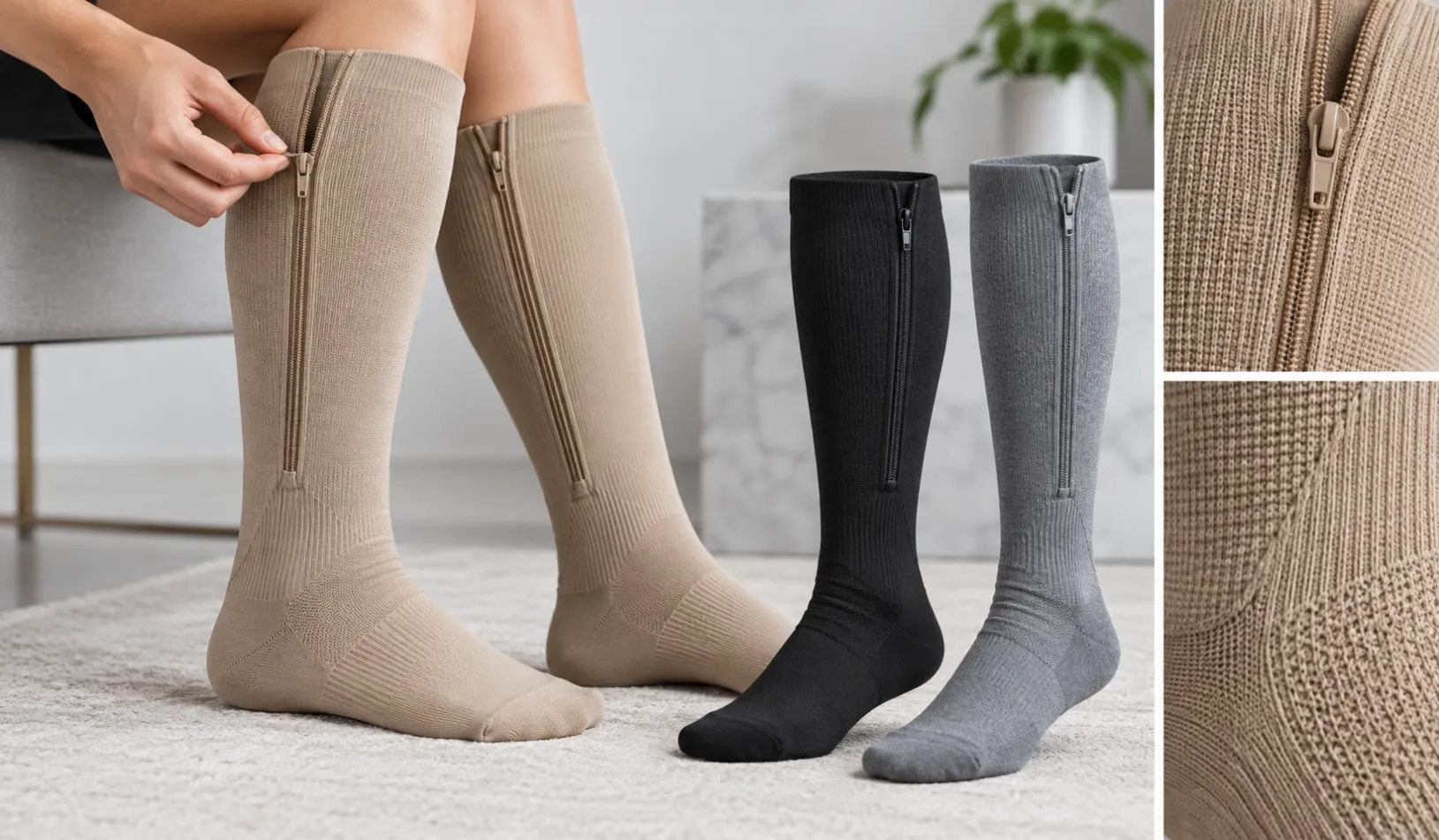
Zippered compression socks are an interesting product option for brands looking to differentiate their compression sock collections.
The side zipper may help simplify the dressing process for some users. However, adding a zipper to a compression sock is not as straightforward as it sounds.
A poorly designed zipper can affect comfort, fit and the overall wearing experience.
For importers, wholesalers and private-label brands, these seven details are worth checking before approving a sample.
1. Zipper Placement
Where should the zipper be positioned?
This is one of the first design decisions.
The zipper should be positioned to allow practical access while minimizing unnecessary friction during movement.
Buyers should evaluate whether the chosen position works across different leg shapes and sock sizes.
A zipper that works well on a small sample may behave differently on a larger calf.
Buyer tip: Request photos or samples showing the zipper fully open, partially closed and fully closed.
2. Zipper Protection and Skin Comfort
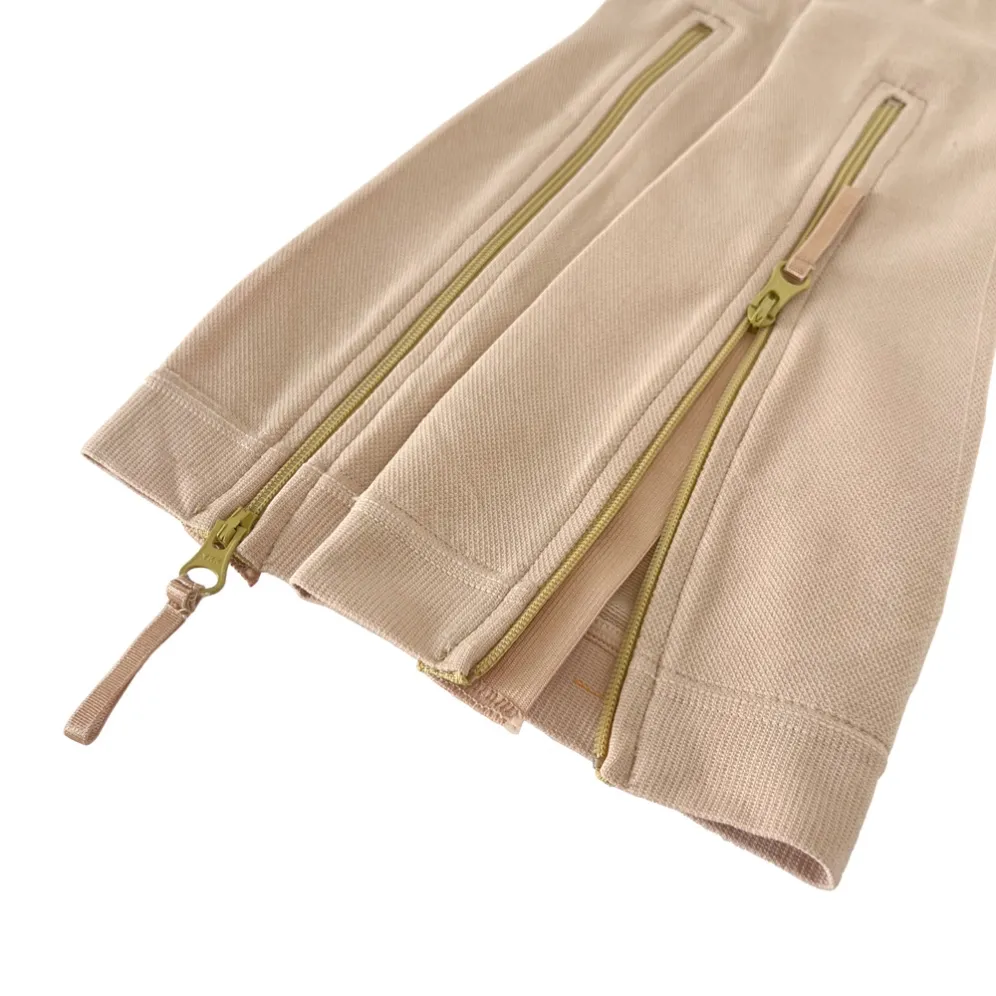
The zipper tape, teeth and slider can create discomfort if they come into direct contact with the skin.
A protective fabric layer behind the zipper is one possible design solution.
When reviewing samples, check:
- Whether the zipper teeth touch the skin
- Whether the slider creates a pressure point
- Whether fabric gets caught during closing
- Whether the zipper ends feel uncomfortable
These details may look minor, but they can affect the customer experience.
3. Compression Performance
A zipper changes part of the sock's construction.
Unlike knitted fabric, zipper components have different stretching characteristics. This may influence how tension is distributed around the leg.
For brands selling graduated compression socks, the intended compression profile should therefore be checked on the finished design.
Do not assume a sock maintains the same pressure performance simply because the original knitted material has not changed.
Ask your supplier how compression requirements will be evaluated after the zipper is incorporated.
4. Fit Across Different Calf Sizes
One zipper length does not necessarily suit every size.
When developing several sizes, consider calf circumference, ankle measurements and lower-leg length.
A design may appear comfortable when laid flat but feel quite different when worn.
Sample approval should therefore involve appropriate fit checks across the intended size range.
For wider-calf products, zipper placement and closure tension may require additional attention.
5. Zipper Strength and Repeated Use
A compression sock is repeatedly stretched, worn, removed and washed.
Its zipper must remain functional under the conditions expected for the product.
Before confirming bulk production, buyers should discuss appropriate tests for:
- Zipper opening and closing
- Slider and zipper tape attachment
- Seam strength around the zipper
- Repeated laundering
- Fabric distortion near the closure
The required tests and acceptance criteria should be agreed upon before production.
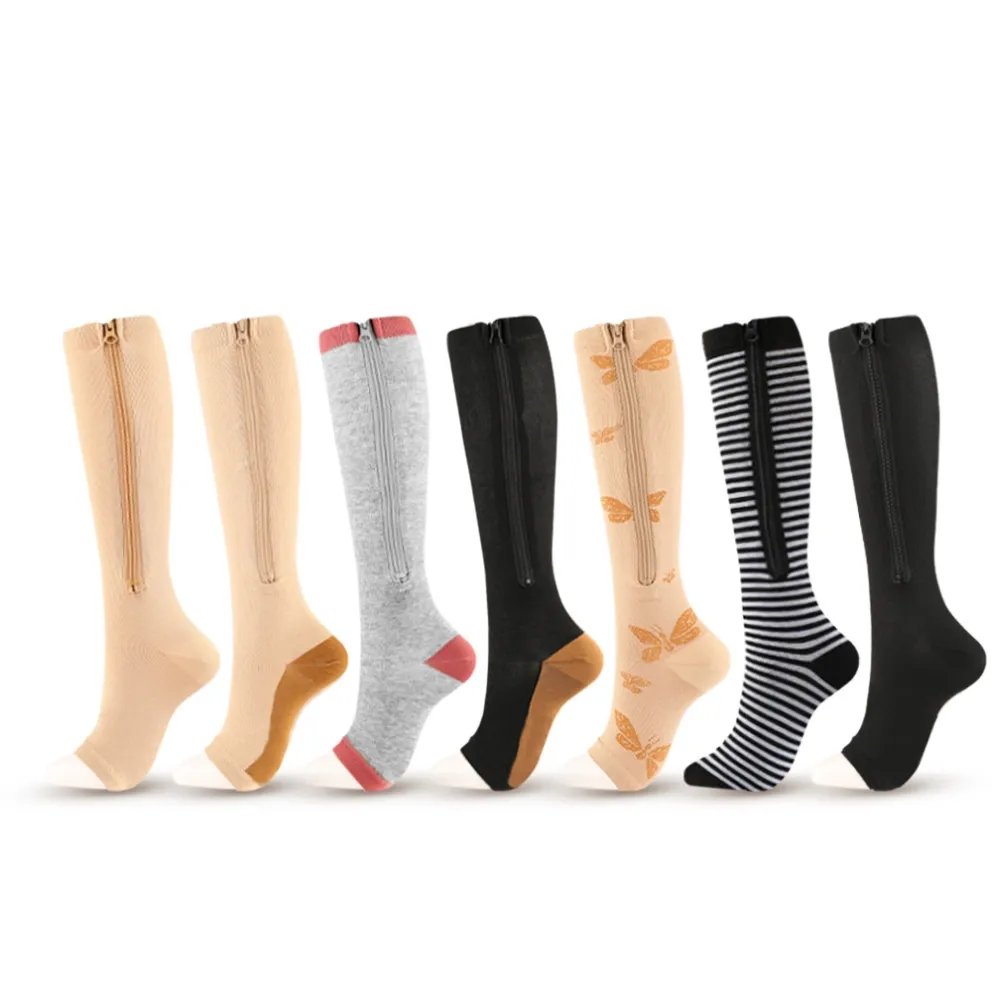
6. Open-Toe or Closed-Toe Design
Zippered compression socks may be developed with different toe constructions.
Open-toe versions may suit certain product preferences, while closed-toe versions offer a more conventional sock design.
The decision should reflect the intended wearer, product positioning and fit requirements.
It is also worth checking the toe finish and foot measurements during sampling.
The zipper is only one part of the overall product.
7. Retail Packaging and Customer Instructions
Zippered compression socks may need clearer product instructions than standard socks.
Brands should consider including guidance on:
- How to select the correct size
- How to open and close the zipper
- How to put on and remove the product
- How to wash and care for the socks
- Any relevant product warnings or limitations
Clear instructions help retailers explain the product and may reduce avoidable customer confusion.
For US brands, intended medical or therapeutic claims should also be reviewed against applicable regulatory and labeling requirements.
A Practical Sample Approval Checklist
Before approving your zippered compression sock sample, confirm the following:
Checkpoint | What to Review |
|---|---|
Zipper placement | Position and ease of operation |
Skin comfort | Protective layer and contact points |
Compression | Agreed pressure specifications and testing |
Sizing | Foot, ankle, calf and leg measurements |
Durability | Zipper attachment and repeated-use performance |
Toe design | Open-toe or closed-toe construction |
Packaging | Size guidance and product instructions |
This checklist can help brands communicate clearer requirements to their manufacturing partners.
Can Zippered Compression Socks Be Customized?
Yes. Custom development can involve material selection, size ranges, zipper construction, colors, branding and packaging.
However, each option should be evaluated according to manufacturing feasibility, product performance and the intended market.
Brands should approve a complete sample specification before placing a bulk order.
Final Thoughts
A good zippered compression sock needs more than a functioning zipper.
Comfort, fit, construction quality and verified performance all matter.
For experienced buyers, reviewing these details during sampling can help prevent unnecessary revisions and quality problems during production.
Looking for an OEM zippered compression sock supplier?
Aby-Tex supports custom compression sock development, including zipper constructions, sizing, material options and private-label packaging.
Explore our Zippered Compression Socks or contact Aby-Tex to discuss your next product development project.