Oct 24, 2026Product Knowledge
Private Label Lumbar Support Belts: How to Get Sizing Right
Learn how brands develop lumbar support belt sizing, from waist measurements and adjustable straps to OEM sampling and fit testing before bulk orders.
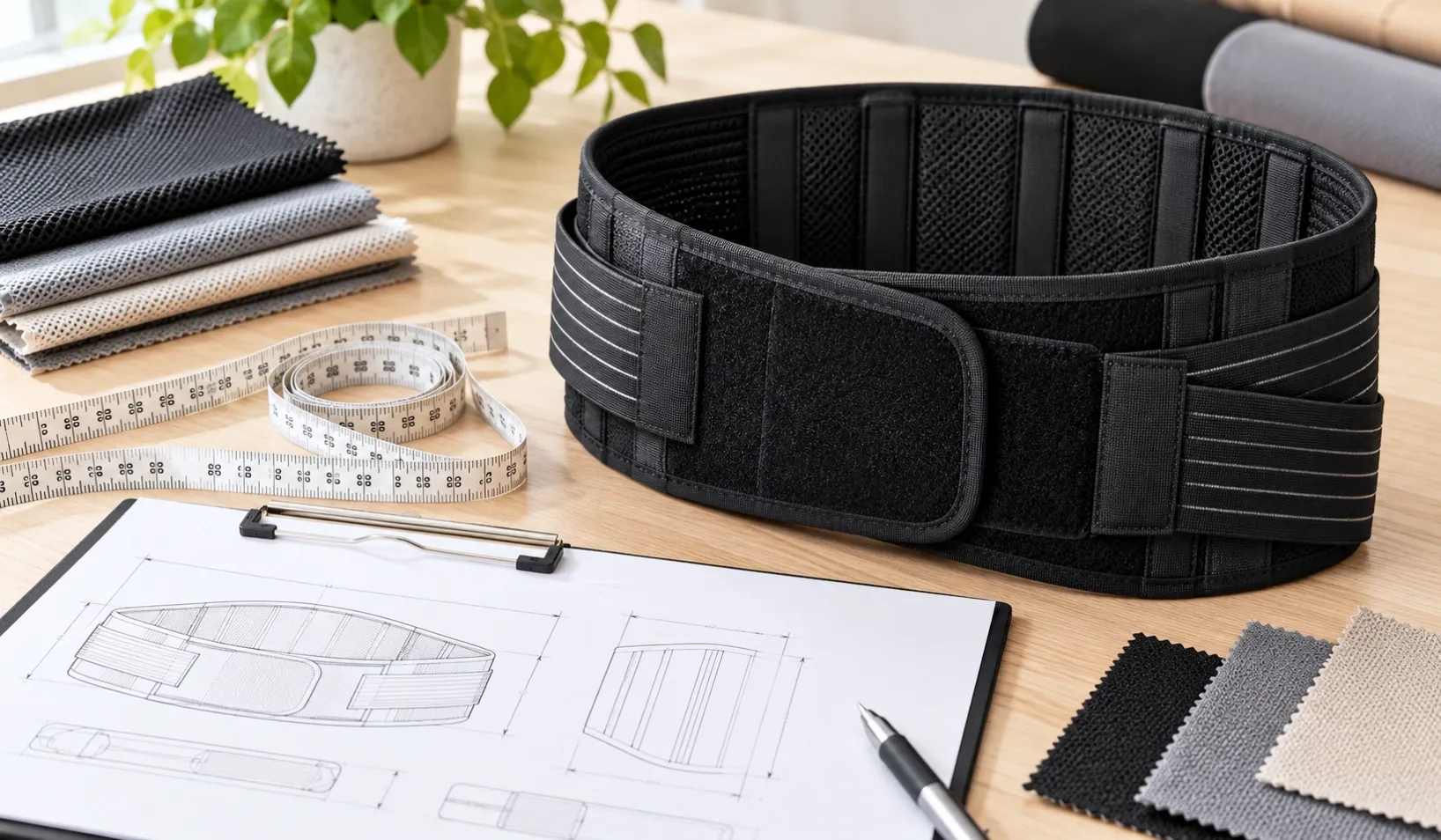
An adjustable lumbar support belt looks like a straightforward product to source. It wraps around the waist, fastens with straps and is often offered in a familiar S–XL size range.
But one problem regularly deserves more attention during product development: adjustable does not mean one size fits everyone.
A belt that is too short may barely fasten. A belt that is too long can leave excess material around the waist. Even when the circumference is correct, the belt may sit too high, fold when the wearer sits down or feel uncomfortable around the hips.
For brands and wholesalers developing private-label lumbar support belts, these details should be resolved before production.
1. Start With the Actual Wearing Position
The first question is not how many sizes to offer.
It is where the customer is expected to wear the belt.
Some lumbar support belts are designed to sit around the lower back and abdomen, while others may cover a larger part of the torso.
A waist measurement taken at the narrowest point of the body may not match the circumference where the belt will actually be worn.
Before requesting samples, confirm:
- The intended belt position
- The target wearer measurements
- The height of the belt at the back and front
- Whether the product will be worn over clothing
- The main activities for which the product is intended
This information gives the supplier a better starting point than simply asking for a medium-size sample.
2. Check the Adjustment Range, Not Just the Size Label
A common purchasing mistake is relying on the supplier's existing S, M, L or XL chart without checking the actual adjustment range.
Two belts labeled Large may have different finished lengths, fastening positions and comfortable fitting ranges.
For each size, request the following information:
Specification | Why Buyers Need It |
|---|---|
Recommended body circumference | Helps customers select the correct size |
Belt length | Defines the main product dimension |
Minimum fastening overlap | Helps evaluate closure security |
Maximum practical adjustment | Shows the usable fitting range |
Front and back heights | Helps evaluate coverage and comfort |
The size range should reflect the finished product, not just the stretch of the fabric.
If a belt reaches a larger circumference only when its straps are stretched to the limit, it may not provide a practical or comfortable fit.
3. Evaluate the Hook-and-Loop Closure
For an adjustable back support belt, the fastening system is a major part of the product.
Buyers should check the effective hook-and-loop contact area at both ends of the intended adjustment range.
A fastening system that works well on a medium-size wearer may have insufficient overlap on a larger wearer.
During sampling, look at three points:
Fastening position: Can the wearer close the belt without awkward pulling?
Overlap area: Is there sufficient contact between the hook-and-loop surfaces throughout the approved size range?
Edge comfort: Do the strap ends or fastening edges create unnecessary rubbing?
Repeated fastening performance should also be evaluated using an agreed test method.
4. Don't Ignore Sitting Comfort
Many support belts look well-fitted when someone is standing upright.
The fit can change significantly when the wearer sits down or bends.
A belt that is too tall or too rigid may fold at the front or press against the ribs and hips.
Before approving a sample, ask wear testers to try typical movements relevant to the intended product, including standing, sitting and walking.
Observe whether the belt:
- Rolls or folds at the edges
- Shifts from its intended position
- Creates uncomfortable pressure points
- Restricts ordinary movement more than intended
- Remains easy to adjust
Record these observations separately for different wearer sizes.
5. Sample More Than One Size
One approved sample does not necessarily validate the full size range.
Where practical, evaluate the smallest and largest proposed sizes, along with a representative middle size.
This can reveal issues with strap proportions, belt height and support-panel positioning that may not appear in the first sample.
Buyers should also compare the actual finished measurements against the proposed size chart.
A clear sampling record makes revisions easier and reduces the risk of approving changes that were never checked on larger or smaller sizes.
6. Prepare Clear Retail Sizing Instructions
For American e-commerce brands and wholesale distributors, sizing affects more than the factory specification.
It also affects customer selection and product returns.
Before printing packaging, make sure the customer-facing size guide explains:
- Where to measure the body
- Whether measurements should be taken over clothing
- Which body circumference range matches each size
- How to position and adjust the belt
- How to care for the product
If both inches and centimeters are used, check that the conversions are consistent.
Clear instructions can help customers choose a more suitable size and avoid preventable confusion.
What to Send Your OEM Supplier
When developing a private-label lumbar support belt, provide a practical product brief:
- Target market and intended wearer
- Desired body measurement ranges
- Reference sample or product photos
- Belt width and coverage requirements
- Strap and closure preferences
- Material and color options
- Branding and packaging requirements
- Expected order quantity
If you are unsure about the sizing, ask your supplier to review the proposed size ranges during development.
Frequently Asked Questions
Can lumbar support belt sizes be customized?
Yes. OEM projects may involve different belt lengths, widths, strap arrangements and size ranges, depending on the design and manufacturing feasibility.
Is one adjustable size suitable for all customers?
Not necessarily. The usable adjustment range must be evaluated on the finished belt. A wider nominal size range does not automatically mean better fit.
Should a lumbar support belt be tested while sitting?
Yes, if sitting is one of the intended wearing situations. Fit assessment should reflect how customers are expected to use the product.
Can brands add private-label packaging?
Yes. Branding and packaging options can be discussed during OEM development, subject to the project's technical and commercial requirements.
Final Thoughts
Sizing is one of the most important details in a lumbar support belt project.
A well-designed adjustment system can help accommodate different body shapes, but it cannot replace an accurate size chart and proper fit evaluation.
For buyers, the better question is not simply whether the belt is adjustable.
It is whether each size offers a practical, comfortable fitting range for the intended customer.
Develop Your Private Label Lumbar Support Belt With Aby-Tex
Aby-Tex supports OEM and ODM development of adjustable back support products, including materials, sizing, fastening construction and private-label packaging.
For your next product development project, contact Aby-Tex with your reference design, size requirements and estimated quantity.