Applications & Solutions
How to Choose Knee Sleeves for Cycling and Road Riding
Cycling in knee sleeves? Compare fit, compression feel, fabric and pedalling wear — and the questions to ask an OEM supplier before you order.
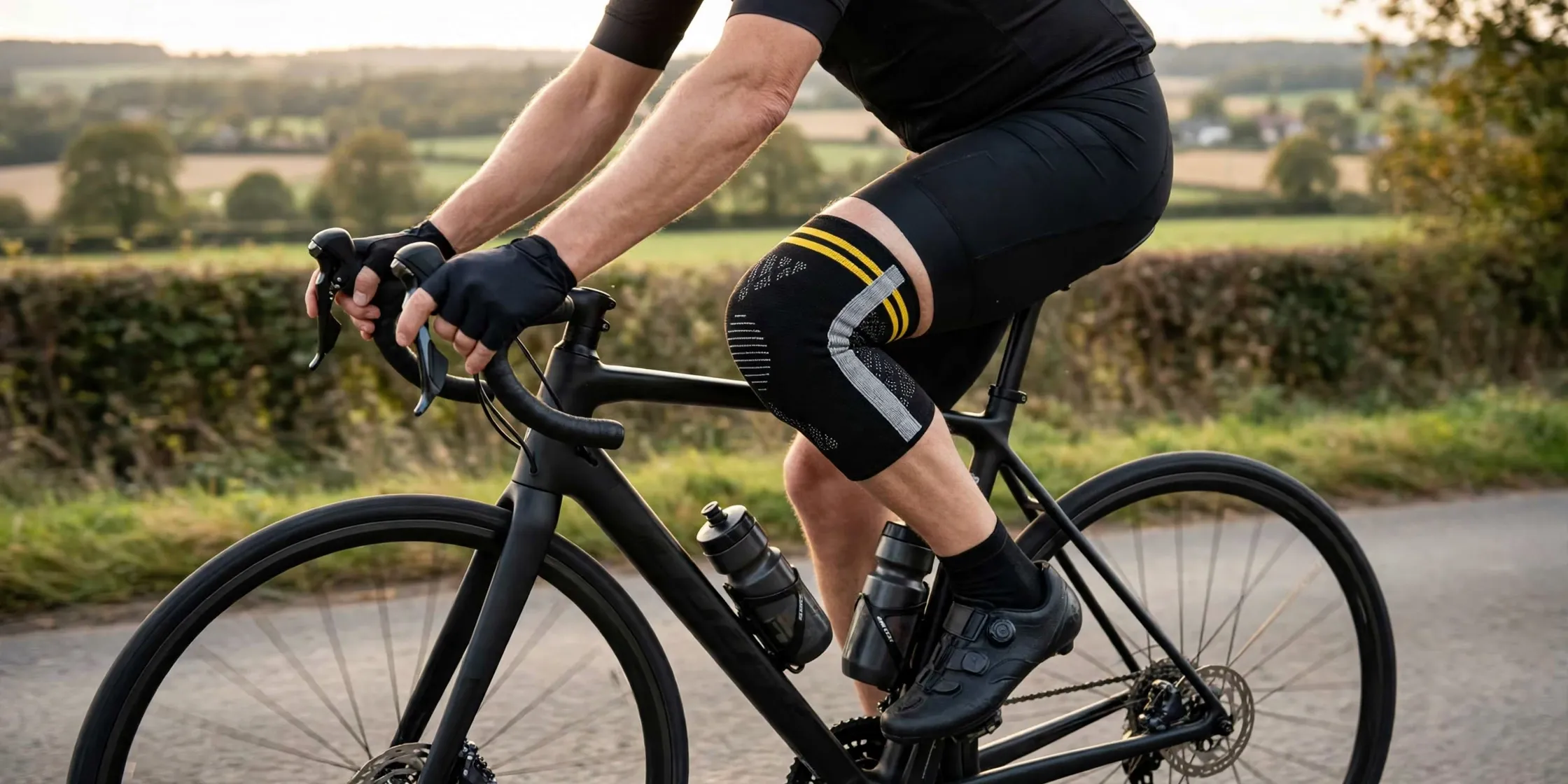
A cycling knee sleeve has a simple job and a hard one: stay in place through thousands of pedal strokes, without sliding down or bunching behind the knee. The questions for buyers are practical ones — which format, which fit, how firm the feel should be, which fabric lasts a season of riding, and what to ask the supplier before ordering.
This guide is written for buyers, not as medical advice: if a product is intended for a medical condition, that needs professional guidance and the relevant test reports.
1. Start with the ride, not the product
Cycling asks more of a knee sleeve than a flat walk does. The knee bends and straightens through the same range on every stroke, hundreds of times an hour, so a sleeve that feels fine standing still can still creep down after an hour of steady cadence. On a road bike the foot is held by the shoe and pedal, so the leg moves in a set path, and the sleeve needs stretch across the front of the knee without digging in behind it. Most riders wear shorts, so a clean look and a top edge that grips without digging in both matter. Name the main use first, then judge every other specification against it.
2. Sleeve, open-patella or adjustable? Pick the right format
Three formats are often confused. A pull-on knitted sleeve is a single piece that pulls on like a tube. It suits a slim profile under shorts and easy on and off — but check the edges, because a sleeve that grips without digging in stays in place better than a plain tube. An open-patella sleeve has an opening at the kneecap, for a wearer who wants that area to feel less covered — but ask whether the opening stays centred during pedalling. An adjustable support adds a strap the wearer can tighten, for different wearers wanting different snugness — but ask how the strap fastens, whether it adds bulk under shorts, and whether it stays put.
3. Fit and sizing: measure, do not guess
A knee sleeve in the wrong size is worse than no sleeve at all — too loose and it slides down and bunches behind the knee; too tight and it cuts in and becomes painful over a long ride. Check that the size chart is based on measurements, not only on S/M/L labels: knee circumference at the kneecap; thigh circumference above the knee and calf circumference below it, because the taper between the two decides whether the sleeve stays up; and leg length and sleeve length, so it covers the right area. Try the fitting sample on a real ride, in the rider's shorts, socks and shoes — a sleeve that feels right in the shop can still slip after an hour of pedalling. See Why Knitted Knee Sleeves Roll Down and How to Improve the Fit.
4. Compression feel: firm enough to notice, not so firm it hurts
Knee sleeves are usually described by how they feel rather than by a single number. Two questions matter more than any headline claim: is the compression targeted — firmer where the design intends it, lighter where the knee needs to flex — and has the stated level been tested? A moderate feel is the range most often used for sports products: a clearly noticeable hold without the difficulty of a firm, specialist product. A firm feel should be chosen only with a clear reason and clear labelling — do not pick the firmest option for a general cycling line by default, because a sleeve that is hard to put on will not be worn for a full ride. Ask for the test method and report behind any compression claim, and do not claim a pressure value or benefit the supplier cannot document for that exact product.
5. Fabric and construction: what to feel for
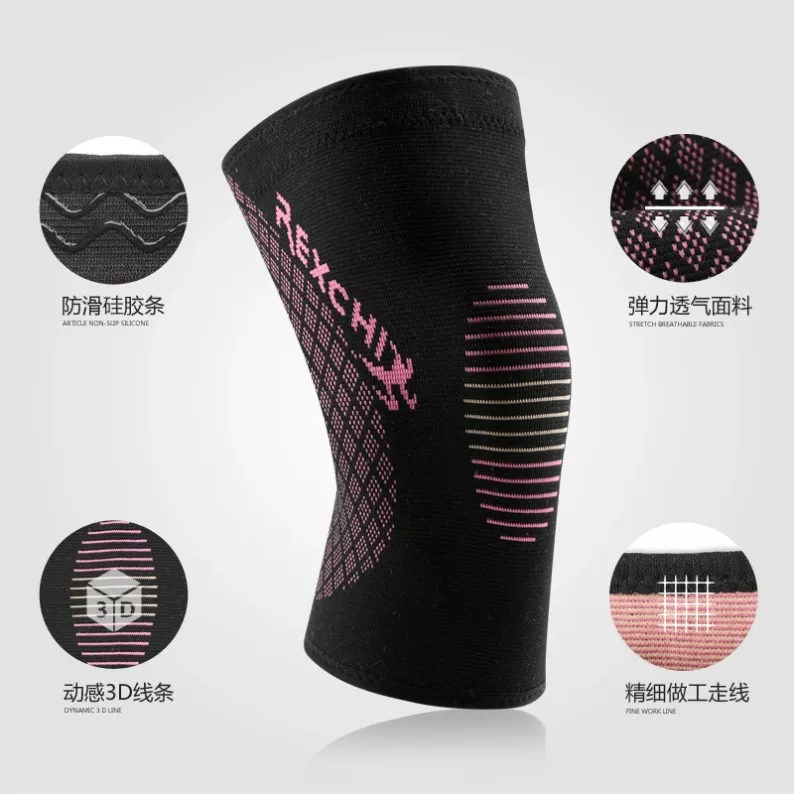
Knitted knee sleeves are usually a blend — a main yarn for structure and an elastic yarn for stretch and recovery. Check breathability first: does the fabric feel damp and heavy after a long ride, or does it dry reasonably quickly? Ask what the yarn blend is, and do not accept a material claim without a composition statement. Then look at knit zones and knee shape: a shaped construction that follows the bend of the joint holds position better than a basic tubular design over thousands of pedal strokes. Flat seams and no hard edge at the top or bottom reduce chafing. A top edge that grips without digging in, and a knit structure that recovers its shape after stretching, complete the stay-up design.
6. What to ask an OEM supplier
Before ordering, a buyer can use this short checklist. It is a general sourcing list — it does not state Aby-Tex's MOQ, price or lead time, which must be confirmed for the specific order.
- What sizes and size ranges can you supply, and is the size chart based on real measurements?
- What yarn blend and knit construction is used, and can you provide a composition statement?
- Can you supply a fitting sample in each size, and what is the sampling process? (Aby-Tex states a 7-day target for custom sampling — confirm the timeline for your design.)
- What customisation is available: colours, logo, packaging and labelling — and does a knitted-in logo change the construction?
- How is quality controlled — and what happens if a batch does not meet the agreed fit or compression specification?
- What are the care instructions, and how many wash cycles is the product expected to withstand?
Pricing for a custom sleeve depends on the same factors as other knitted supports — yarn, construction, size range and order quantity.
A simple way to decide
Choose the ride use first, then the format that fits it, then the size based on real measurements and a trial on a real ride, then a fabric you have tested on the bike.