Applications & Solutions
Knee Sleeve Assortment Planning for Sports Retailers
Planning a knee sleeve range for retail? Range structure, size depth, colour breadth and the supplier questions to ask before you order.
A knee sleeve range is a buying decision before it is a product list. Start with who will buy the sleeve, where it will sell, and how many sizes and colours the range can carry. This guide is for sports retailers, private-label buyers and distributors planning a knee sleeve assortment. It is a buying guide, not medical advice: a product intended for a medical condition needs professional guidance and the relevant test reports.
Start with the channel and the end user
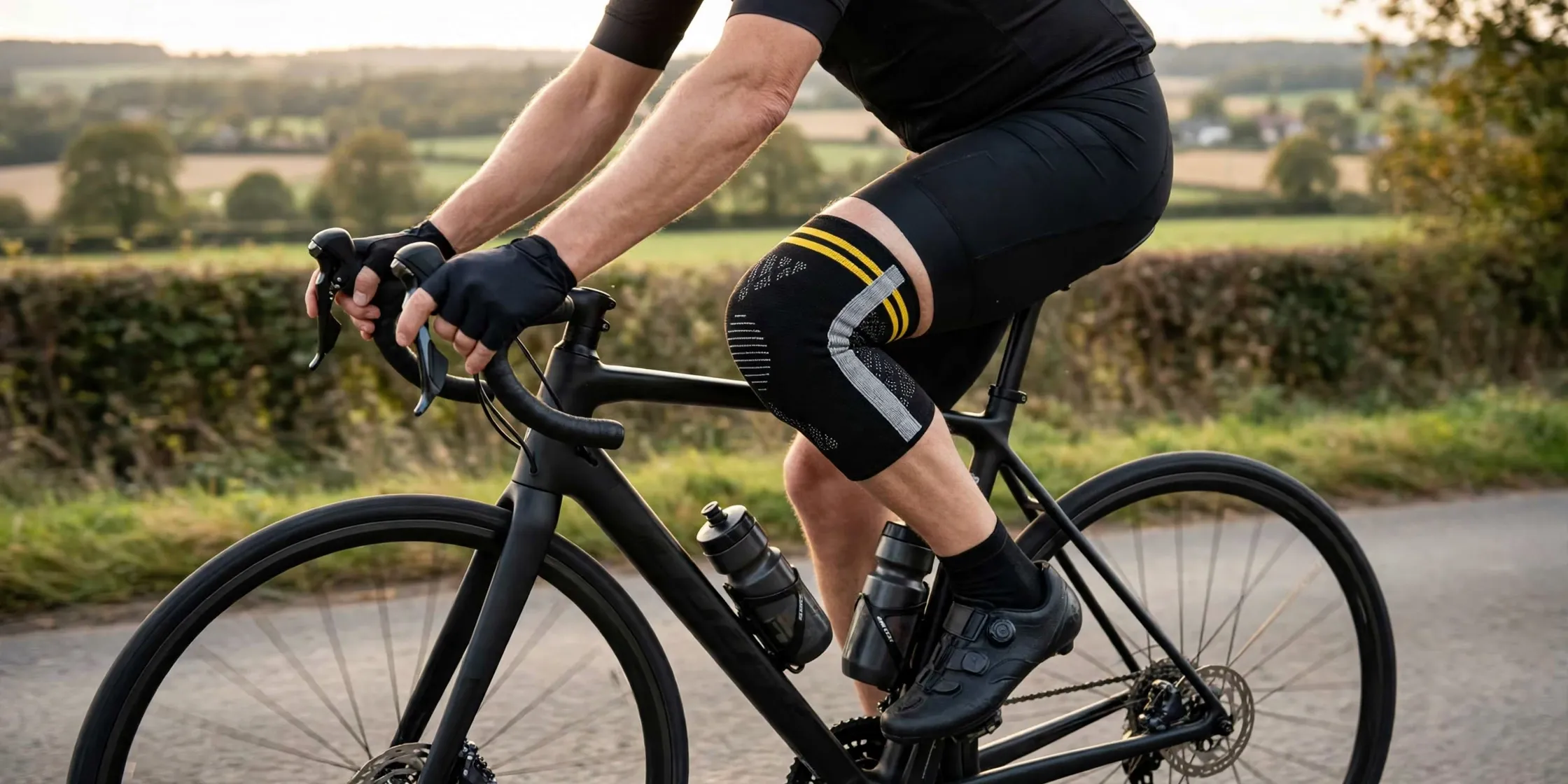
Before comparing products, name the channel and the wearer it serves. A sports retailer sells to active customers who choose by feel and fit in the shop; an e-commerce seller sells to buyers who choose from a size chart and a photo, so returns are the bigger risk; a pharmacy sells to customers who ask staff for guidance, so the range needs clear differences. Then name the main uses: everyday wear, team sports, running and cycling, and outdoor walking. A range covering all of these needs a clear structure, not one sleeve stretched across every use.
Structure the range in three layers
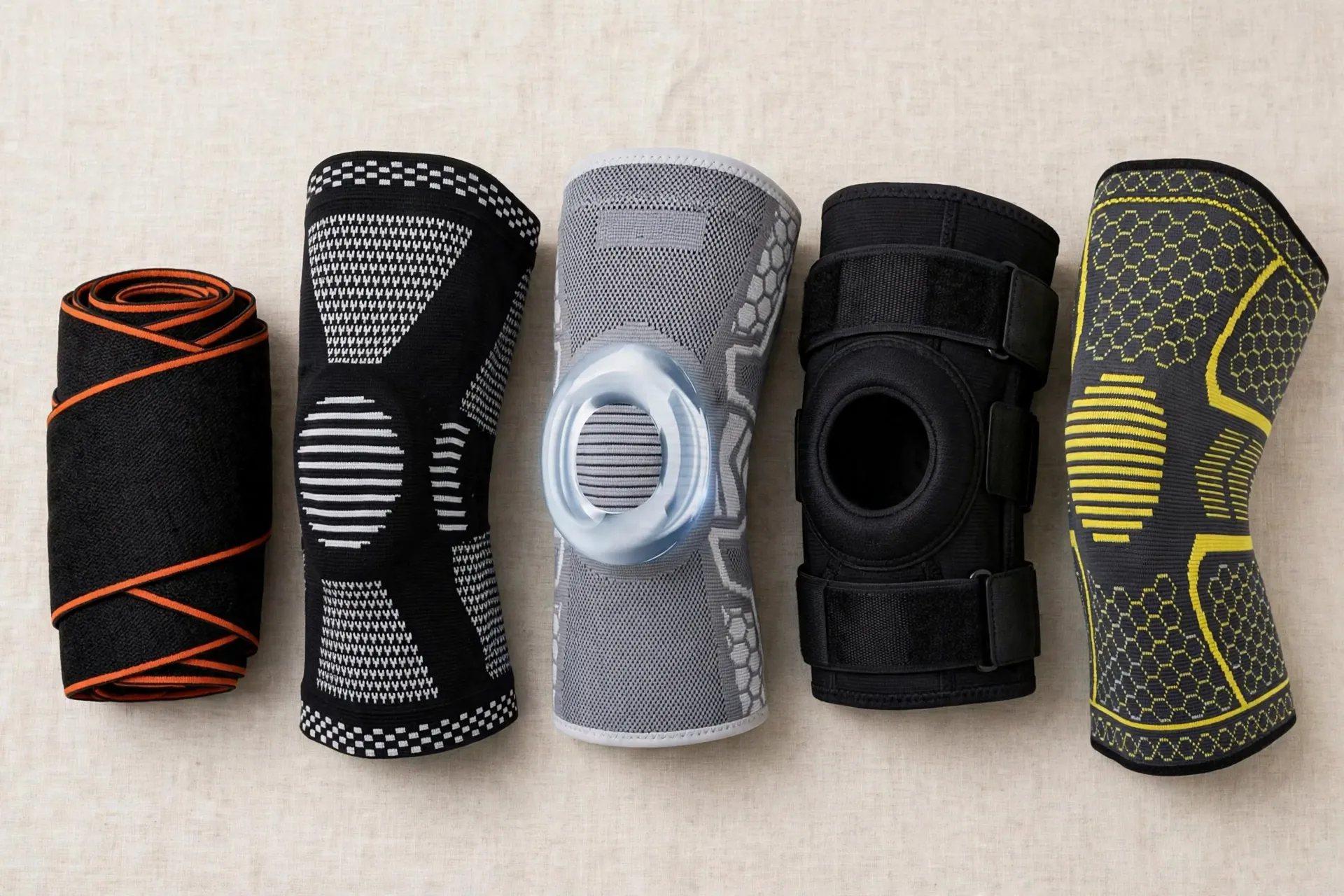
A workable range has three layers, and each layer has a different job. The core layer is the small set of styles that sell all year: a basic pull-on knitted sleeve — see Basic Knitted Knee Support Sleeve — in the main colours and the full size range. Stock this layer deepest — it carries the range when seasonal lines dip. The seasonal layer follows the calendar — lighter styles for warm months, or styles matched to a sport season — a limited run, not a permanent listing. The experimental layer tests new formats: an open-patella style, an adjustable support, or a new colour. Keep this layer small and time-boxed, and decide in advance what earns it a core place next season. If a style cannot be placed in one of these three layers, it does not belong in the range.
Size depth versus colour breadth
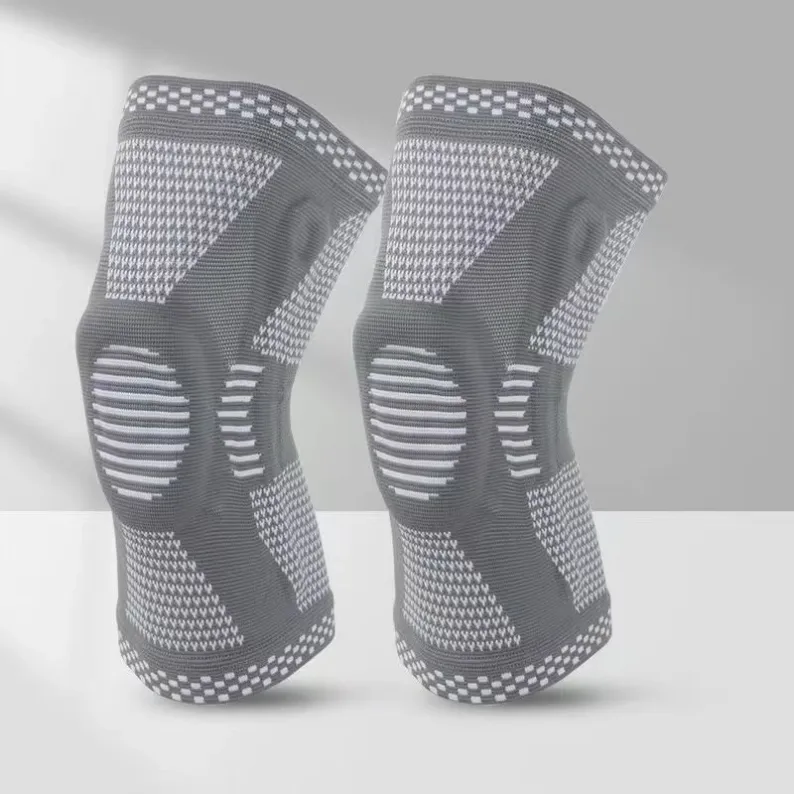
The hardest choice in any assortment is where to spend the stock: more sizes of fewer colours, or more colours of fewer sizes. For knee sleeves, size depth usually matters more than colour breadth. A sleeve in the wrong size slides down or cuts in and generates returns, so the sizes that sell most need the deepest stock and the ends of the range still need to be present. Colour is the breadth decision: a core colour set plus one or two seasonal colours is usually enough. Ask the supplier how the size curve is built — whether the size chart is based on real measurements rather than S/M/L labels — and check the ends, not only the middle. Five colours in three sizes disappoints more customers than three colours in the full size range.
Fit and compression feel: verify the specification
Fit and feel are the two specifications a buyer must verify rather than accept on trust. Check that the size chart is based on measurements, and ask for fitting samples in the smallest and largest sizes — a sample tried on a real walk or ride beats a size chart alone. Compression feel should be described in plain terms — light, moderate or firm — and ask what sits behind the claim: is the compression targeted — see Knee Sleeve with Silicone Support — and has the stated level been tested for that exact product and size? A moderate feel is the range most often used for sports products; a firm feel needs a clear reason and clear labelling. Do not claim a pressure value the supplier cannot document. See Why Knitted Knee Sleeves Roll Down and How to Improve the Fit.
Fabric and construction as quality criteria
Fabric and construction decide whether a sleeve survives a season of use — treat them as quality criteria, not marketing lines. For an extended-length example, see 3D Knitted Performance Knee & Leg Sleeve . Check breathability: does the fabric feel damp and heavy after a long session, or dry quickly? Ask what the yarn blend is, and do not accept a material claim without a composition statement. Then look at knit zones and knee shape: a shaped construction that follows the bend of the joint holds position better than Non-Slip Knitted Knee Support. Flat seams and no hard edge reduce chafing. A top edge that grips without digging in and a knit that recovers its shape after stretching complete the stay-up design. Wash the sample several times: a sleeve that loses its hold will generate returns across the whole range.
What to ask an OEM supplier
Use this checklist before ordering — it does not state Aby-Tex’s MOQ, price or lead time; confirm those for the specific order.
- What sizes and size ranges can you supply, and is the size chart based on real measurements?
- What formats can you supply — pull-on sleeve, open-patella, adjustable — and how do they differ in construction and fit?
- What yarn blend and knit construction is used, and can you provide a composition statement?
- Can you supply a fitting sample in each size, and what is the sampling process? (Aby-Tex states a 7-day target for custom sampling — confirm the timeline for your design.)
- What customisation is available: colours, logo, packaging and labelling — and does a knitted-in logo change the construction?
- How is quality controlled — and what happens if a batch does not meet the agreed specification?
- What are the care instructions, and how many wash cycles is the product expected to withstand?
Pricing depends on the same factors as other knitted supports — yarn, construction, size range and order quantity.
A simple way to decide
List the channel and end user first, then the three layers, then size depth before colour breadth, then fit and feel with a test report behind them, then a fabric tested in use. If a supplier cannot answer the checklist with documents and samples, the range is not ready for your shelves.