Market & Industry Insights
Selling Knitted Supports and Compression Products in Europe: A Compliance and Sizing Guide for Buyers
Selling supports or compression products in Europe? Check intended use, sizing, labelling and the documents to ask for — before you order.
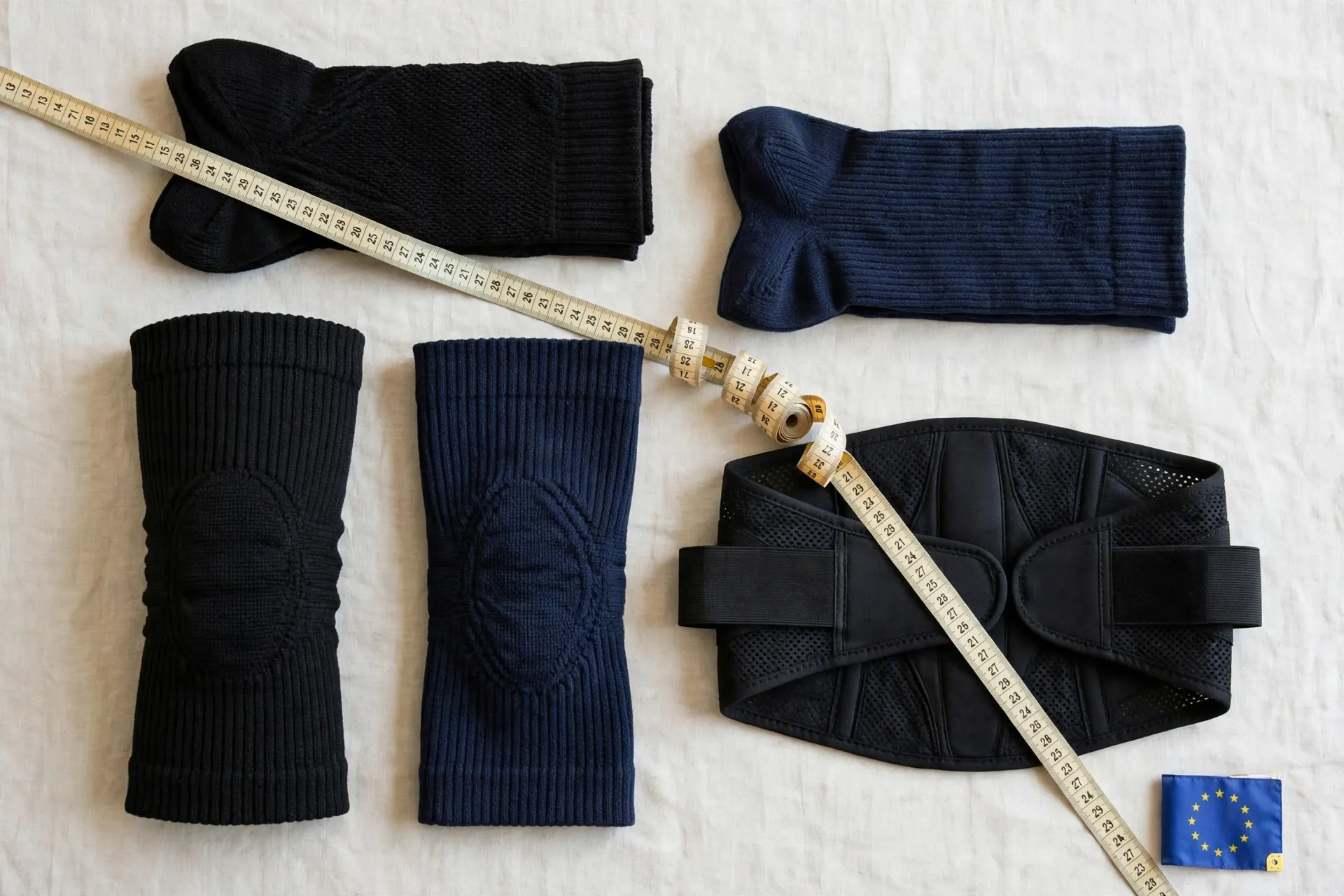
For a buyer entering Europe, the product is rarely the hard part. A support that sells well in one market can still fail in another — because the size chart does not match, the label is in the wrong language, or the documents do not cover that exact product.
This guide is for private-label buyers, distributors and brand owners. It is a sourcing checklist, not legal or medical advice: check the current requirements for your exact product, destination and channel before ordering.
1. Start with the intended use and the destination
Before comparing suppliers, name two things: what the product is for, and where exactly it will be sold.
- Intended use: a general sports support and a product presented for a medical use are different propositions, even when the knit looks the same. Wording should match the use it is actually sold for; where a medical use is claimed, wording and supporting reports need professional input.
- Destination and channel: a pharmacy, a sports retailer and an online marketplace do not ask for the same things. Selling into two or three European countries should mean two or three different answers on language, labelling and documentation.
- Who checks what: agree early who checks the requirements for each destination and who holds the documents. A requirement found after printing or shipping costs far more than one found at enquiry stage.
2. Sizing: measure, do not translate
The most common sizing mistake is also the simplest: copying a size from another market and assuming it means the same thing. S, M and L are not portable — the same letter can cover different measurements on different products, suppliers and markets.
Ask for the size chart in measurements — ankle and calf circumference and calf length for socks and sleeves, waist for a back support, wrist for a wrist support — and check the ends, not only the middle. A chart that fits the middle well can still fail at the smallest and largest sizes, so ask for fitting samples in those sizes.
Sizing is the most likely reason a first European order generates returns, so agree before ordering how one will be handled.
3. Compression levels and claims: ask for the document behind the number
A pressure figure is only as good as the document behind it. Two questions matter more than the headline number: is the compression graduated — firmest at the ankle, lighter up the leg — and has the stated level been tested for that exact product and size?
Ask for the test method and report behind the number — method, issuer and date — rather than accepting a label at face value. A figure copied from a catalogue, a different construction or a different size is not evidence. The same applies to any functional claim, such as a material or cooling claim: do not accept it without a document for that exact product.
4. Labelling, language and packaging
The sewn-in label stays with the support after the pack is gone, so it deserves the most careful approval — and the language question must be settled before printing. Size, fibre content and care instructions should match the actual product and the supplier's documentation for that exact product.
Agree the languages and their order before the artwork is made.
Pack, hangtag and listing should say the same thing as the label — same size, product name, and compression or performance wording. One mismatch can generate a return. For the packaging approval sequence, see the private-label packaging guide (topic 10, 2026-11-20); for marketplace packaging and barcode detail, see How to Launch a Private-Label Compression Sock Brand on Amazon.
5. The documents to ask for
Put a small file together for each product before ordering. Each item should refer to that exact product: (1) a composition statement for the exact yarn blend and construction; (2) the compression test method and report behind any pressure figure, with product, size, issuer and date stated; (3) the size chart in measurements, with measurement points named; (4) the label and care information as it will actually be printed, in the agreed languages; (5) lot identification on pack and carton, so a complaint can be traced to a specific order.
Read each document the same way: does it name this product, this size and this construction? Who issued it, and when? If any answer is missing, it does not support the claim. This guide does not state which certificates Aby-Tex holds, because that list has not been confirmed.
6. What to ask an OEM supplier
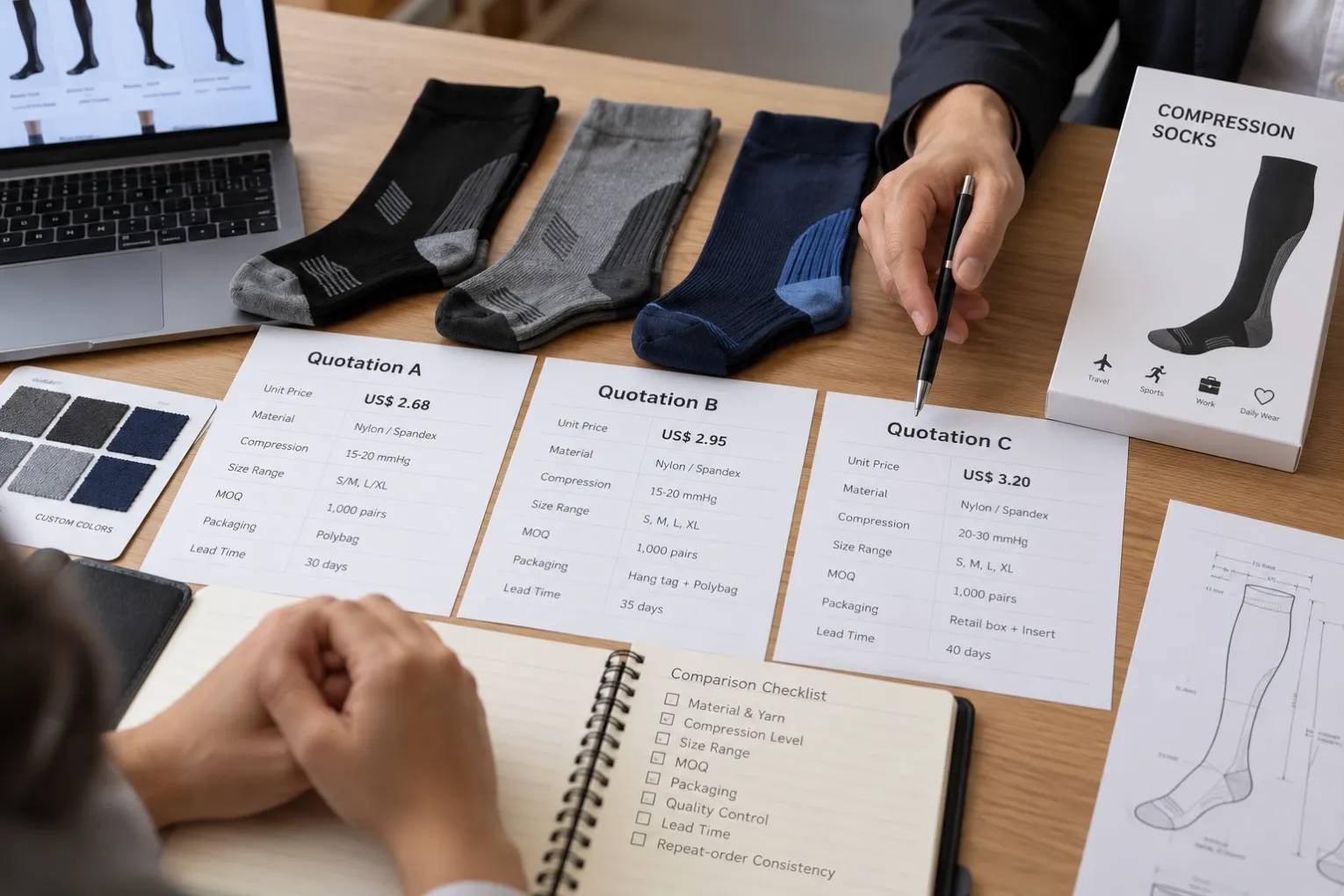
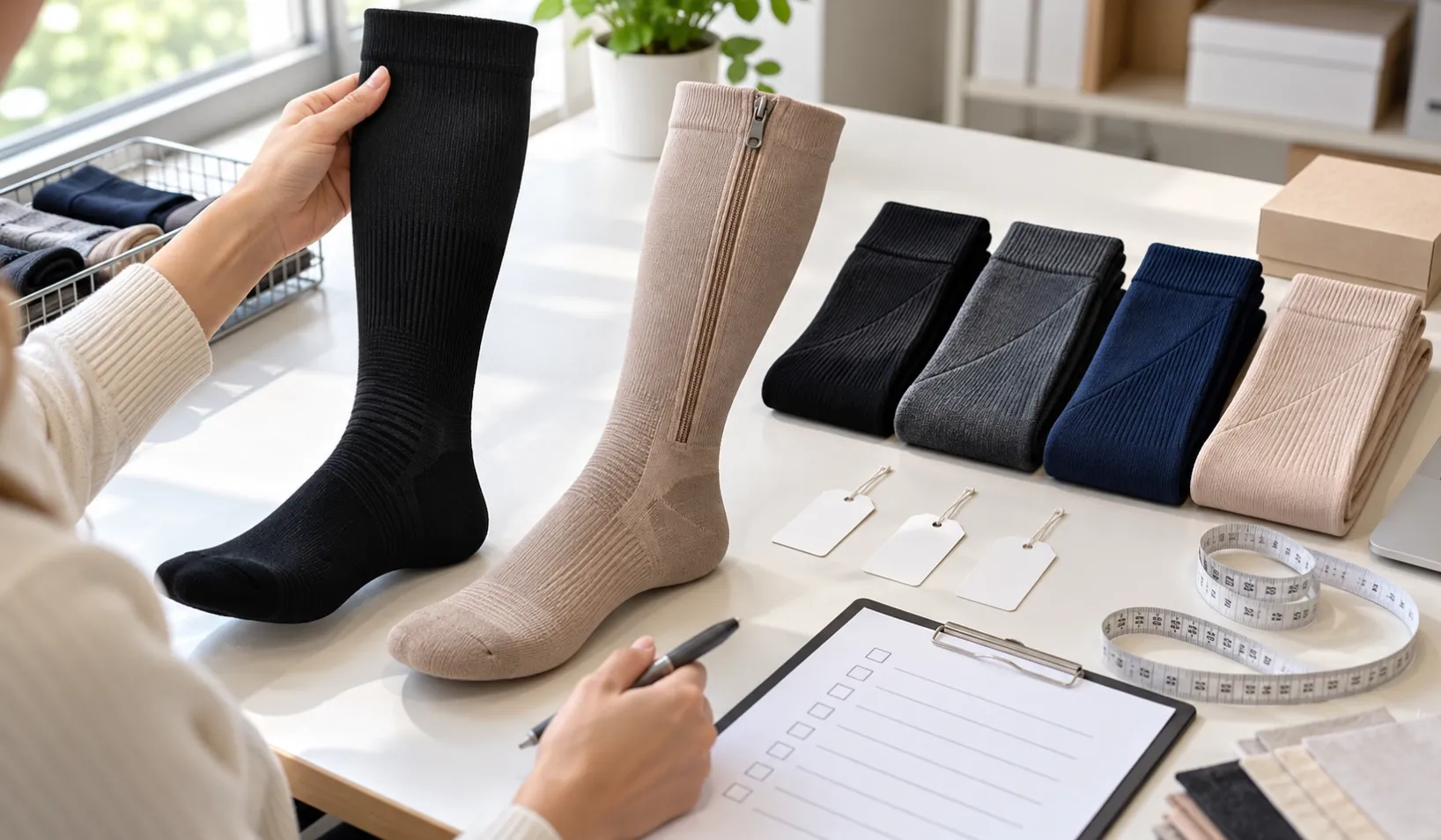
Use this checklist before ordering. It does not state Aby-Tex's MOQ, price or lead time — confirm those for the specific order.
- Which European destinations and channels have you supplied this product to, and what changed for each?
- What compression levels and size ranges can you supply, and what test reports support them?
- What yarn blend and knit construction is used, and can you provide a composition statement for this exact product?
- Can you supply a fitting sample in each size, including smallest and largest? (Aby-Tex states a 7-day target for custom sampling on its homepage — confirm the timeline for your design.)
- What languages and label layouts can you supply, and who checks the artwork?
- What certificates or test reports exist for this exact product, and what is not covered?
- How is a production lot identified, and what happens if a batch does not match the approved specification?
Pricing depends on yarn, construction, size range and order quantity. See How to Choose a Custom Compression Sock Manufacturer — and do not copy its North American wording into a European listing without checking it first.
A simple way to decide
Name the intended use and destination first, then the size in measurements, then the compression level with a test report behind it. If a supplier cannot answer the checklist with documents and samples for that exact product, the line is not ready for Europe.