Back Supports for Garden Retailers: A Buyer's Assortment Guide
Sourcing back supports for garden retail? Channel, range, sizing and packaging — and the supplier questions to ask before you order.
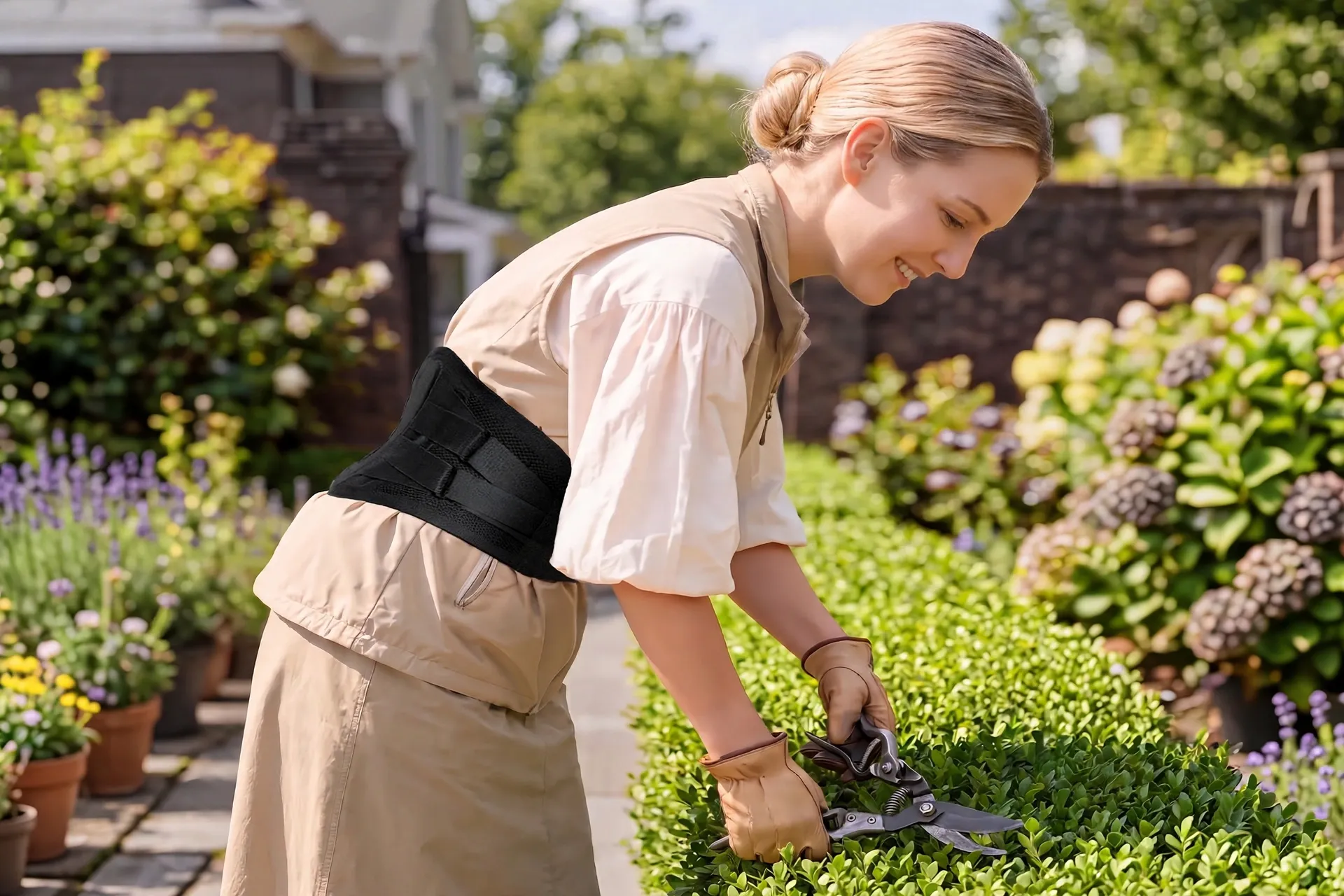
For a buyer sourcing back supports for garden retail, the decision is a range decision for a seasonal shelf, not a personal fitting decision. The questions are commercial: which constructions belong in a garden-centre range, how the range behaves across a short selling season, and what can be written into a purchase order and checked on arrival.
This guide is for garden-centre buyers, DIY and home-retail buyers, e-commerce garden shops and private-label buyers. It is a buying guide, not medical advice.
1. Start with the channel and the gardener
Gardening is not one activity, and the channel decides which specification matters. Planting, weeding, digging, lifting pots and pruning may all fall in the same afternoon — and the support that sells through a garden centre is not necessarily the one that sells through a DIY retailer.
- Garden centres and nurseries: the customer is buying for a hobby, often alongside plants and tools. The listing needs a clear size guide, composition and care instructions, and packaging that explains itself on a shelf.
- DIY and home retail: the support sits beside workwear and gloves. The buyer needs a small range that is easy to review: too many similar models slow the decision, for buyer and shopper alike.
- E-commerce garden shops: returns are driven by fit, so the size chart and the product description have to agree with what arrives. A support that fits over gardening clothes needs its size chart to say so.
Buying one model for every gardener is how supports end up returned — and how a retailer ends up with a slow line taking shelf space through the season.
2. Claims: what a back support can — and cannot — say
Get this right before any product decision — it affects the labelling as well as the buying.
A back support is a wearing aid: it can give a feeling of support and steady pressure around the waist. It is not personal protective equipment, and it should not be presented as a way to prevent injury or as a replacement for proper lifting technique and rest breaks. It is not a medical device: no claim about pain, injury or a medical condition belongs on the listing or the packaging.
That boundary belongs in the listing and the packaging copy — keep the language to fit, comfort and construction; see Back Support Belts for Workwear Distributors: An OEM Sourcing Checklist.
3. Support types: decide the range before the first sample
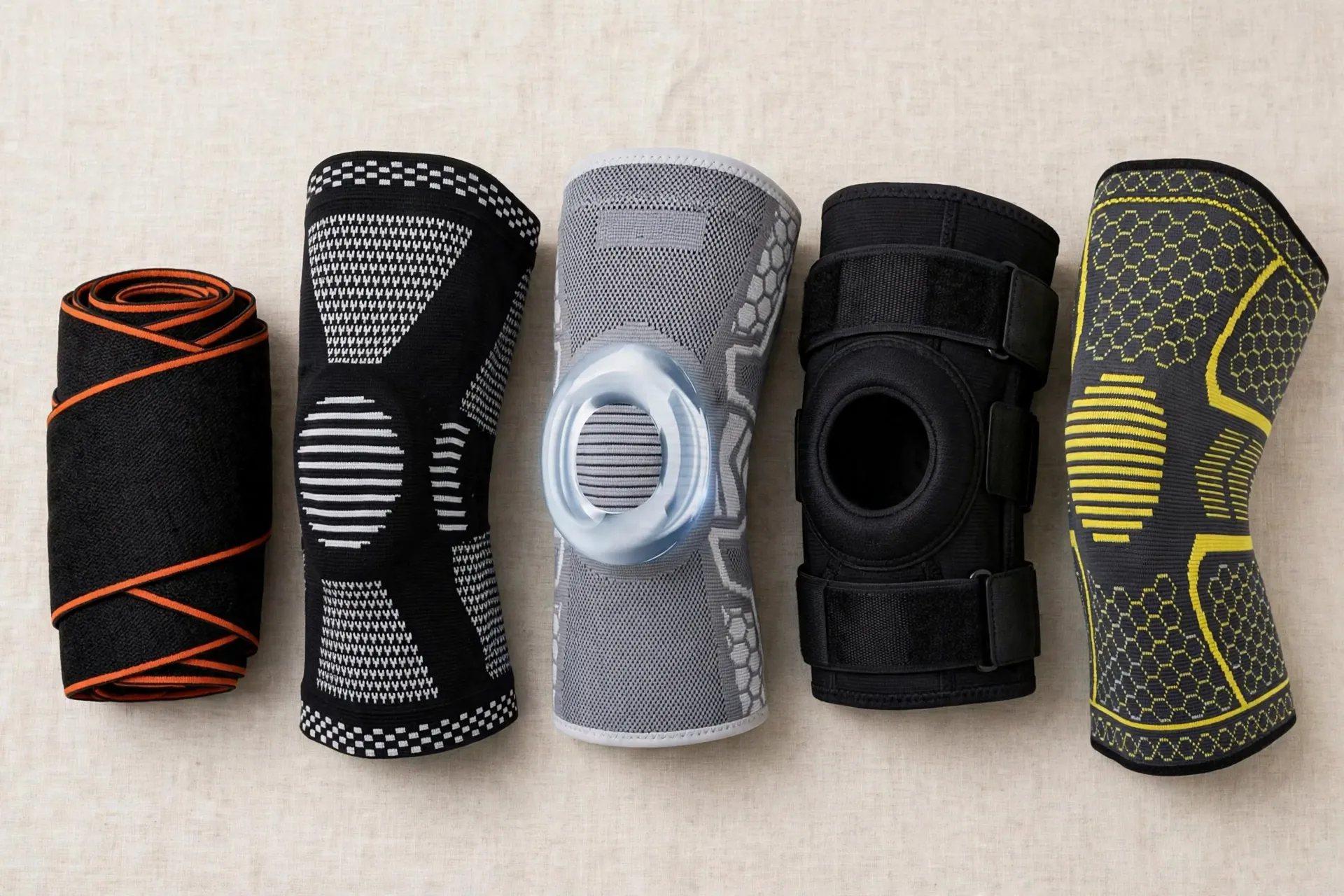
Garden supports generally fall into three constructions. The choice is a range decision: which to carry, and which to leave out.
- Knitted elastic brace: a close-fitting support, often with a reinforced panel around the lower back. The commercial case is a low profile under gardening clothes. Check that the knit recovers its shape and the edges do not roll.
- Adjustable belt with straps: a wider belt that can be tightened or loosened during the session. The commercial case is one product covering digging and seated potting work, cutting the SKUs to carry. Check the fastening, adjustment with gloves on, and whether the straps stay put once set.
- Brace with flexible stays: a support with flexible reinforcement around the lower back. The commercial case is a firmer feeling of structure for longer sessions. Check that the stays do not dig in when kneeling or bending, and stay in their pockets after washing.
A garden-centre range rarely needs all three — pick the constructions that match the channel.
4. Sizing: plan the size curve for retail, not for a team
A wrong size is a returns problem, not only a comfort problem: too loose and it slides; too tight and it restricts breathing and movement.
Check that the size chart is based on body measurements, not only S/M/L labels: waist circumference where the support will sit, and the fastening's adjustment range. For a retail order, ask how many sizes the supplier offers and whether the same size chart will be kept on reorder — a size chart that changes between orders creates returns the retailer has to absorb.
5. Seasonality, packaging and the shelf
Gardening is a seasonal trade, and the range has to behave like one: core styles sell through the season, while a seasonal colour or a gift set is a limited run, not a permanent listing. Plan so the core lines can be reordered and the seasonal lines cleared without discounting the core.
Packaging does the selling when no staff member is nearby: size, construction and care instructions where the shopper can see them, and a barcode and labelling area that fits the retailer's system. Ask early whether the supplier can separate production by customer — different packaging, labelling and colourways — without mixing specifications.
6. What to ask an OEM supplier before the first order
A short checklist. It does not state Aby-Tex's MOQ, price or lead time — confirm those for the specific order.
- What sizes and adjustment ranges can you supply, and how is the size chart measured?
- What yarn blend and knit construction is used, and can you provide a composition statement?
- How does the fastening work, and how many open–close cycles should it withstand?
- Can you supply a fitting sample in each size, and what is the sampling process? Confirm the timeline for your design.
- What customisation is available: length, colours, logo, labelling and packaging?
- How is quality controlled — and what happens if a batch does not meet the agreed specification?
- What are the care instructions, and how many wash cycles is the product expected to withstand?
Pricing depends on yarn, construction, size range and order quantity. For the team-supply view, see Warehouse and Logistics Workers: How to Choose a Back Support for Long Shifts.
A simple way to decide
List the channel and the gardener first, then the constructions, then the size curve from measurements taken over gardening clothes, then a sample tested through a full session and several washes.